
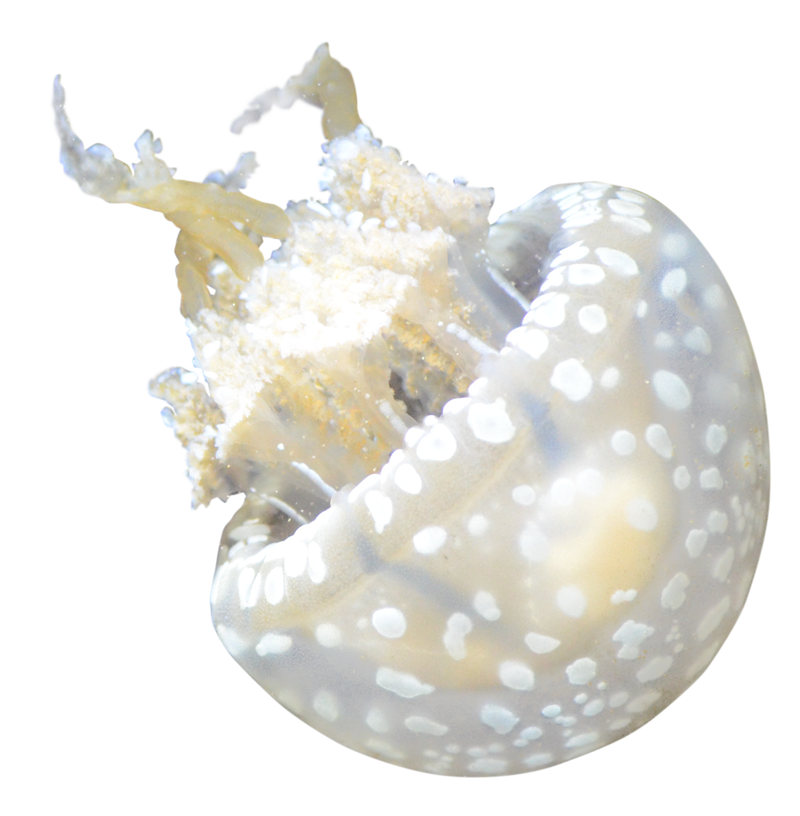
Mastigias papua (Lesson, 1830)
太陽の恵みを受けるクラゲ
A Jellyfish Living on Sunlight’s Gifts
傘径は一般に10cm前後で、大きな個体では20~30cmに達するクラゲです。インド洋から西太平洋の暖かい海に広く分布し、沿岸の浅い内湾や波の穏やかな場所に多く見られます。日本では沖縄をはじめとする南西諸島で観察されます。一般的なクラゲのような長い触手はなく、傘の下には8本のフリル状の口腔腕が発達しています。その姿がタコの足を連想させることから、「タコクラゲ」と呼ばれるようになりました。
本種の大きな特徴は、体内に褐虫藻と呼ばれる単細胞の藻類を共生させていることです。褐色がかった体色の多くはこの褐虫藻に由来し、褐虫藻は光合成によってつくり出した栄養の一部をタコクラゲに供給しています。そのため本種は日当たりの良い浅瀬を好み、ときには水面近くを漂いながら太陽光を利用します。動物でありながら植物のように光の恩恵を受けて暮らす、興味深い生態を持つクラゲです。
刺胞動物の仲間であるため毒を持っていますが、その毒性は非常に弱く、人が触れてもほとんど痛みを感じないことが多いとされています。ただし個人差があるため注意は必要です。寿命は比較的短く、飼育下では1年程度とされます。穏やかに漂う姿と、褐虫藻との共生によって成り立つ独特の生活様式から、水族館でも人気の高いクラゲの一種です。
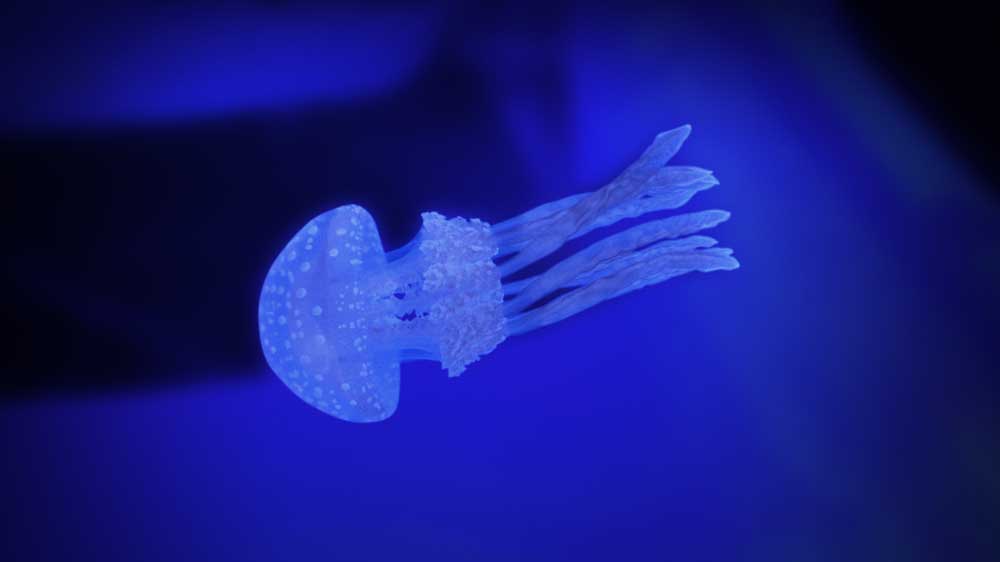
The spotted lagoon jellyfish is a jellyfish whose bell typically measures around 10 cm in diameter, although large individuals may reach 20–30 cm. It is widely distributed throughout the warm waters of the Indian Ocean and western Pacific Ocean, where it inhabits shallow coastal lagoons, sheltered bays, and other calm environments. In Japan, it can be found in the Ryukyu Islands, including Okinawa. Unlike many jellyfish, it lacks long marginal tentacles. Instead, eight frilly oral arms extend beneath the bell, giving it an appearance reminiscent of an octopus, from which its common Japanese name, “Tako-kurage” (octopus jellyfish), is derived.
One of the most remarkable features of this species is its symbiotic relationship with microscopic algae known as zooxanthellae. Much of its brownish coloration comes from these algae, which live within the jellyfish’s tissues. Through photosynthesis, the zooxanthellae produce nutrients and provide a portion of them to their host. As a result, the spotted lagoon jellyfish prefers sunlit shallow waters and is often seen drifting near the surface to maximize exposure to sunlight. This unique lifestyle allows it to benefit from solar energy in a manner more commonly associated with plants.
Like other cnidarians, it possesses stinging cells and is capable of delivering venom. However, its sting is extremely mild, and many people may not even notice being stung. Individual reactions can vary, so caution is still advised. The species has a relatively short lifespan and is generally believed to live for about one year in captivity. Its graceful appearance and fascinating partnership with zooxanthellae have made it a popular exhibit in public aquariums around the world.
参考文献
東京ズーネット | ニュース | 「浮遊生物」コーナーのニューフェイス、タコクラゲ | (2018年11月2日) 2024年7月28日閲覧
いおワールドかごしま水族館 | 水族図鑑 | タコクラゲ 2024年7月28日閲覧
“Lagoon Jelly” (2015, May 17), Aquarium of the Pacific. 2026年8月2日閲覧
“Spotted Lagoon Jellyfish (Mastigias Papua)” Exotic Aquaculture. 2026年8月2日閲覧