
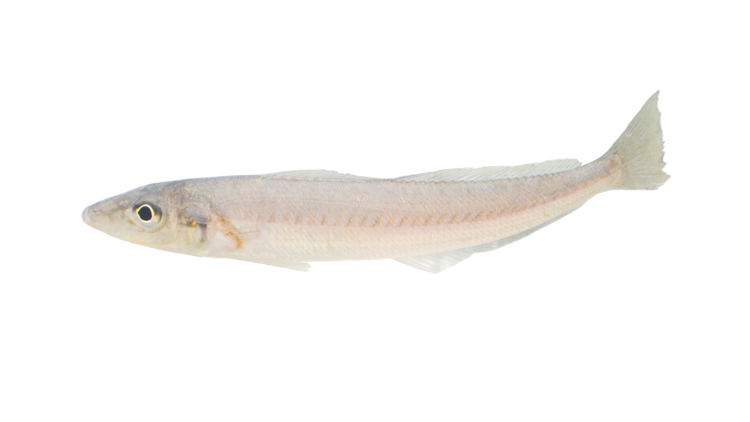
Sillago japonica (Temminck and Schlegel, 1843)
素直で飾り気のない「キス」
Kisu, the Unadorned Fish
日本の砂浜や浅い内湾の砂底に暮らす、キス科を代表する魚です。全長は20cm前後が普通ですが、30cmほどに達する個体もいます。細長い体は白銀色に輝き、海底近くを泳ぎながら、ゴカイなどの多毛類や小型の甲殻類を探して食べます。日本では古くから釣り魚や食用魚として親しまれ、特に天ぷらの魚としてよく知られています。本種は一般に「キス」と呼ばれ、「キス」といえば本種を指すことが多い魚です。
「キス」という不思議な名前ですが、もともとの呼び名は「きすご」だったとされています。約500年前の『御湯殿の上の日記』に「きすご」の名が記録され、江戸時代の1712年に刊行された『和漢三才図絵』にも「幾須吾(きすご)」と記されています。現在の「キス」は、この「きすご」の最後の「ご」が省略された呼び名と考えられます。現在でも地域によっては「キスゴ」という呼び方が残っています。
では、「きすご」とは何を意味するのでしょうか。その語源として挙げられているのが「生直(きす)」という古い言葉です。「生直」は、性質が素直で飾り気のないことを意味し、そこに魚を表す語尾「ご」が付いて「きすご」になったと説明されています。細くすっと伸びた白銀色のシロギスの姿は、「生直」という言葉から連想される、飾り気のない姿ともいえます。ただし、「幾須吾」は「きすご」という音を表した古い表記であり、「幾須」という漢字そのものが「生直」を意味するわけではありません。
長い年月のなかで「きすご」から「きす」へと呼び名が変化し、現在では「鱚」という漢字が使われています。「きすご」という古い呼び名が現在の「キス」に受け継がれていることからも、日本でこの魚が長く身近な存在だったことがうかがえます。
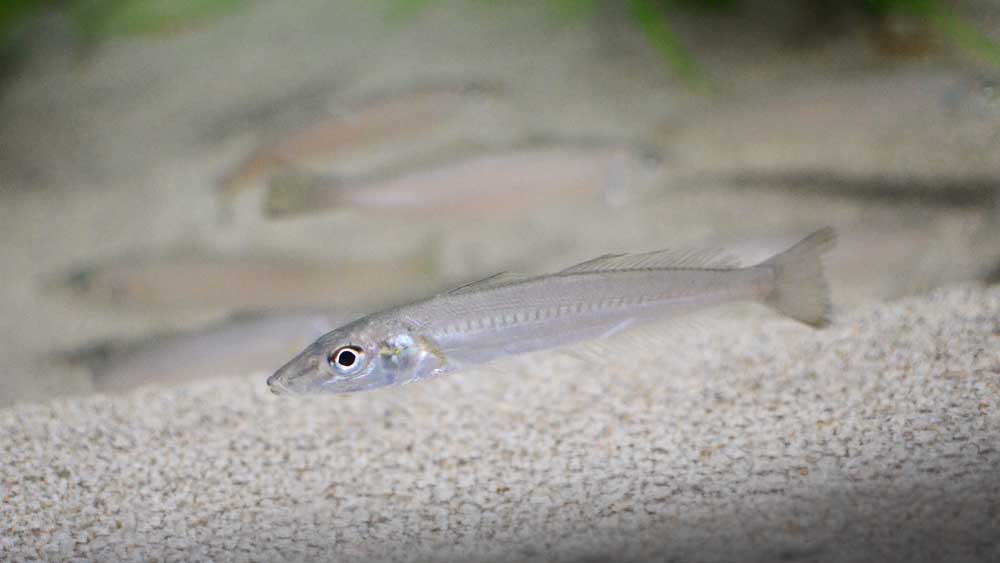
The Japanese whiting is a representative member of the Sillaginidae family, inhabiting sandy bottoms along Japan’s beaches and in shallow coastal bays. Most individuals are around 20 cm long, although some can grow to about 30 cm. Its slender body has a silvery-white sheen, and it swims close to the seafloor, searching for polychaete worms and small crustaceans. It has long been familiar in Japan as both a fishing and food fish, and is especially well known as a popular ingredient for tempura. The species is commonly called “kisu” in Japan, and the name generally refers to this species.
The name “kisu” may seem unusual, but its original name is thought to have been “kisugo.” The name “kisugo” appears in the Oyudono no Ue no Nikki, a diary dating back about 500 years, and the Wakan Sansai Zue, published in 1712 during the Edo period, records it as “幾須吾” (kisugo). The modern name “kisu” is thought to have developed through the omission of the final “go.” The name “kisugo” is still used in some parts of Japan today.
What, then, does “kisugo” mean? One proposed origin derives “kisu” from the old Japanese word “kis(u),” written as 生直, meaning something straightforward, unadorned, or plain in character. The suffix “go,” used in fish names, was then added to form “kisugo.” The Japanese whiting’s slender, smoothly elongated, silvery-white body can also be associated with the unadorned quality expressed by this word. It should be noted, however, that “幾須吾” was an old written form representing the sound “kisugo”; the characters “幾須” themselves do not mean 生直.
Over time, the name changed from “kisugo” to “kisu,” and the kanji 鱚 came to be used for the modern name. The fact that the old name “kisugo” has survived in the modern name “kisu” also reflects the long history of this fish as a familiar part of life in Japan.
参考文献
寺島良安『和漢三才図会』巻第四十九、1712年 2026年10月10日閲覧
FishBase — Sillago japonica (Temminck & Schlegel, 1843) 2026年10月10日閲覧
ぼうずコンニャクの市場魚貝類図鑑 | シロギス 2026年10月10日閲覧