
Chaetodon lunula (Lacépède, 1802)
ラグーンに暮らすラクーン
A Raccoon Living in the Lagoon
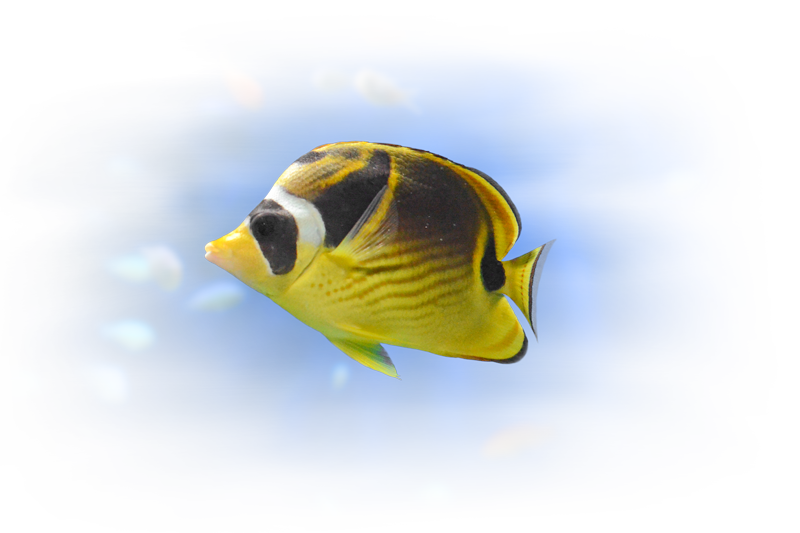
インド・太平洋のサンゴ礁や岩礁域に広く分布するチョウチョウウオの仲間で、全長は約20cmになります。黄色から黄褐色の体に褐色の斜め縞が入り、目を横切る幅広い黒帯と、その後方に続く白色帯が特徴です。体の後方には黒い眼状斑があり、黒白の顔模様と合わせてアライグマを思わせることから、英名では「Raccoon Butterflyfish」と呼ばれています。幼魚では背鰭後方の眼状斑がより目立ち、成長にともなって模様が変化します。
昼間は岩礁やサンゴ礁を泳ぎ、単独やペア、小さな群れで見られますが、餌を探すのは主に夜間です。ハワイで行われた胃内容物の調査では、後鰓類(ウミウシの仲間)が主要な餌として確認され、管棲多毛類の触手なども食べていました。地域によっては多毛類、腹足類、ヒドロ虫、サンゴなども利用しており、サンゴだけを専門に食べる魚ではありません。ウミウシ類には化学防御物質を持つものもありますが、チョウハンがその毒に特別な耐性を持つことを示す研究は確認されていません。それでも後鰓類を重要な餌として利用することは、本種の興味深い食性の特徴です。
目を横切る黒帯と体後方の眼状斑は、本種を特徴づける模様です。チョウチョウウオ類では、このような模様が眼の位置や魚の向きを分かりにくくし、捕食者に頭部を誤認させる効果があると考えられています。学名の種小名 lunula はラテン語で「小さな月」を意味し、目の上に見られる黒い三日月形の斑紋に由来するとされています。和名の「チョウハン」は「蝶斑」に由来するとされ、特徴的な斑紋を蝶の模様になぞらえた名前と考えられています。
The Raccoon Butterflyfish is a member of the butterflyfish family found widely across the Indo-Pacific, inhabiting coral reefs and rocky coastal areas. It grows to about 20 cm in total length. Its yellow to yellowish-brown body is marked with diagonal brown bands, while a broad black band crosses the eye and is followed by a white band. A prominent black eyespot is present toward the rear of the body. Together with the bold black-and-white facial markings, this pattern resembles the face of a raccoon, giving the species its English common name, “Raccoon Butterflyfish.” Juveniles have a more conspicuous eyespot near the rear of the dorsal fin, and their markings change as they mature.
During the day, the Raccoon Butterflyfish can be seen around rocky reefs and coral reefs, either alone, in pairs, or in small groups, but it mainly searches for food at night. A stomach-content study conducted in Hawaii found opisthobranchs, including sea slugs, to be an important part of its diet, along with the tentacles of tube-dwelling polychaete worms. Depending on the locality, it also feeds on polychaetes, gastropods, hydroids, and corals, so it is not a specialized coral feeder. Some sea slugs possess chemical defenses, but there is no evidence that this species has a specific resistance to their toxins. Nevertheless, its regular consumption of opisthobranchs is an interesting feature of its feeding ecology.
The black band across the eye and the eyespot toward the rear of the body are among the species’ most distinctive markings. In butterflyfishes, such patterns are thought to make the position of the eye and the orientation of the fish less obvious, potentially causing predators to misidentify the location of the head. The specific epithet lunula is derived from the Latin word meaning “little moon” and is thought to refer to the black, crescent-shaped marking above the eye. The Japanese common name Chōhan is likewise considered to refer to the butterfly-like pattern of its markings.
参考文献
U.S. Department of the Interior, Chaetodon lunula (Lacepède, 1802). 2026年10月17日閲覧
粟国アーカイブス | 生物 | チョウハン 2026年10月17日閲覧
広島大学デジタルミュージアム | チョウハン 2026年10月17日閲覧