
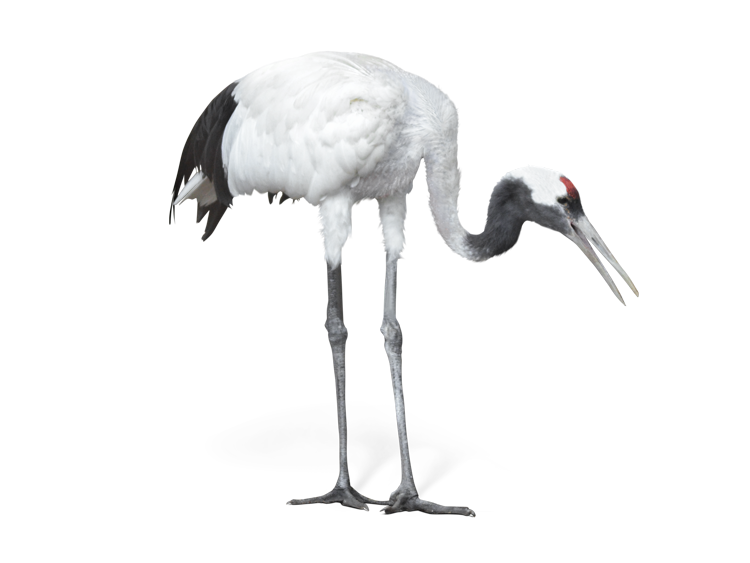
Grus japonensis (Müller, 1766)
雪原での情熱的な求愛ダンス
A Passionate Dance Across the Snow
全長102~147cm、翼長64~67cm、翼開長約240cm。東アジアの湿原や湖沼、河川周辺に生息する世界最大級のツルです。日本では北海道東部の湿原を中心に繁殖し、冬は釧路湿原一帯に多くの個体が集まります。学名 Grus japonensis が示すように、日本を象徴する鳥として古くから親しまれてきました。
文献上では、1133年成立の『詩序集』に「丹頂」の名が見られるのが初期の記録とされています。しかし明治から大正時代にかけては狩猟や開発の影響で急激に数を減らし、一時は日本国内では野生絶滅したと考えられるほどになりました。ところが1924年、釧路湿原で数十羽の生存が確認され、その後は給餌や生息地保全などの手厚い保護活動によって個体数は着実に回復しました。現在では北海道を代表する野生動物となり、その保全は日本の自然保護を象徴する成功例の一つとして知られています。
北海道の先住民アイヌ民族はタンチョウを「サロルンカムイ(湿原の神)」と呼び、神聖で縁起の良い鳥として敬ってきました。また日本では古くから長寿の象徴とされますが、その由来は紀元前2世紀頃に成立した中国の古典『淮南子』にある「鶴の寿は千歳」という一節に求められると考えられています。もちろん実際の寿命はそこまで長くなく、野生では20~30年ほどです。それでも優雅な姿や夫婦で長くつがいを維持する習性が、人々に永遠や長寿のイメージを抱かせてきました。
タンチョウは求愛ダンスでも世界的に知られています。繁殖期になると、オスとメスは向かい合って首を伸ばし、翼を大きく広げながら跳ねるように舞い、互いの鳴き声を合わせます。この行動は一方的な求愛ではなく、つがいの絆を確かめ合う共同のディスプレイです。雪原に響く鳴き声と、息を合わせて舞う優雅な姿は、まるで舞踏会でのダンスのようで、日本の冬を代表する美しい光景として多くの人々を魅了しています。
Body length 102–147 cm, wing length 64–67 cm, and wingspan approximately 240 cm. The Red-crowned Crane is one of the largest crane species in the world, inhabiting wetlands, lakes, and rivers across East Asia. In Japan, it breeds mainly in the marshes of eastern Hokkaido, while many individuals gather in the Kushiro Wetland during winter. As its scientific name, Grus japonensis, suggests, it has long been regarded as one of Japan’s most iconic birds.
The earliest known written reference to the bird as “Tancho” appears in the Shijoshu, compiled in 1133. During the Meiji and Taisho periods, however, excessive hunting and habitat loss caused its population to decline dramatically, and it was once believed to have become extinct in the wild in Japan. In 1924, several dozen birds were rediscovered in the Kushiro Wetland. Since then, intensive conservation efforts—including winter feeding programs and habitat protection—have steadily restored the population. Today, the Red-crowned Crane has become one of Hokkaido’s best-known wild animals, and its recovery is widely regarded as one of Japan’s greatest conservation success stories.
The Indigenous Ainu people of Hokkaido call the crane Sarorun Kamuy, meaning “God of the Marsh,” and have long revered it as a sacred and auspicious bird. Throughout Japan, it has also symbolized longevity. This belief is thought to originate from a passage in the ancient Chinese classic Huainanzi, compiled around the 2nd century BC, which states, “A crane lives for a thousand years.” In reality, wild cranes typically live only 20–30 years. Nevertheless, their graceful appearance and the lifelong pair bonds they often form have made them enduring symbols of longevity and fidelity.
The Red-crowned Crane is also famous for its spectacular courtship dance. During the breeding season, males and females face each other, stretching their necks, spreading their wings, leaping into the air, and calling in unison. Rather than being a one-sided display, this synchronized performance strengthens the bond between the pair. Echoing across the snowy landscape, their elegant movements resemble a ballroom dance, creating one of the most iconic and breathtaking scenes of the Japanese winter.
参考文献
久井 貴世『江戸時代の文献史料に記載されるツル類の同定―タンチョウに係る名称の再考察―』山階鳥類学雑誌 2013年 45巻 1号 p. 9-38 2024年7月28日閲覧
GetNavi web | ライフスタイル | 白銀の世界で繰り広げられる、熱い、熱い「タンチョウのダンス」って知ってる? | (2017年10月31日) 2024年7月28日閲覧
環境省 | 自然環境・生物多様性 | タンチョウ 2026年8月2日閲覧