
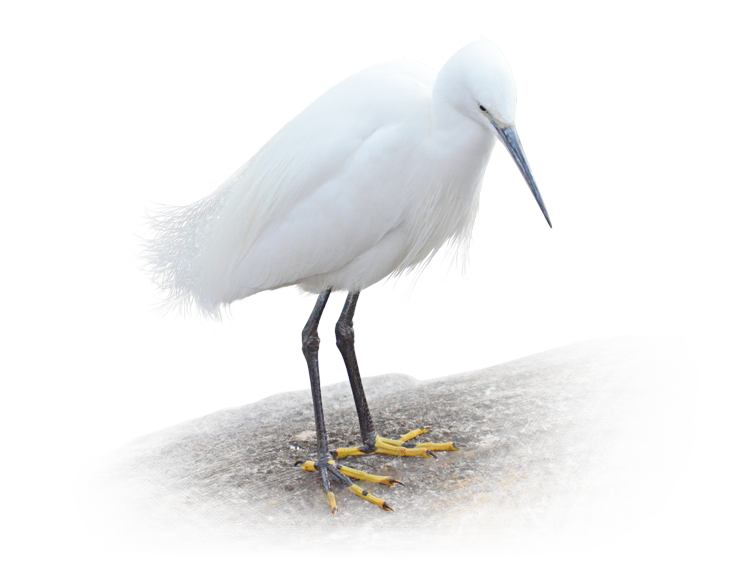
Ardea garzetta (Linnaeus, 1766)
黄色い足先で浅瀬を探る白鷺
The White Egret Searching the Shallows with Yellow Toes
コサギは、全身が純白の羽毛に覆われた優雅なサギの一種で、日本を含む東アジアから東南アジア、さらにはオーストラリアにかけて広く分布しています。日本では本州以南に多く見られ、河川や湖沼、水田、干潟、沿岸部など多様な水辺環境に適応して生息します。体長は約60cm前後、翼開長はおよそ100cmほどで、細長い体と首、黒く細いくちばしが特徴です。脚も黒色ですが、足指のみが鮮やかな黄色を呈し、野外での重要な識別点となっています。
日本では同じく白い体色を持つダイサギやチュウサギも見られますが、コサギはそれらより小柄で、黒い脚と黄色い足先の組み合わせによって比較的容易に見分けることができます。ダイサギは体がかなり大きく、首や嘴も長大で、非繁殖期には嘴が黄色味を帯びます。チュウサギは中間的な大きさで、繁殖期には嘴の基部が黄色く変化することがありますが、コサギのような鮮やかな黄色の足指は持ちません。遠目では判別が難しいこともありますが、足の色や体格の違いは野外識別における重要な手掛かりです。
繁殖期になると、後頭部から数本の長い冠羽が伸び、背中にもレース状にほぐれた飾り羽が現れます。これらの装飾羽は19世紀から20世紀初頭にかけての羽毛貿易で珍重され、乱獲の対象となりました。特に繁殖期の親鳥が集中的に狙われたため、世界各地でサギ類の個体数は大きく減少しましたが、その後の保護活動や法整備によって回復し、現在では日本各地で比較的普通に見られる水鳥となっています。
主な餌は小魚や甲殻類、水生昆虫、カエルなどで、浅瀬をゆっくり歩きながら獲物を探し、鋭いくちばしで素早く捕らえます。時には足を小刻みに震わせたり、水底をかき回したりして水中の生物を驚かせ、動いたところを捕食する行動も見られます。黄色い足先は、こうした採餌時に獲物を刺激する視覚的役割を持つ可能性が指摘されており、コサギ特有の特徴として注目されています。
繁殖は春から夏にかけて行われ、樹上やヨシ原などにコロニー(集団営巣地)を形成します。他のサギ類と混群を作ることも多く、繁殖地は鳴き声や羽ばたきで非常に騒がしくなります。1回の産卵数は3〜5個程度で、雌雄が協力して抱卵や育雛を行います。ヒナは孵化後しばらくして巣立ちますが、その後もしばらくは親鳥から給餌を受けながら成長します。
季節移動については地域によって留鳥または漂鳥として扱われますが、寒冷地の個体は冬季に南方へ移動する傾向があります。都市近郊の河川や公園の池などでもよく見られることから、人間活動との関わりも深く、環境への適応力の高さがうかがえます。その白く端正な姿としなやかな動きは古くから人々に親しまれており、日本の水辺風景を象徴する鳥の一つです。
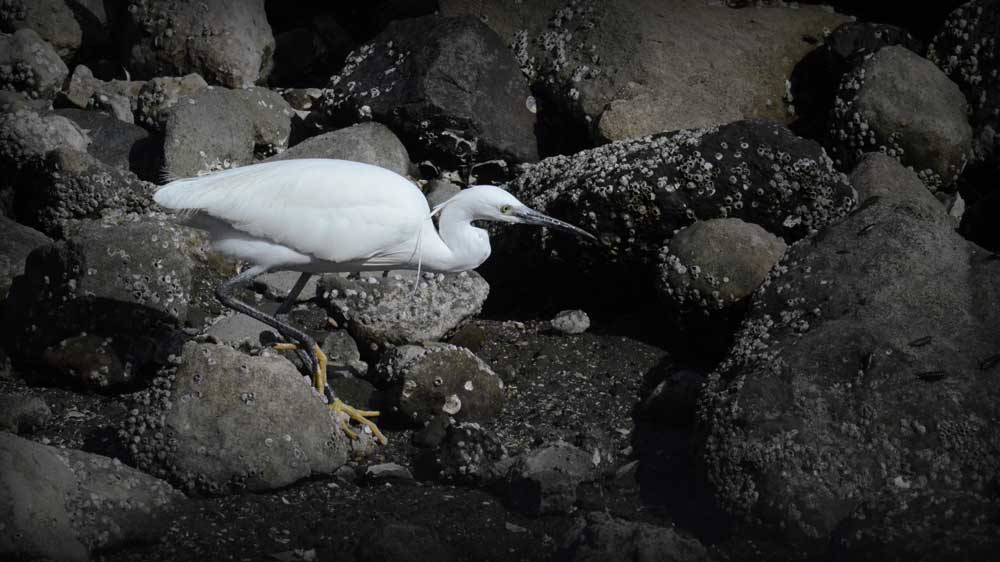
A Little Egret hunting for sea slaters
The Little Egret is an elegant species of heron covered entirely in pure white plumage. It is widely distributed from East Asia, including Japan, through Southeast Asia and as far as Australia. In Japan, it is commonly found from Honshu southward, inhabiting a wide variety of wetland environments such as rivers, lakes, rice paddies, tidal flats, and coastal areas. It measures about 60 cm in body length, with a wingspan of approximately 100 cm. Its slender body and neck, together with its thin black bill, are characteristic features. The legs are also black, while only the toes are bright yellow, forming an important field mark for identification.
Among the white herons found in Japan are the Great Egret and Intermediate Egret, but the Little Egret is smaller than both and can be identified relatively easily by its combination of black legs and yellow feet. The Great Egret is considerably larger, with a much longer neck and bill, and its bill becomes yellowish during the non-breeding season. The Intermediate Egret is medium-sized, and during the breeding season the base of its bill may turn yellow, but it lacks the vivid yellow toes characteristic of the Little Egret. Although distinguishing these species from a distance can sometimes be difficult, differences in leg color and body size provide important clues for field identification.
During the breeding season, several long plumes extend from the back of the head, and delicate lace-like ornamental feathers appear on the back. These decorative plumes were highly prized during the plume trade of the late nineteenth and early twentieth centuries, leading to extensive hunting. Because breeding adults were specifically targeted, populations of egrets declined drastically in many parts of the world. However, conservation efforts and legal protections later allowed populations to recover, and today the species is once again a relatively common waterbird throughout Japan.
Its diet mainly consists of small fish, crustaceans, aquatic insects, and frogs. It slowly walks through shallow water while searching for prey, which it quickly captures with its sharp bill. At times, it vibrates its feet or stirs the bottom with them to startle aquatic animals into movement before striking. The bright yellow feet are thought to serve as visual stimuli during such feeding behavior and are regarded as one of the species’ distinctive characteristics.
Breeding takes place from spring to summer, when colonies are formed in trees or reed beds. Little Egrets often nest together with other heron species, and breeding sites become very noisy with calls and wingbeats. A clutch usually consists of three to five eggs, and both sexes share incubation and chick-rearing duties. Although the chicks leave the nest some time after hatching, they continue to depend on their parents for food for a while afterward.
Depending on the region, the species may be resident or partially migratory, though birds inhabiting colder areas tend to move southward during winter. Because it is frequently seen even along urban rivers and ponds in parks, the Little Egret has a close relationship with human environments and demonstrates a high adaptability to environmental change. Its graceful movements and immaculate white appearance have long made it familiar to people, and it remains one of the birds that symbolize the waterside landscapes of Japan.
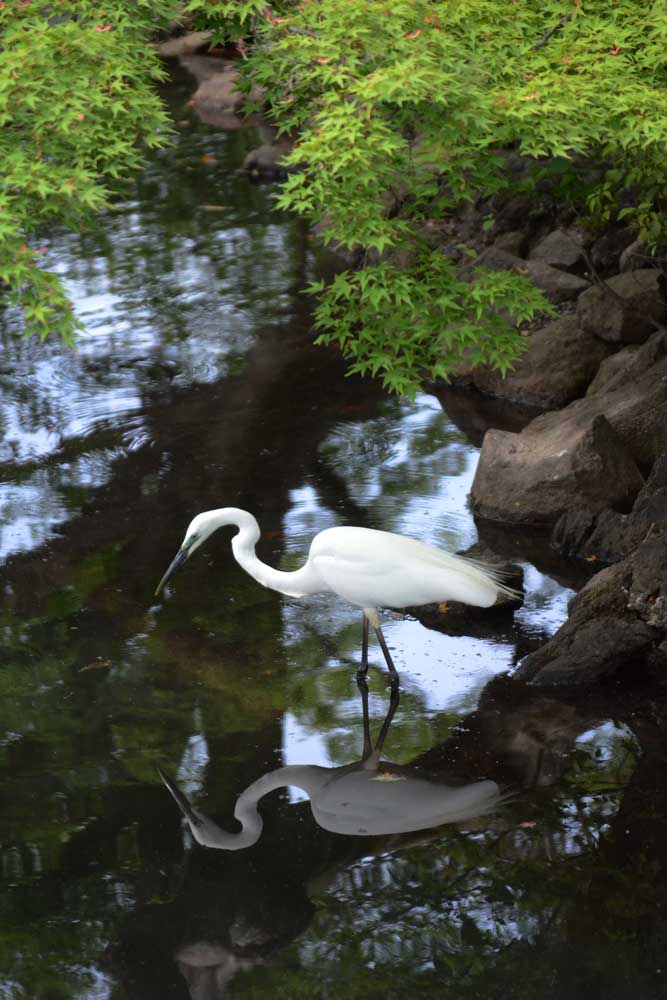
An adult Little Egret standing quietly in a spring park
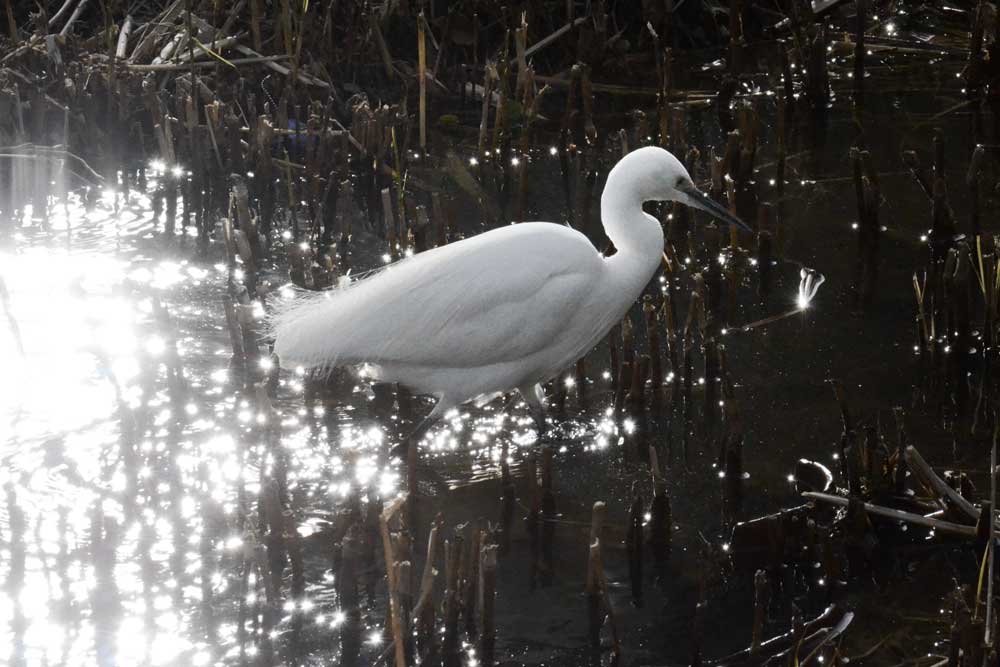
A young Little Egret at a winter pond.

At Shinagawa Kumin Park. A sequence of photos.
参考文献
WWFジャパン | 日本のレッドリストが更新 危機と保全の現状が明らかに | (2026年3月17日) 2026年5月10日閲覧
“Become an Instant Expert on the Snowy Egret Feather” (2020, May 27), The Arts Society. 2026年5月10日閲覧
“Little Egret” Living Levels. 2026年5月10日閲覧
“Snowy Egret” All About Birds, Cornell University. 2026年5月10日閲覧
“Little Egret” Sibley Guides. 2026年5月10日閲覧
濱尾章二, 井田俊明, 渡辺 浩, 樋口広芳(2005)サギ類の餌生物を誘引・撹乱する採食行動 -波紋をつくる漁法を中心に. Strix, 23, 91-104. 2026年5月10日閲覧