
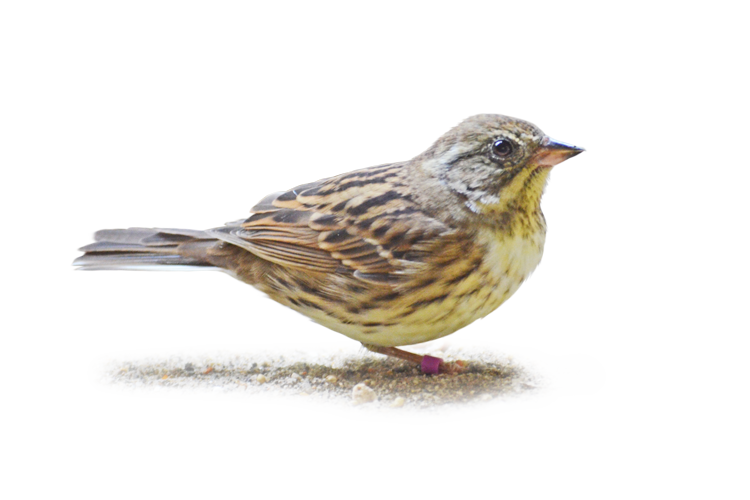
Emberiza spodocephala (Pallas, 1776)
林の奥から響く控えめな歌声
A Modest Song Echoing from Deep within the Woods
アオジはスズメ目ホオジロ科に属する小型の鳥で、全長は約16cmほどです。ユーラシア大陸東部に広く分布し、日本では北海道の農耕地にある孤立した林や本州の標高の高い明るい林などで繁殖し、秋から春の越冬期は本州以南の山地から低地の林や林縁、薮など暖地へ移動して越冬します。比較的開けた環境に生息し、地上や低木の中で活動することが多いです。
雄の成鳥は、頭部が緑がかった暗灰色で覆われ、目と嘴の周囲が黒くなるのが特徴です。腹部は鮮やかな黄色を帯び、暗色の頭部との対比が目立ちます。一方、雌は全体的に淡い褐色で縦斑が目立ち、雄に比べて地味な印象を受けます。嘴はやや太く短く、種子をついばむのに適した形状をしています。
和名「アオジ」は、古くホオジロ科の鳥類を総称して「しとと」と呼んでいたことに由来します。本種のように体色が緑がかるものは「青しとと(あをじとと)」と呼ばれ、これが省略されて現在の名称になったとされています。これには、日本語における「青」が緑色を含む広い色域を指していたという背景も関係しています。
食性は雑食性で、主に草本類の種子を食べますが、繁殖期には昆虫などの小動物も積極的に捕食し、雛に与えます。繁殖期は春から初夏にかけてで、地上近くの草むらや低木内に椀状の巣を作り、通常4〜5個の卵を産みます。
地鳴き(警戒音)は「チッチッチッ…」、さえずりは「チョッピンチロロ、チーチョロリリリー」とホオジロよりもゆったりとしたテンポで鳴き、藪の中から聞こえてくることが多いです。冬期には群れで行動することもあり、人目につきにくいながらも身近な環境に適応した鳥として知られています。
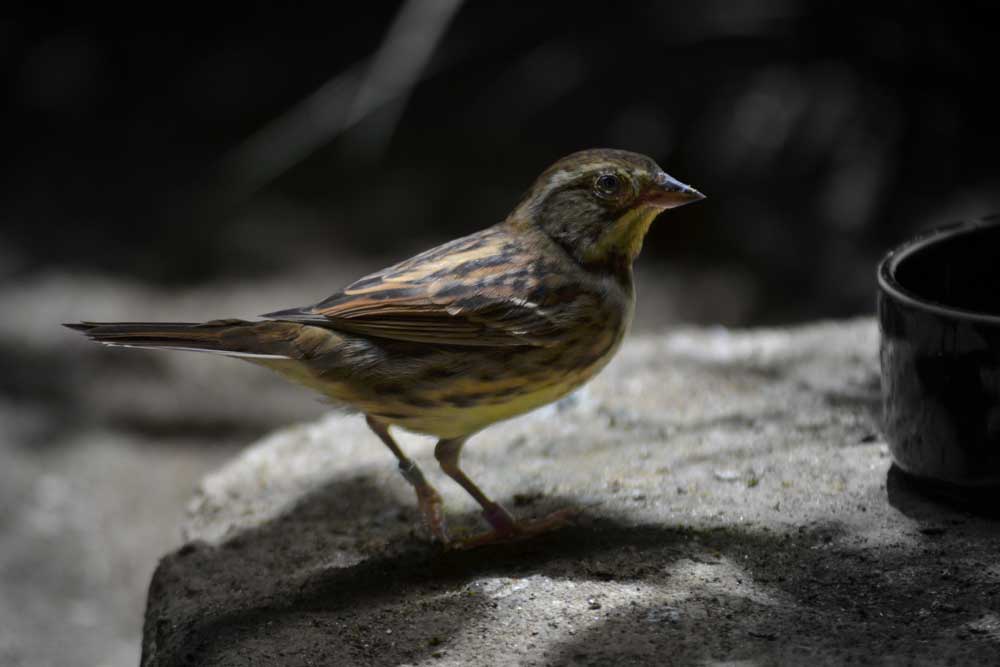
The Black-faced Bunting (Emberiza spodocephala) is a small passerine bird belonging to the bunting family (Emberizidae), measuring about 16 cm in total length. It is widely distributed across eastern Eurasia. In Japan, it breeds in habitats such as isolated woodland patches within agricultural landscapes in Hokkaido and open, high-elevation forests in Honshu. From autumn through spring, during the wintering season, it migrates to warmer areas from Honshu southward, inhabiting forests, forest edges, and dense thickets from mountainous to lowland regions. It typically favors relatively open environments and is often active on the ground or within low vegetation.
Adult males are characterized by a greenish dark gray head, with black coloration around the eyes and bill. The underparts are bright yellow, forming a striking contrast with the darker head. Females, in contrast, are generally pale brown with prominent streaking, giving them a more subdued appearance. The bill is short and robust, well adapted for picking seeds.
The Japanese name “Aoji” derives from the old term “shito-to,” once used as a general name for buntings. Individuals with greenish plumage, such as this species, were called “ao-shitoto” (“green bunting”), which was later abbreviated to the present name. This naming also reflects the historical use of the Japanese word “ao” (blue/green), which traditionally encompassed a broader range of colors including green.
It is omnivorous, feeding mainly on the seeds of herbaceous plants, but during the breeding season it actively consumes insects and other small invertebrates, which are also fed to the chicks. The breeding season extends from spring to early summer. Nests are typically built in a cup shape close to the ground, within grasses or low shrubs, and a clutch usually consists of four to five eggs.
Its call note is a sharp “chit-chit-chit…,” while the song is a more relaxed, melodious series of notes often rendered as “choppin-chiroro, chi-chororiririi,” delivered at a slower tempo than that of the Meadow Bunting. These vocalizations are frequently heard from within dense undergrowth. In winter, individuals may form flocks, and although they are often inconspicuous, they are well adapted to living in close proximity to human-modified environments.
参考文献
日本野鳥の会 | モニタリングサイト1000 陸生鳥類調査 情報 2025年 9月号 Vol.17 No.1 2026年5月4日閲覧
北海道開発局 | 十勝の川の生き物たち 十勝の川生物図鑑 | アオジ 2026年5月4日閲覧
日本野鳥の会 | BIRDFAN | 野鳥図鑑 | アオジ 2026年5月4日閲覧