
Emberiza cioides (Brandt, 1843)
ホオジロの多彩な歌のレパートリー
The Meadow Bunting’s Rich Song Repertoire
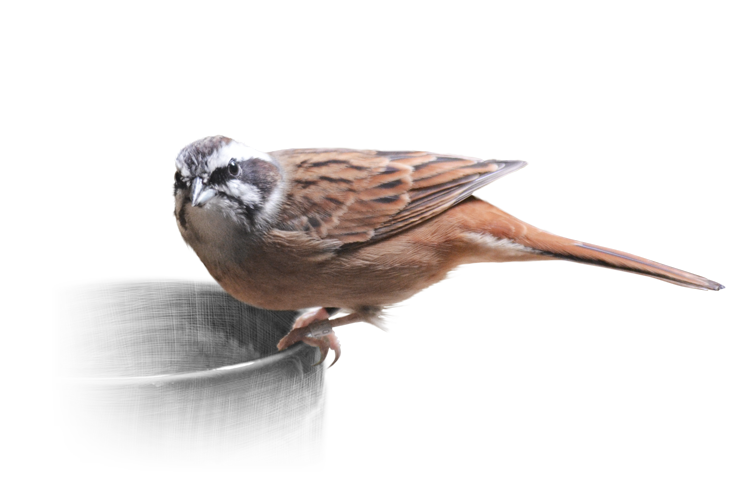
全長約17cm。スズメ目ホオジロ科に属する東アジア固有の小鳥で、日本のほか、朝鮮半島、中国東部から中部、ロシア沿海地方などに分布します。日本では本州、四国、九州では留鳥として一年を通して見られ、北海道では夏鳥として繁殖します。平地から山地までの草地や農耕地、河川敷、里山など、低木や草むらが点在する開けた環境を好み、人の暮らしに近い場所でもよく見られます。冬には小規模な群れを作ることがありますが、繁殖期には雄が縄張りをもち、高い枝先や電線などの目立つ場所から盛んにさえずります。
頭部の白黒の模様が特徴で、頬の白斑が「ほおが白い」ことから和名が付けられました。雄は繁殖期になると顔や胸の色彩がより鮮明になりますが、雌は全体に淡い褐色で、顔の模様もやや不明瞭です。地上を跳ね歩きながら採食することが多く、秋から冬にはイネ科植物などの種子を主食とします。一方、繁殖期には昆虫やクモなどの小動物を積極的に捕らえます。
繁殖期は4~8月頃で、地面近くの草むらや低木の根元に枯れ草や細根を用いた椀形の巣を作り、3~5個の卵を産みます。抱卵は主に雌が行い、雄は縄張りの防衛や見張りを担います。孵化した雛には親鳥が昆虫やクモなどを運んで育て、巣立ち後もしばらくは親鳥から餌を受けながら採食を学び、徐々に独立していきます。
特徴的なフレーズを繰り返す澄んださえずりは、「一筆啓上仕り候」や「源平つつじ 白つつじ」と聞きなされ、古くから親しまれてきました。一見すると同じ歌を繰り返しているように聞こえますが、実際には1羽が十数種類ものさえずりを持ち、状況に応じて巧みに歌い分けています。これらのさえずりは縄張りを宣言するとともに、雌へのアピールにも重要な役割を果たしています。身近な鳥でありながら奥深い行動を見せるホオジロは、日本の里山を代表する野鳥の一つです。
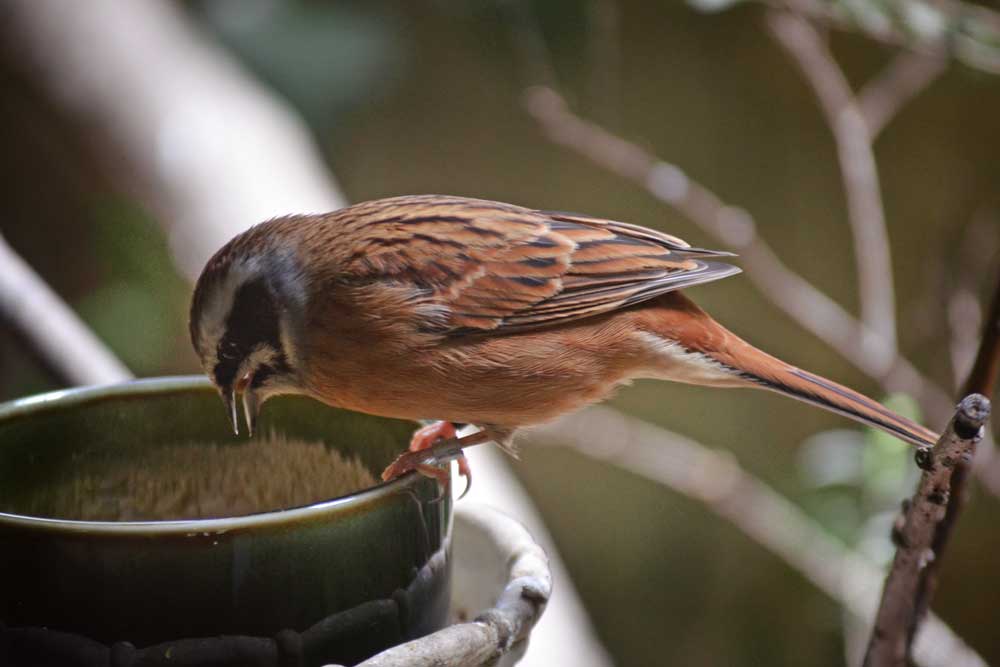
The Meadow Bunting (Emberiza cioides) is a small passerine measuring about 17 cm in length. Endemic to East Asia, it is distributed across Japan, the Korean Peninsula, eastern and central China, and the Russian Far East. In Japan, it is a resident throughout Honshu, Shikoku, and Kyushu, while breeding as a summer visitor in Hokkaido. It inhabits open landscapes with scattered shrubs and grasses, including grasslands, farmland, riverbanks, and satoyama woodlands, and is often found close to human settlements. During winter it may form small flocks, but in the breeding season males establish territories and sing conspicuously from exposed perches such as treetops and utility wires.
Its striking black-and-white head pattern is its most distinctive feature, and its Japanese name, Hoojiro, literally means “white cheek,” referring to the prominent white cheek patch. Breeding males show more vivid facial and breast markings, whereas females are generally duller brown with less distinct facial patterns. Meadow Buntings usually forage by hopping along the ground. Seeds of grasses and other herbaceous plants make up most of their diet in autumn and winter, while insects, spiders, and other small invertebrates become the primary food during the breeding season.
Breeding takes place mainly from April to August. The female builds a cup-shaped nest from dried grasses and fine roots near the ground, hidden among grasses or at the base of shrubs, and lays three to five eggs. Incubation is performed mainly by the female, while the male defends the territory and keeps watch. After hatching, both parents feed the chicks with insects and other small prey. Even after fledging, the young continue to receive food from their parents while learning how to forage independently before eventually becoming self-sufficient.
The Meadow Bunting’s clear, repetitive song is one of Japan’s most familiar bird vocalizations and has long been remembered through traditional Japanese mnemonics such as “Ippitsu Keijō Tsukamatsuri Sōrō” and “Genpei Tsutsuji, Shiro Tsutsuji.” Although the song may sound repetitive to human ears, each male possesses around a dozen different song types and skillfully alternates among them according to the situation. These songs play important roles in both territorial defense and attracting mates. Despite being a familiar bird, the Meadow Bunting exhibits remarkably sophisticated vocal behavior, making it one of the representative birds of Japan’s satoyama landscapes.
参考文献
太田川河川事務所 | 大田川生物誌 | ホオジロ 2026年7月18日閲覧
明石全弘・山岸哲(1987)「ホオジロ Emberiza cioides の囀りに関する研究」『日本鳥学会誌』36(1): 19–45. 2026年7月18日閲覧
BirdLife International. 2016. Emberiza cioides. The IUCN Red List of Threatened Species 2016: e.T22720902A94689064. 2026年7月18日閲覧
暦生活 | ホオジロ | 柴田 佳秀 (2023年5月27日) 2026年7月18日閲覧