
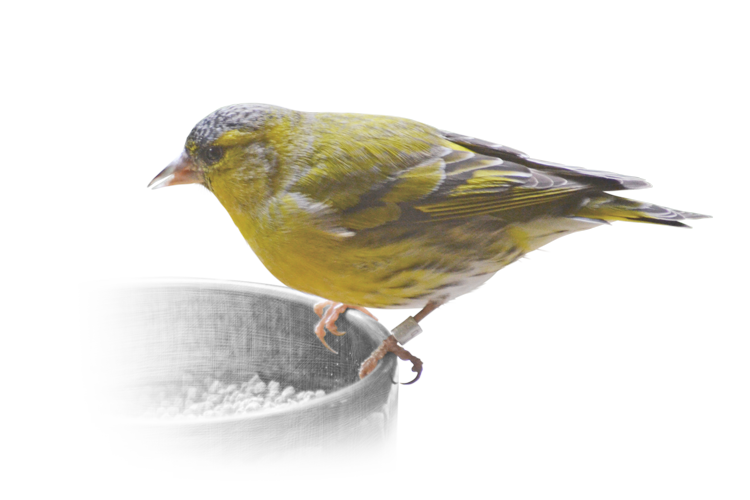
Carduelis spinus (Linnaeus, 1758)
冬を彩るカナリアの仲間
A Canary Relative Brightening the Winter Landscape
全長約12cm、体重10~18gほど。スズメ目アトリ科に属する小型の野鳥で、ヨーロッパからシベリア、中国北部を経て日本までユーラシア北部に広く分布します。日本では北海道や本州中部以北の針葉樹林で繁殖し、冬になると本州以南へ移動する冬鳥として各地で見られます。雄は頭頂部と喉が黒く、鮮やかな黄色の羽色が目を引く一方、雌は全体に淡い黄緑色で黒色部が少なく、雌雄とも下面には細かな黒い縦斑があります。
主な生息環境は針葉樹林や混交林ですが、冬には落葉広葉樹林や河川敷、公園などにも現れます。食性は植物食が中心で、ハンノキやカバノキ、モミ、カラマツなどの種子を好みます。細い枝先に逆さまにぶら下がって採食する姿はヒワ類らしい特徴です。繁殖期には昆虫やクモ類も利用し、ヒナには動物質の餌を多く与えます。
冬には数十羽から数百羽の群れを作り、ベニヒワやアトリ、カワラヒワなどと混群を形成することもあります。「チリリ、チリリ」と澄んだ声を響かせながら波状飛行を繰り返し、群れが一斉に向きを変える様子は冬の林を彩る風物詩です。また、繁殖地の球果や種子の豊凶に応じて飛来数が大きく変動し、餌が不足した年には通常より南方まで多数が移動する「漂行(イラプション)」が見られます。
マヒワは、飼い鳥として広く知られるカナリアと同じヒワ属(Spinus)に属する近縁種で、美しい黄色い羽色や軽やかなさえずりにも共通点があります。江戸時代から昭和初期にかけては、日本でも飼い鳥として親しまれました。しかし、飼育すると長生きしにくい鳥であったことから、「弱い鳥」を意味する「鶸(ヒワ)」の名が付いたという説があります。この「ヒワ」を代表する鳥という意味で「真」を冠し、「マヒワ(真鶸)」と呼ばれるようになったとも考えられています。現在では野鳥の捕獲・飼育は法律で原則として禁止されており、その美しい姿や群れの行動は自然の中で観察するものとなっています。
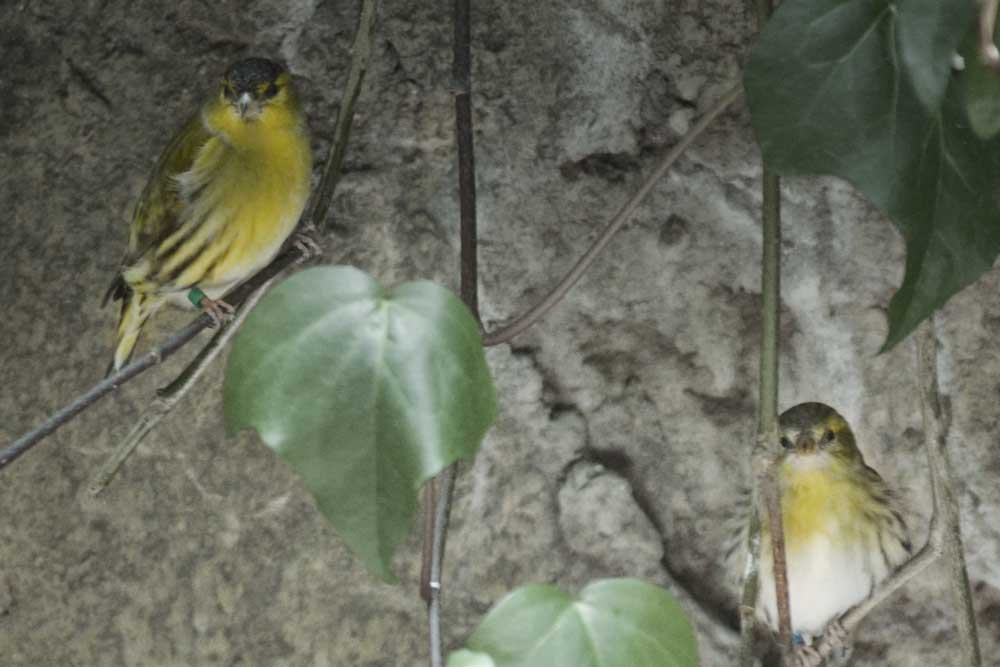
The Eurasian Siskin is a small finch measuring about 12 cm in length and weighing 10–18 g. It belongs to the family Fringillidae and is widely distributed across northern Eurasia, from Europe through Siberia and northern China to Japan. In Japan, it breeds mainly in the coniferous forests of Hokkaido and central to northern Honshu, then migrates south to spend the winter throughout much of the country. Males are easily recognized by their bright yellow plumage with a black crown and throat, while females are paler yellow-green with less black. Both sexes have fine dark streaks on the underparts.
Its primary habitat is coniferous and mixed forests, although in winter it also occurs in deciduous woodlands, riverbanks, parks, and other open wooded areas. It feeds mainly on seeds, especially those of alders, birches, firs, and larches. Like other siskins, it often hangs upside down from slender branches while feeding. During the breeding season, it also eats insects and spiders, which provide an important source of protein for growing chicks.
In winter, Eurasian Siskins may gather in flocks ranging from a few dozen to several hundred birds, sometimes mixing with redpolls, Bramblings, and Oriental Greenfinches. Their undulating flight, accompanied by clear, ringing calls, is a familiar sight and sound in winter woodlands. The number arriving in Japan varies considerably from year to year, depending on the seed production of conifers and birches in their breeding range. In years of poor seed crops, large numbers move farther south in an irruptive migration.
The Eurasian Siskin belongs to the genus Spinus, making it a close relative of the domestic canary. The two species share their yellow plumage, lively songs, and agile feeding behavior. In Japan, the Eurasian Siskin was commonly kept as a cage bird from the Edo Period until the early Showa era. One traditional explanation for the name hiwa is that these birds were considered delicate and did not survive long in captivity. The prefix ma (“true” or “typical”) was later added, giving rise to the name Mahiwa (“true siskin”). Today, the capture and keeping of native wild birds is generally prohibited by law in Japan, and the species is best appreciated in its natural habitat.
参考文献
サントリーの愛鳥活動 | 日本の鳥百科 | マヒワ 2026年7月25日閲覧
所沢市 | ふれあいの里だより(令和元年5月号)| スズメ?カナリア?カワラヒワ | (2019年5月9日) 2026年7月25日閲覧
広島大学 | デジタル自然史博物館 | マヒワ 2026年7月25日閲覧
日本野鳥の会京都支部 | 野鳥 | マヒワ 2026年7月25日閲覧