
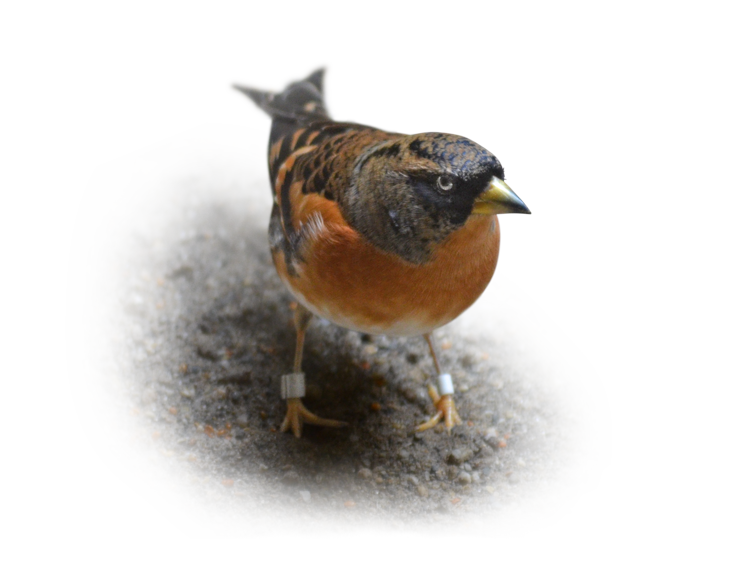
Fringilla montifringilla (Linnaeus, 1758)
ブナの豊作年に膨れ上がる群れ
Flocks Swelling in Years of Heavy Beech Mast
全長16cm前後。スズメ目アトリ科に属する小鳥で、漢字では「花鶏」あるいは「獦子鳥」と表記されます。「花鶏」は現在もっとも一般的に用いられる表記です。和名の「アトリ」の語源には諸説ありますが、群れを作る習性から「集鳥(あつとり)」が転じたとする説がよく知られています。
ユーラシア大陸北部の広い範囲で繁殖し、冬になるとヨーロッパや東アジアへ南下して越冬します。日本では主に冬鳥として全国に渡来し、平地の林、農耕地、公園、河川敷などで普通に見られます。年によって飛来数の変動が大きく、木の実の豊凶に応じて大規模な移動を行うことでも知られています。特にブナ科植物の実が豊富な年には大群が形成され、数万羽規模の群れがねぐらを作ることもあります。
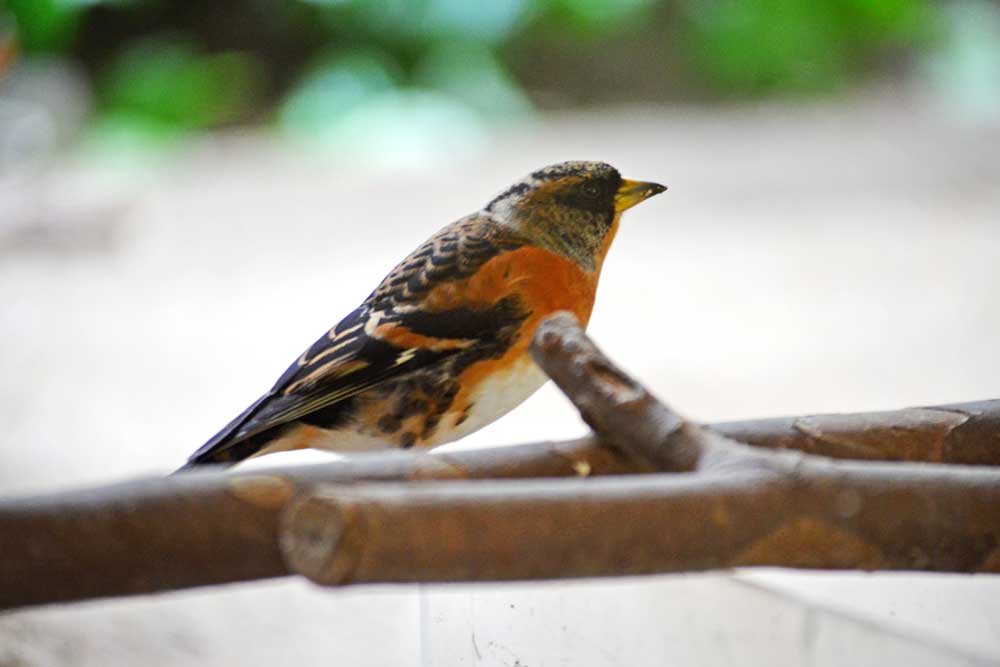
雄の成鳥は、黒い頭部、橙褐色の胸や肩羽、白い腹部の対比が美しく、翼にははっきりした白斑が入ります。雌や若鳥は全体的に淡色で、頭部も褐色味を帯びています。飛翔時には白い腰が目立ち、群れで飛ぶ際にもよく目につきます。嘴は季節によって色が変化し、冬は黄色味を帯びますが、繁殖期には暗色になります。
食性は雑食性で、秋から冬には草木の種子や木の実を中心に食べ、春から夏には昆虫類も多く捕食します。日本では農地や草地で落ちた種子をついばむ姿がよく観察されます。地上で採食することが多く、群れで一斉に飛び立つ様子は冬の風物詩の一つです。鳴き声は「チッ、チッ」あるいは「キュイーン」と聞こえることが多く、飛びながらよく鳴き交わします。
The Brambling is a small passerine bird belonging to the finch family, measuring about 16 cm in total length. In Japanese, it is written with the characters “花鶏” or “獦子鳥.” “花鶏,” literally meaning “flowered bird,” is the most commonly used modern spelling and refers to the striking coloration of the male. The origin of the Japanese name “Atori” is uncertain, but one well-known theory suggests it derives from “atsu-tori,” meaning “gathering birds,” in reference to the species’ habit of forming large flocks.
The species breeds across the northern regions of the Eurasian continent and migrates southward to Europe and East Asia during winter. In Japan, it is mainly a winter visitor found throughout the country in woodlands, farmland, parks, and riverbanks. Numbers fluctuate greatly from year to year, as the species undertakes large-scale movements depending on the availability of tree seeds and nuts. In years when beech trees produce abundant mast, enormous flocks may form, sometimes creating communal roosts containing tens of thousands of birds.
Adult males are especially striking, with a black head, orange-brown breast and shoulders, and a contrasting white belly. Distinct white patches are visible on the wings. Females and juveniles are generally duller, with brownish heads and softer overall coloration. The white rump is particularly noticeable in flight and makes flocks easy to recognize from a distance. The bill also changes color seasonally, appearing yellowish in winter and becoming darker during the breeding season.
Bramblings are omnivorous. From autumn to winter they mainly feed on seeds and nuts, while insects become an important food source during spring and summer. In Japan they are often seen foraging on the ground in fields and grasslands, picking up fallen seeds. Their habit of erupting into flight all at once in large flocks is considered one of the characteristic sights of winter. Their calls are typically sharp “chit-chit” notes or thin, drawn-out calls often given in flight.
参考文献
YAMAP MAGAZINE | 『古事記』『日本書紀』にも登場する鳥、アトリ|大橋弘一の「山の鳥」エッセイ Vol.16 | (2025年10月28日) 2026年5月9日閲覧
サントリーの愛鳥活動 | 日本の鳥百科 | アトリ 2026年5月9日閲覧
日本野鳥の会 | BIRD FAN | アトリ 2026年5月9日閲覧
“Brambling” British Trust for Ornithology (BTO). 2026年5月9日閲覧
福岡県 | 福岡いきものステーション | アトリ(花鶏)| (2018年2月) 2026年5月9日閲覧