
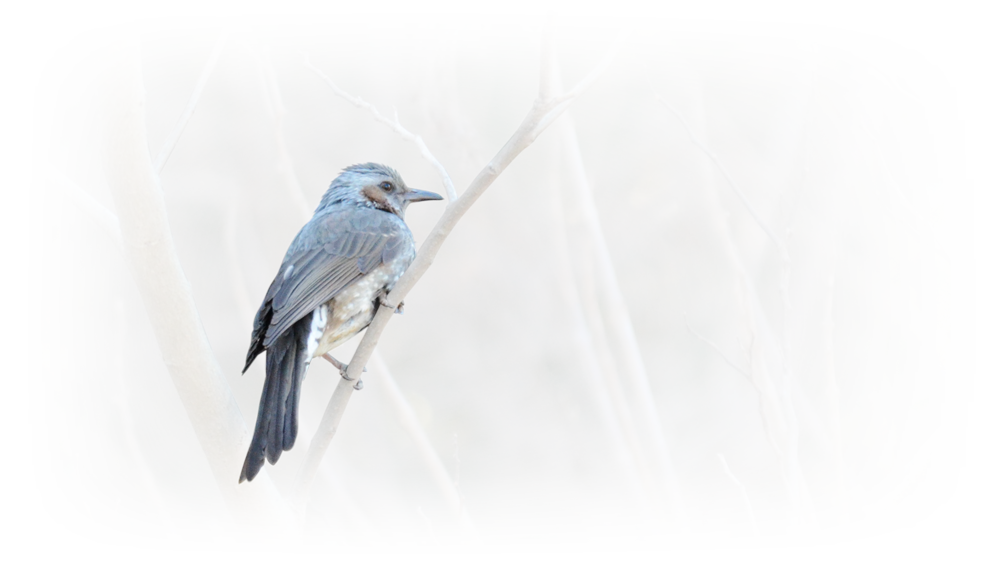
Hypsipetes amaurotis (Temminck, 1830)
時代を越えて響く「ヒーヨ」の声
The Brown-eared Bulbul: Its “Hīyo” Call Across the Agesan Environments
全長約27cm。全身が灰褐色で頬に赤褐色のチークのような紋が入り、頭頂部の羽毛がやや逆立っているのが特徴です。日本、朝鮮半島、中国東部、台湾など東アジアに広く分布し、日本では北海道から沖縄まで多くの地域で一年を通して観察されます。およそ8つの亜種に分類され、グロージャーの法則に従い、北に位置する個体ほど体色が薄くなる傾向が見られます。
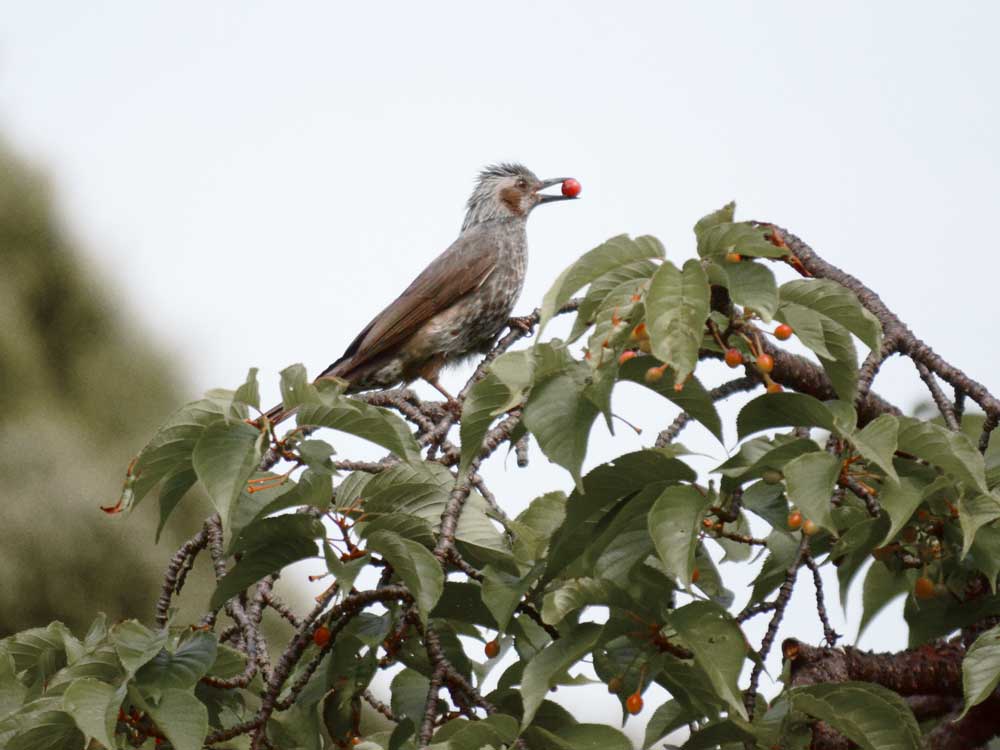
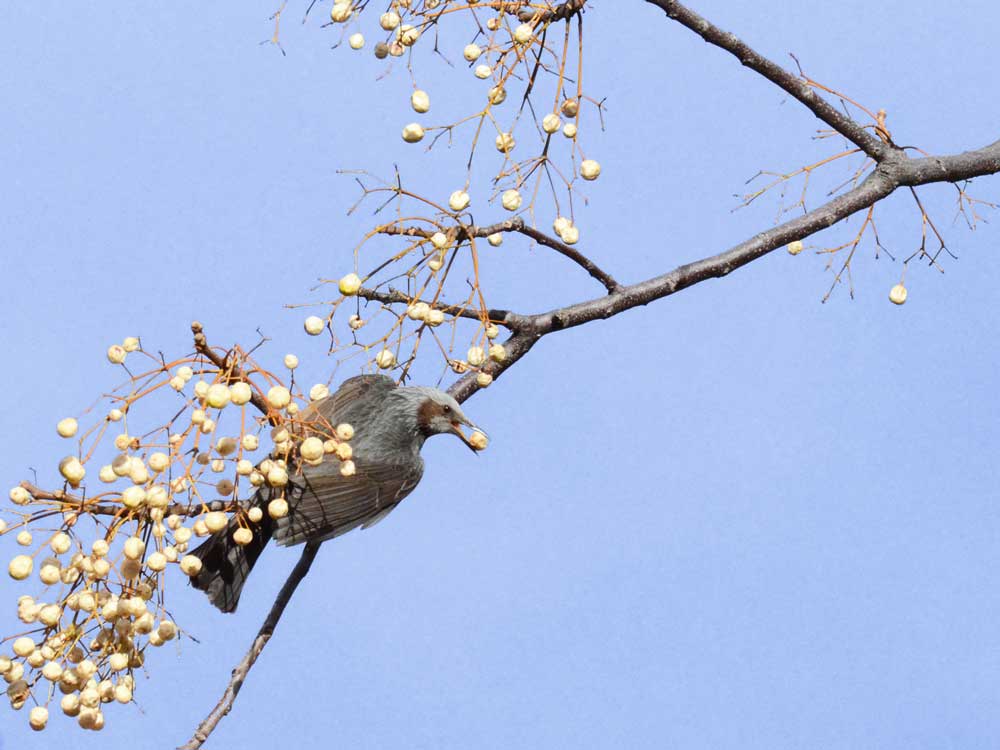
市街地の公園や住宅地の庭木、里山の林縁など幅広い環境に適応する身近な野鳥で、その名の通り「ヒヨ、ヒーヨ」と甲高い声で鳴きながら活動します。雑食性で昆虫類も捕食しますが、特に果実や花蜜を好み、サクラやツバキ、カキ、ピラカンサなど多様な植物資源を利用します。こうした採食行動を通じて花粉の運搬や種子散布に関与する一方、果樹や葉物野菜を食害することもあり、農業上は主要な加害種の一つとして対策が講じられています。
近年は個体数の増加と分布の拡大が指摘されており、全国規模の鳥類調査でも多くの調査地点で記録される出現頻度の高い種とされています。観察頻度は極めて高く、調査によっては日本で最も多く観察される鳥として挙げられることもあります。かつては本州中部以北を中心に渡りを行う個体群が多く、秋から冬にかけて大陸側から飛来する印象の強い鳥でしたが、都市化や気候の変化に伴い、現在では年間を通して同一地域にとどまる留鳥的な個体が増えています。渡りの際には数十羽から数百羽の群れを形成し、海峡や山地を越えて移動する様子が観察されることもあり、小鳥ながら比較的大胆な移動能力を持つことが知られています。
古くから人との関わりも深く、平安時代には飼育されて鳴き声の優劣を競う「鵯合わせ」が行われていました。詩人三好達治は「鵯(ひよどり)の 来るも 去るも あはれかな」と詠み、晩秋から冬にかけて群れで飛来し、また去っていくヒヨドリの姿に、季節の移ろいと一時的な賑わいへの感慨を重ねています。当時は現在よりも渡りを行う個体群の印象が強く、秋冬の到来を告げる鳥として認識されていました。
また「鵯越(ひよどりごえ)」は、現在の神戸市にある急峻な山地の地名で、源平合戦において源義経がこの断崖を騎馬で駆け下り奇襲を行ったという逸話で知られています。この名称は、ヒヨドリが秋から冬にかけて群れをなして海峡や山地を越えて移動する際、急な斜面や尾根を越えて飛ぶ様子になぞらえたものとされ、当時の人々がその渡り行動を身近に観察していたことを示しています。
The Brown-eared Bulbul reaches about 27 cm in length. It is characterized by its overall grayish-brown plumage, a reddish-brown cheek patch resembling a blush, and slightly raised feathers on the crown. It is widely distributed across East Asia, including Japan, the Korean Peninsula, eastern China, and Taiwan. In Japan, it can be observed year-round in many regions from Hokkaido to Okinawa. The species is divided into approximately eight subspecies, showing regional variation in size and coloration, with northern populations tending to be paler in accordance with Gloger’s rule.
It is a familiar bird that adapts well to a wide range of environments, including urban parks, residential gardens, and the edges of secondary forests. True to its name, it is often heard giving high-pitched calls such as “hiyo, hiyo” as it moves about. Although omnivorous and feeding on insects, it shows a strong preference for fruits and nectar, utilizing a variety of plant resources such as cherry blossoms, camellias, persimmons, and pyracantha. Through these feeding habits, it plays a role in pollination and seed dispersal, while at the same time it may cause damage to fruit trees and leafy vegetables, making it one of the major agricultural pest species.
In recent years, increases in population size and expansion of its range have been noted, and it is regarded as a species frequently recorded at many survey sites across Japan. Its observation frequency is extremely high, and in some surveys it is even cited as the most commonly observed bird in the country. Although many populations, especially in northern Honshu, were once migratory and strongly associated with seasonal movements from the continent in autumn and winter, more individuals now remain in the same area throughout the year. During migration, flocks ranging from several dozen to several hundred birds may form, and they are known to cross straits and mountainous areas, demonstrating relatively bold movement for a bird of its size.
This species has long been associated with people. In the Heian period, it was kept as a cage bird, and contests known as “Hiyodori-awase” were held to compare their calls. The poet Tatsuo Miyoshi wrote, “The bulbul comes and goes—how moving it is,” expressing a sense of seasonal change and fleeting liveliness brought by the bird’s arrival and departure in late autumn and winter. At that time, migratory populations were more prominent, and the species was recognized as a bird that heralded the arrival of the colder seasons.
The place name “Hiyodori-goe,” located in present-day Kobe, refers to a steep mountainous area and is known from an episode in the Genpei War in which Minamoto no Yoshitsune is said to have led a surprise attack by descending a cliff on horseback. The name is believed to derive from the bulbul’s habit of moving in flocks across straits and mountainous terrain in autumn and winter, reflecting how people in the past closely observed its migratory behavior.
参考文献
山口 恭弘(2005年11月15日)「ヒヨドリ」Bird Research News Vol.2 No.11, 認定NPO法人バードリサーチ 2026年5月3日閲覧
CANON Global | Bird Branch Project | 野鳥写真図鑑 | ヒヨドリ 2026年5月3日閲覧
長野県地球温暖化防止活動推進センター | ブログ | 身近な鳥1ヒヨドリ(鵯)| (2019年2月8日) 2026年5月3日閲覧
農林水産省 | 農作物被害状況 | 全国の野生鳥獣による農作物被害状況について(令和6年度) 2026年5月3日閲覧
エコ〜るど京大 | 【京大!バイオスクープ file 20】8月の野鳥 ヒヨドリ | (2023年8月14日) 2026年5月3日閲覧
環境省「全国鳥類繁殖分布調査報告」( 2016-2021年), p.100, p153 2026年5月3日閲覧
サライ,jp | 趣味・教養 | 都心でも年中見られる「ヒヨドリ」3つの特徴【ベランダ野鳥観察のすすめ】| (2018年3月16日) 2026年5月3日閲覧
NIKKEIリスキング | 実は日本近辺にしかいない ヒヨドリの不思議 | (2013年10月5日) 2026年5月3日閲覧
バードリサーチニュース | 第8回インターネット・バードソン 3,293カ所で295種を観察コガモとホシハジロは緯度・経度に比例してオスが多くなる | 神山 和夫 (2023年3月27日) 2026年5月3日閲覧