
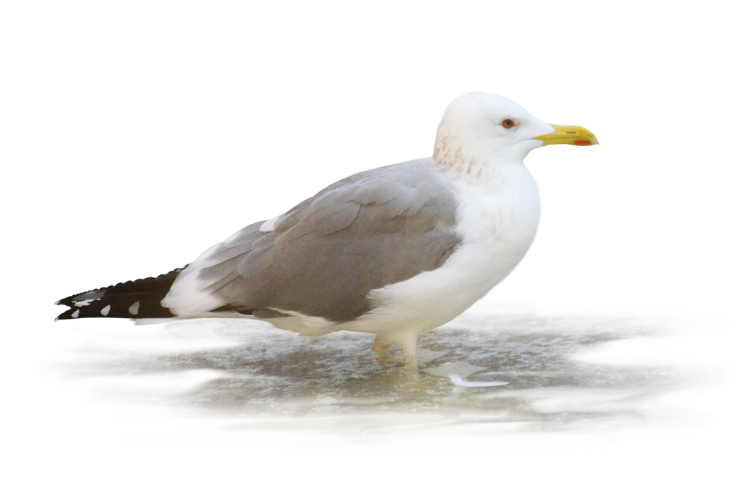
Larus (vegae) mongolicus (Sushkin, 1925)
モンゴルの湖から黄海へ渡る大型カモメ
The Large Gull Migrating from Mongolian Lakes to the Yellow Sea
体長約56〜68cmになる大型のカモメです。主な繁殖地はモンゴル北部やバイカル湖周辺、アルタイ山脈付近の湖沼地帯で、内陸の湖や島状の湿地に集団で営巣します。冬になると南東方向へ渡り、中国東部の沿岸部や黄海沿岸、朝鮮半島などで越冬します。近年の衛星追跡研究によると、モンゴルの繁殖地から黄海沿岸の越冬地まで平均約2000〜2400kmを移動することが確認されており、長距離を渡る渡り鳥であることが明らかになっています。
成鳥は頭部と体下面が白く、背と翼上面は淡い灰色をしています。翼の先端には黒色部があり、その中に「ミラー」と呼ばれる白い斑が見られます。嘴は黄色で下嘴に赤斑があり、脚は淡いピンク色を帯びます。若鳥は全身に褐色の斑が多い羽衣をしており、完全な成鳥羽になるまで通常4年ほどかかります。生息環境は内陸の湖沼から海岸、河口、干潟、港湾まで幅広く、魚類や無脊椎動物、小型動物のほか、人間の廃棄物なども利用する雑食性の鳥です。
本種はセグロカモメ類と呼ばれる大型白頭カモメの仲間に含まれます。これらのカモメは外見が非常によく似ているため分類が難しく、モンゴルセグロカモメもかつてはセグロカモメの亜種として扱われたことがありました。現在は独立種とする見解が多いものの、近縁種との関係については今も研究が続けられています。
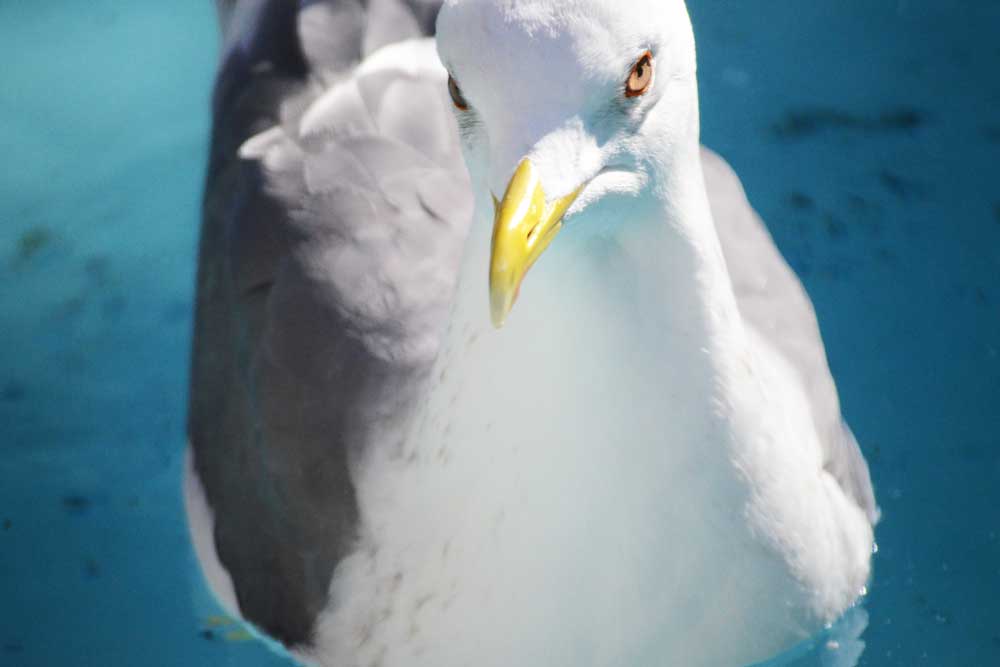
The Mongolian Gull is a large gull measuring about 56–68 cm in length. Its main breeding range lies in northern Mongolia, around Lake Baikal and the Altai region, where it nests colonially on inland lakes and islands in wetlands. In winter it migrates southeastward and spends the non-breeding season along the coasts of eastern China, the Yellow Sea, and the Korean Peninsula. Recent satellite-tracking studies have shown that individuals travel roughly 2,000–2,400 km between breeding and wintering grounds, demonstrating that this species undertakes long-distance seasonal migrations.
Adults have a white head and underparts with a pale gray mantle and upperwings. The wingtips are black and contain white spots known as “mirrors.” The bill is yellow with a red spot on the lower mandible, and the legs are pale pink. Juvenile birds show heavily mottled brown plumage and require about four years to acquire full adult plumage. The species occupies a wide variety of habitats ranging from inland lakes to coastal shores, estuaries, tidal flats, and harbors. It is an opportunistic feeder, taking fish, invertebrates, small animals, and sometimes human refuse.
This gull belongs to the group of large white-headed gulls closely related to the Vega Gull and other northern gull species. Because members of this group are very similar in appearance, their classification has long been debated. The Mongolian Gull was formerly treated as a subspecies of the Vega Gull, but many modern authorities recognize it as a distinct species, although its exact relationships with other large gulls continue to be studied.
参考文献
Olsen, K. M., & Larsson, H. (2004). Gulls of Europe, Asia and North America. 2026年4月19日閲覧
ミツユビカモメと仲間たち | モンゴルセグロカモメ Mongolian Gull 2026年4月19日閲覧