
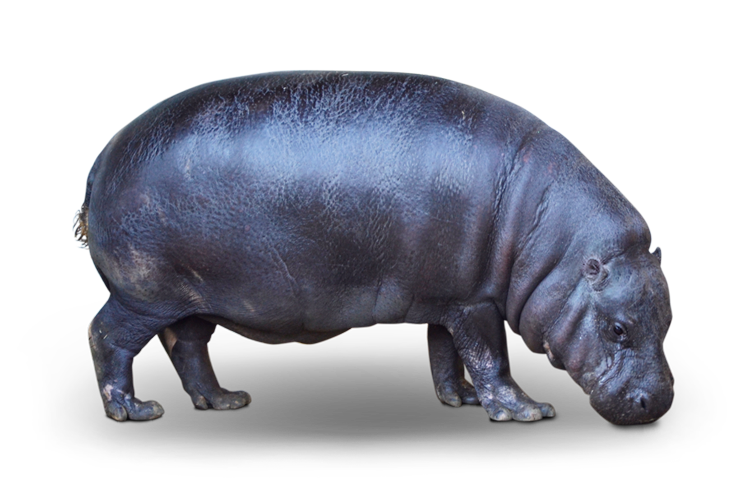
Choeropsis liberiensis (Morton, 1849)
森に生きる幻のカバ
The Elusive Hippopotamus of the Forest
西アフリカの熱帯雨林に生息するカバの仲間で、ギニア、コートジボワール、シエラレオネ、リベリアなど、ギニア湾沿岸地域に分布しています。体長150〜175cm、肩高75〜100cm、体重180〜275kg。大型のカバに比べるとかなり小型で、現生するカバ科では最小種です。全身は黒褐色から灰褐色で、皮膚は乾燥に弱いため、水辺や湿った森林環境を好みます。丸みを帯びた頭部や細めの四肢など、カバ科の中でも祖先的特徴を残した種と考えられています。また、目や鼻孔が大型のカバほど頭頂部に突出しておらず、より陸上生活に適応した形態を持っています。
19世紀にはすでにその存在が現地から報告されていましたが、ヨーロッパの学者たちは長らく「奇形のカバ」だと考え、小型のカバが存在することを認めていませんでした。しかし20世紀初頭に生体の捕獲と飼育に成功したことで、独立した種として広く知られるようになりました。現在では動物園でも人気の高い動物ですが、野生では非常に警戒心が強く、人前に姿を現すことは稀です。
大型のカバが群れで河川に集まるのに対し、コビトカバは単独性が強く、昼間は水辺や茂みで休み、夜になると森の中を歩き回って採食します。大型のカバほど水中生活に依存しておらず、森林内で過ごす時間が長いことも特徴です。食性は植物食で、草、シダ類、地下茎、木の葉、落果などを食べます。また森林内には同じ経路を繰り返し通った「獣道」を作る習性があります。寿命は野生で15〜20年ほどですが、飼育下では40年以上生きる例もあり、50年を超えた記録も存在します。
森林伐採や農地開発、密猟などによって生息地は減少しており、現在は絶滅危惧種として保護の対象となっています。野生個体数は約2000〜2500頭と推定され、特に内戦の続いた地域では生息状況の調査自体が困難とされています。大型のカバほど攻撃的ではないとされますが、鋭い犬歯を持ち、追い詰められると激しく反撃することもあります。
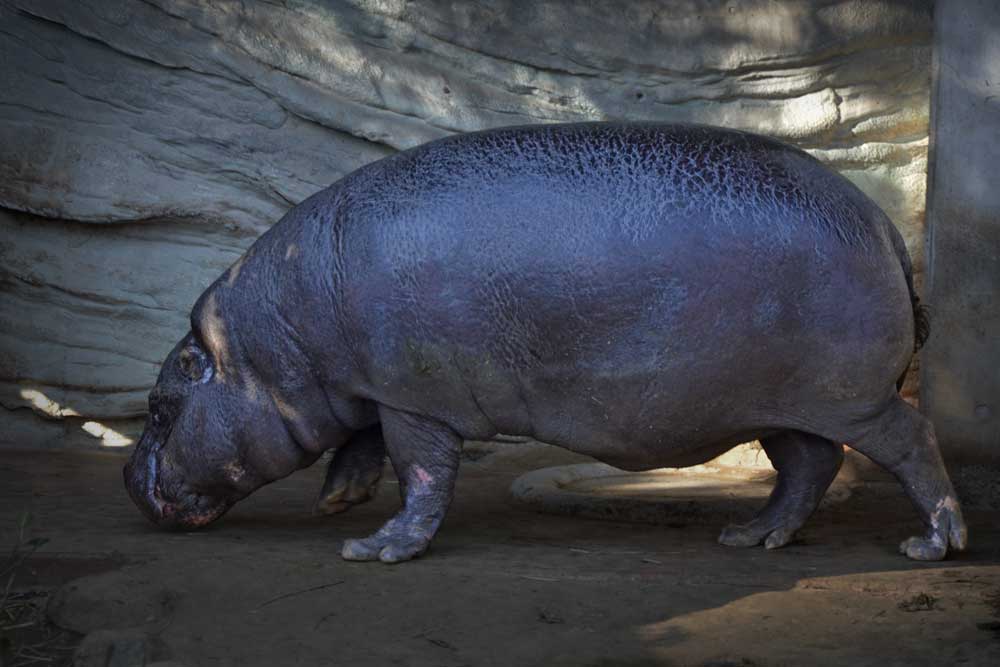
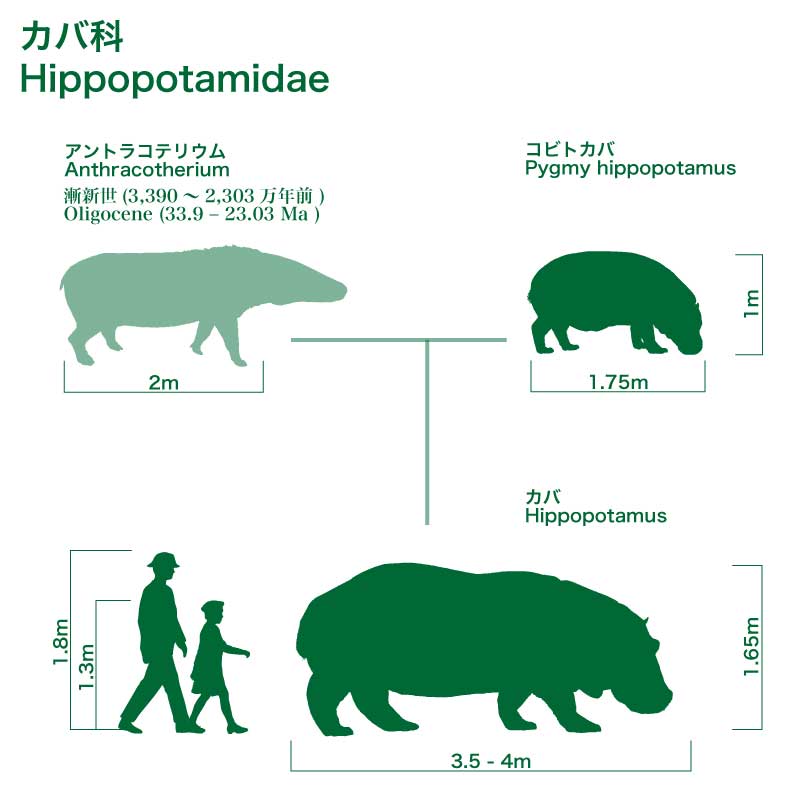
The pygmy hippopotamus is a small member of the hippopotamus family inhabiting the tropical rainforests of West Africa, including Guinea, Côte d’Ivoire, Sierra Leone, and Liberia along the Gulf of Guinea. It measures 150–175 cm in body length, stands 75–100 cm at the shoulder, and weighs 180–275 kg. Much smaller than the common hippopotamus, it is the smallest living species in the hippopotamus family. Its body is dark brown to grayish-brown, and because its skin is vulnerable to drying out, it prefers humid forests and waterside habitats. Its rounded head and relatively slender limbs are considered to retain ancestral characteristics of early hippopotamids. In addition, its eyes and nostrils are less elevated than those of the common hippopotamus, reflecting a stronger adaptation to life on land.
Although its existence had been reported locally since the 19th century, many European scholars long dismissed it as merely a deformed hippopotamus and did not recognize it as a distinct small species. It was only after live individuals were captured and kept in the early 20th century that the species became widely accepted. Today, the pygmy hippopotamus is a popular zoo animal, but in the wild it is extremely secretive and rarely seen by humans.
Unlike the common hippopotamus, which gathers in groups along rivers, the pygmy hippopotamus is largely solitary. During the day it rests near water or in dense vegetation, and at night it wanders through the forest in search of food. It depends less on aquatic environments than the larger hippopotamus and spends much of its time on land. Herbivorous in diet, it feeds on grasses, ferns, roots, leaves, and fallen fruits. It is also known for creating forest trails by repeatedly following the same routes. Lifespan in the wild is estimated at around 15–20 years, while individuals in captivity may live over 40 years, with some records exceeding 50 years.
Habitat destruction caused by logging, agricultural expansion, and poaching has led to a decline in wild populations, and the species is now considered endangered. The total population is estimated at only 2,000–2,500 individuals, and in regions affected by civil conflict, even basic field surveys remain difficult. Although generally regarded as less aggressive than the common hippopotamus, it possesses sharp canine teeth and can fiercely defend itself when cornered.
参考文献
Elephant Talk | ペットコラム | No.171 コビトカバ – おもしろ哺乳動物大百科 116 偶蹄目(クジラ偶蹄目)カバ科 | 2015年9月1日 2024年8月31日閲覧
ウォーカーズプラス | 謎に包まれたミニカバの生態に迫る。野生でほとんど出会えず、むしろ動物園でしか会えないかも?【会えなくなるかもしれない生き物図鑑】 | 2022年6月30日 2024年8月31日閲覧
Pygmy Hippopotamus Choeropsis liberiensis Morton, 1844. INTERNATIONAL STUDBOOK for the year 2012. BASEL ZOO 2024年8月31日閲覧