
Treron sieboldii (Temminck, 1835)
森と海に現れる不思議なハト
The White-bellied Green Pigeon Between Forest and Sea
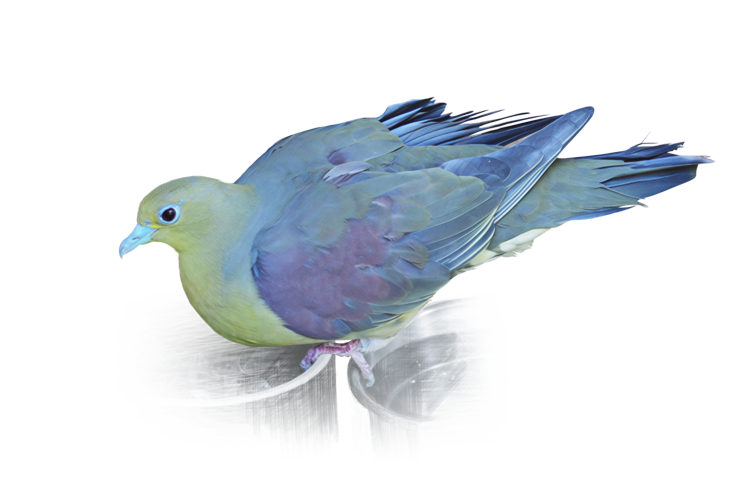
全長は約33cm。全身は黄緑色を基調とした柔らかな羽色を持ち、森林の葉陰に溶け込むような保護色となっています。雄は肩羽に赤紫色の帯があり、雌は全体的に緑色が強いのが特徴です。嘴は淡青色、脚は赤みを帯びており、一般的な灰色のハト類とは大きく異なる印象を与えます。
東アジアに分布し、日本では北海道から九州まで広く見られます。主に平地から山地の落葉広葉樹林や照葉樹林に生息し、特に果実の豊富な森林を好みます。留鳥または漂鳥として扱われますが、寒冷地の個体は冬季に暖地へ移動することもあります。森林性が強いため都市部ではあまり目立たず、静かな山林で「アーーアオーアオー」と、低く響く特徴的な声を聞くことができます。
主な食物は木の実や果実で、ヤマザクラ、エノキ、ムクノキ、ドングリなどの実を好みます。枝先に止まりながら果実を丸呑みにし、消化されなかった種子を別の場所へ運ぶため、森林の種子散布者としても重要な役割を担っています。季節によって採食する植物は変化し、繁殖期である初夏には若葉や芽を食べることもあります。巣は樹上の枝に小枝を組んだ簡素な皿形で、通常2個の卵を産み、雌雄が交代で抱卵と育雛を行います。雛には親鳥が「ピジョンミルク」と呼ばれる栄養豊富な分泌物を与えることも、ハト類に共通する特徴です。
本種を語る上で特に有名なのが、海岸へ飛来して海水を飲む行動です。神奈川県の照ヶ崎海岸をはじめ、各地の岩礁海岸では、多数のアオバトが群れで波打ち際へ降り立つ姿が観察されます。海水を飲む理由には、果実中心の食生活で不足しがちな塩分やミネラルの補給が関係すると考えられています。海岸では波に攫われたり、ハヤブサなどの猛禽類に襲われたりする危険もあり、群れが一斉に飛び立つ場面は迫力があります。
古くから日本人は、山の緑に溶け込む本種を静かな森の鳥として親しんできました。和名の「アオバト」は、その緑色の体色をそのまま表した名前です。一方、学名の Treron sieboldii のうち属名 Treron はギリシャ語で「ハト」を意味し、種小名 sieboldii は日本研究で知られるドイツ人博物学者フランツ・フォン・シーボルトに献名されています。
The White-bellied Green Pigeon is a medium-sized pigeon measuring about 33 cm in total length. Its body is covered in soft yellowish-green plumage that serves as camouflage among forest foliage. Males have a distinctive purplish-red patch on the shoulders, while females are generally greener overall. The bill is pale bluish and the legs are reddish, giving the species a very different appearance from the typical gray pigeons familiar to many people.
This species is distributed throughout East Asia and is widely found in Japan from Hokkaido to Kyushu. It inhabits deciduous broadleaf forests and evergreen forests from lowlands to mountainous areas, especially forests rich in fruit-bearing trees. Although generally regarded as resident or partially migratory, birds from colder regions may move southward during winter. Because it is strongly associated with forests, it is seldom conspicuous in urban areas. In quiet woodlands, its low, drawn-out call—often rendered as “Aoo… Aoo…”—can frequently be heard echoing through the trees.
Its diet mainly consists of fruits and seeds, including those of wild cherry, hackberry, muku tree, and oaks. Perching on branches, it swallows fruits whole and later disperses undigested seeds elsewhere, playing an important ecological role as a seed disperser in forests. Seasonal changes in diet are also observed, and during the breeding season in early summer it may feed on young leaves and buds. The nest is a simple platform of twigs built on tree branches. Usually two eggs are laid, and both parents share incubation and chick-rearing duties. Like other pigeons, the adults feed their chicks with a nutrient-rich secretion known as “pigeon milk.”
One of the most famous behaviors of this species is its habit of visiting rocky seashores to drink seawater. At places such as Terugasaki Coast in Kanagawa Prefecture, large flocks can be seen gathering at the water’s edge. This behavior is thought to help supplement salt and minerals lacking in their fruit-based diet. However, the birds face dangers at the shore, including strong waves and attacks by raptors such as peregrine falcons. The sight of an entire flock suddenly taking flight is especially dramatic.
For centuries, the White-bellied Green Pigeon has been regarded as a quiet bird of the forest in Japanese culture. Its Japanese name, “Aobato,” simply refers to its green coloration. The scientific name Treron sieboldii derives from the Greek Treron, meaning “pigeon,” while the species name sieboldii honors the German physician and naturalist Philipp Franz von Siebold, who is well known for his studies of Japan.
参考文献
こまたん | アオバト 2026年5月16日閲覧
アオバトの谷PROJECT | おいでよアオバトの谷 群馬県上野村アオバトガイドツアー | アオバトの基本的な生態についてご紹介。オスメスの見分け方や鳴き声など。| (2021年3月19日) 2026年5月16日閲覧
『アオバトのくらし』(2029年) 神奈川県立生命の星・地球博物館 2026年5月16日閲覧
有隣堂 | Web版 有鄰 第564号「アオバトのふしぎ」 加藤ゆき 2026年5月16日閲覧
「アオバト」Bird Research News Vol.8 No.9 (2011年9月28日) 2026年5月16日閲覧