
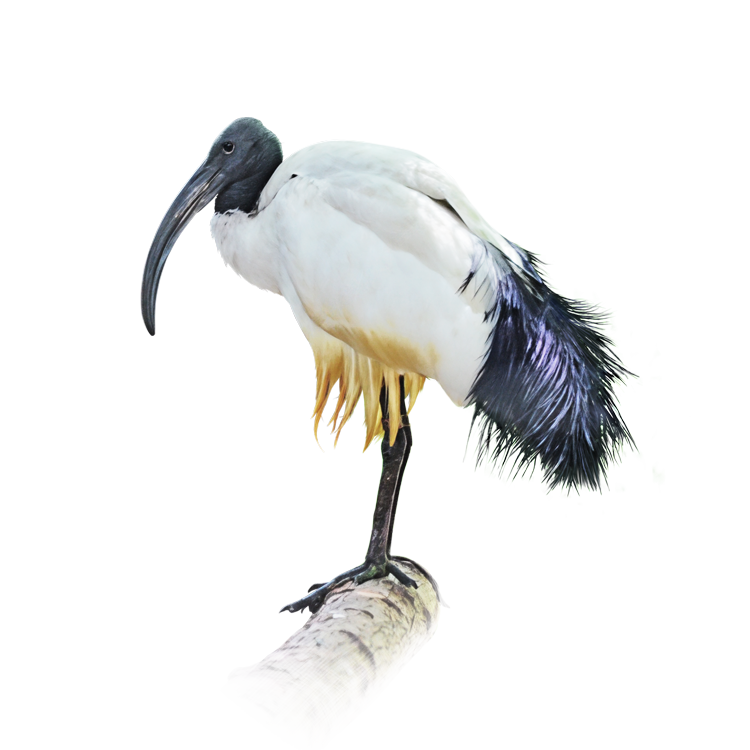
Threskiornis aethiopicus (Latham, 1790)
数百万羽ものミイラを残した聖なる鳥
The Sacred Bird Behind Millions of Mummies
全長は約65〜90cm、翼開長は110〜125cmほどに達します。全身は白色を基調とし、顔から喉にかけて羽毛のない黒い皮膚が露出しています。嘴は細長く下方へ湾曲し、脚も黒色です。飛翔時には風切羽や尾羽の黒色部分がよく目立ち、白い体との鮮やかな対比を見せます。サハラ砂漠以南のアフリカに広く分布し、特に東アフリカや南部アフリカの湖沼地帯、湿原、河川流域で多く見られます。湿地、氾濫原、干潟、農耕地など多様な環境に適応し、人間の生活圏にも進出しています。
主に浅瀬を歩きながら採食し、長い嘴を泥や水中に差し込んで獲物を探します。食性は幅広く、昆虫、甲殻類、貝類、魚類、両生類、小型爬虫類などを捕食します。腐肉や動物の死骸をついばむこともあり、都市部ではゴミ集積場や市場周辺に集まる姿も見られます。飛行時には首と脚をまっすぐ伸ばし、大きな群れで滑空する様子が観察されます。乾燥地帯では定住せず、降雨や水位変化に応じて広域を移動する遊動性の強い鳥です。
繁殖期には樹上や水辺の小島などに集団営巣地(コロニー)を形成します。枝を組んだ皿状の巣を作り、通常2〜4個の卵を産みます。雌雄が協力して抱卵や育雛を行い、雛は灰色の綿羽に覆われて成長します。降雨量や湿地環境の変化に応じて繁殖時期を変えることもあり、アフリカの不安定な自然環境に柔軟に適応しています。
本種は古代エジプト文明との関わりでも特に有名です。古代エジプトでは知恵と学問を司る神「トト」の化身と考えられ、神聖な鳥として崇拝されました。祈りや供物として大量の個体が神殿へ捧げられた結果、エジプト各地の遺跡からは数百万羽規模ともされるミイラが発見されています。この膨大な数から、かつては大規模に繁殖されていたとも考えられていました。しかし近年のDNA解析では、ミイラ個体の遺伝的多様性が高いことが判明し、完全飼育ではなく、野生個体を大量捕獲して一時的に飼育し、神殿へ供給していた可能性が高いと考えられるようになりました。当時のナイル川流域には広大な湿地が広がっていましたが、その後の環境変化により、現在のエジプトでは野生個体はほとんど見られなくなっています。
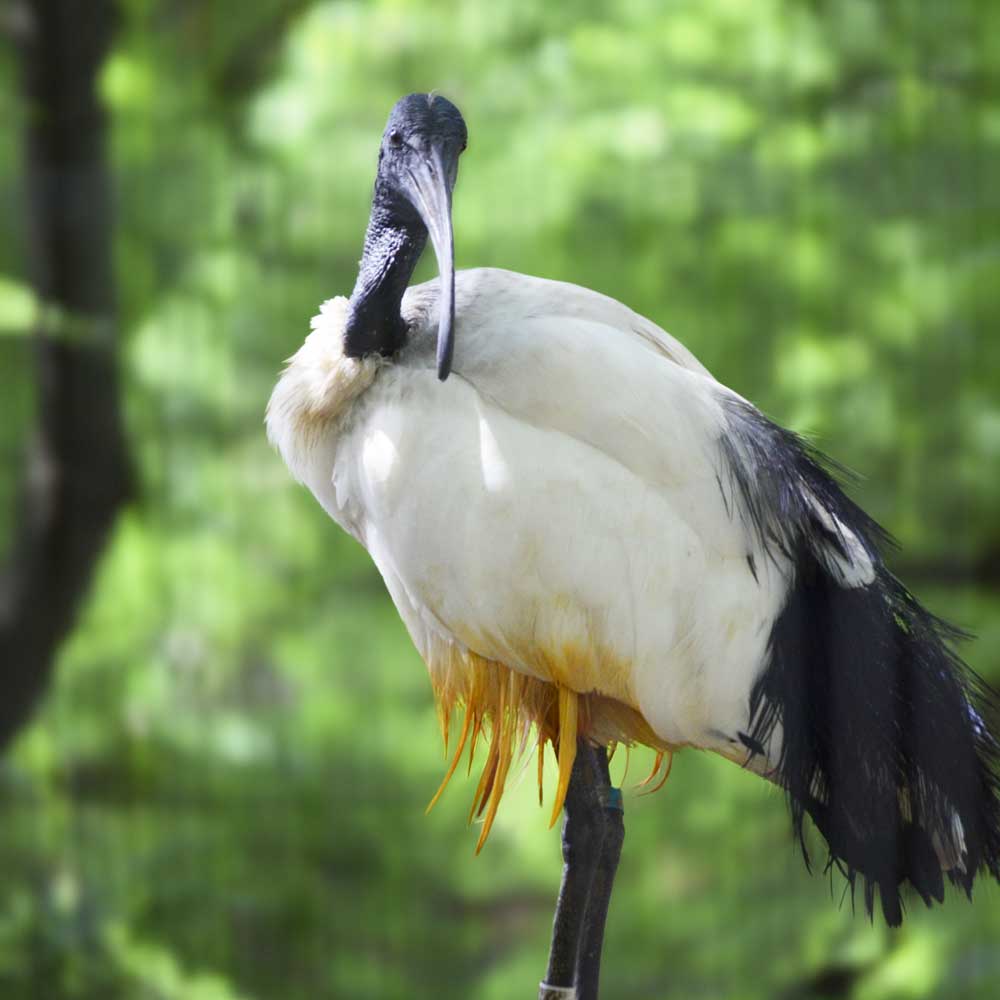
Large numbers of African sacred ibises were captured in ancient Egypt and supplied to temples.
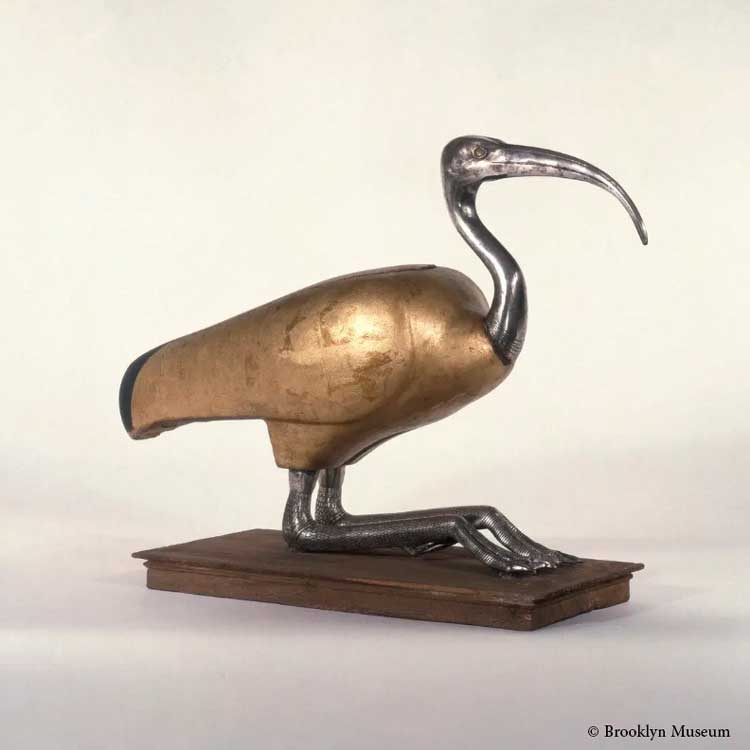
An ibis coffin in the collection of the Brooklyn Museum. Inside rests a mummified ibis.
The African Sacred Ibis is a large wading bird reaching 65–90 cm in total length, with a wingspan of approximately 110–125 cm. Its body is predominantly white, contrasting sharply with the featherless black skin covering the face and throat. The long bill curves downward, and the legs are also black. In flight, the black flight feathers and tail stand out clearly against the white body. The species is widely distributed across sub-Saharan Africa, especially around lakes, wetlands, and river systems in eastern and southern Africa. It inhabits a variety of environments including marshes, floodplains, tidal flats, and farmland, and readily adapts to areas influenced by human activity.
The bird typically forages while walking slowly through shallow water, probing mud and water with its long bill. Its diet is highly varied and includes insects, crustaceans, mollusks, fish, amphibians, and small reptiles. It also scavenges carrion and food waste, and in urban areas it may gather around garbage dumps and markets. During flight, it extends both neck and legs straight, often gliding in large flocks. In arid regions, it does not remain permanently in one area but moves widely in response to rainfall and changing water levels.
During the breeding season, colonies are formed in trees or on small islands near water. The nest is a shallow platform made of sticks, and usually two to four eggs are laid. Both parents share incubation and chick rearing duties, while the chicks grow covered in gray down. Breeding timing may shift according to rainfall and wetland conditions, reflecting the species’ flexibility in adapting to Africa’s unstable environments.
The species is especially famous for its close association with ancient Egyptian civilization. In ancient Egypt, it was regarded as the earthly form of Thoth, the god of wisdom and learning, and was worshipped as a sacred bird. Vast numbers were offered to temples as prayers and votive offerings, and archaeological sites across Egypt have yielded millions of mummified ibises. Because of this enormous number, scholars once believed the birds had been mass-bred in captivity. However, recent DNA studies revealed relatively high genetic diversity among the mummified individuals, suggesting that ancient Egyptians likely captured large numbers of wild birds seasonally and kept them temporarily before supplying them to temples. Although the Nile Valley once supported extensive wetlands where the species was common, environmental changes over time have caused the bird to nearly disappear from modern Egypt.
参考文献
“African Sacred Ibis” Muséum national d’Histoire naturelle. 2026年5月16日閲覧
“Sacred Ibis” Oakland Zoo. 2026年5月16日閲覧
“Threskiornis aethiopicus” Animal Diversity Web. 2026年5月16日閲覧
西日本新聞 | 【古代エジプト展】(下)神の化身を納めた壺 | 福薗美由紀・福岡市博物館学芸員 | (2022年4月8日) 2026年5月16日閲覧
“Ibis Coffin (Thoth)” Brooklyn Museum. 2026年5月17日閲覧