
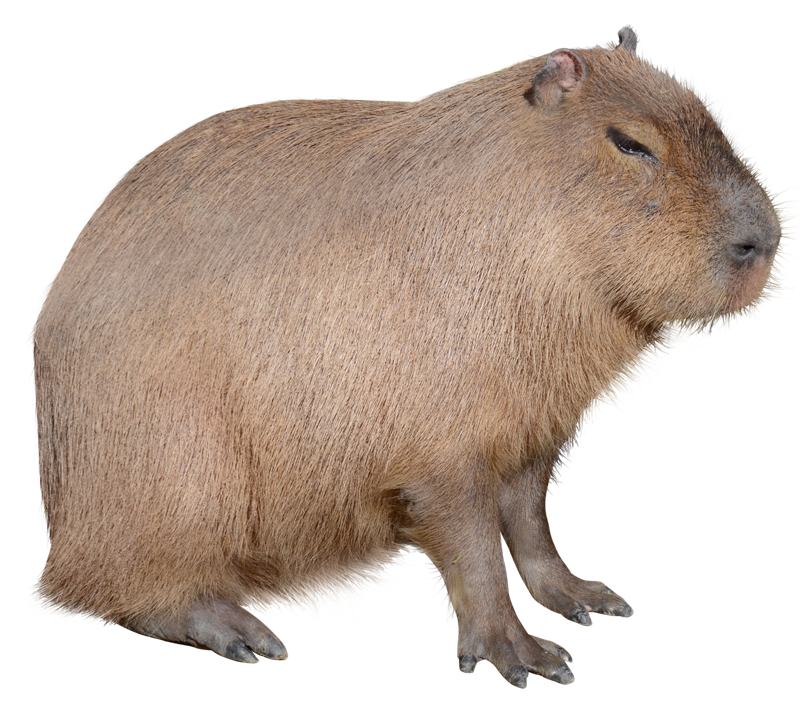
Hydrochoerus hydrochaeris (Linnaeus 1766)
カピバラを阻むアンデスの壁
The Andes: A Barrier to Capybaras
カピバラは、現生するげっ歯類の中で最大の種であり、体長約100〜130cm、体重は50kgを超えることもある半水生哺乳類です。丸みを帯びた体と短い四肢をもち、目・耳・鼻が頭の上部に集中して配置されているため、水面にわずかに顔を出したまま周囲を警戒することができます。指の間には水かきが発達し、泳ぎや潜水に優れています。体毛は粗くまばらで乾きやすく、水辺生活への適応が顕著です。オスの成体では目と鼻の間に「モリージョ(morrillo)」と呼ばれるコブ状の臭腺があり、分泌物を用いて縄張りや個体の存在を示します。
カピバラを含むテンジクネズミ類は、約4000万年前に南米へ到達したげっ歯類を祖先とし、大陸の隔離環境の中で独自に進化しました。その過程で大型化した系統も現れ、カピバラはその流れを受け継ぐ動物です。約300万年前のアメリカ大陸間大交差により、ジャガーやピューマなどの捕食者が加わると、生存環境は大きく変化しました。このような捕食圧のもとで、体の大きさや群れでの生活、水辺への適応といった特徴が有利に働いたと考えられます。
分布はパナマ南部からアルゼンチン北部、ウルグアイにかけての南米の広い範囲に及び、特にアマゾン川やラプラタ川流域の湿地や河川周辺に多く見られます。一方でチリには自然分布していません。その主因はアンデス山脈という高大な地形による地理的障壁と、その西側に広がる乾燥・冷涼な環境にあります。水辺に強く依存する本種にとって、これらの条件は生息に適さず、この二重の制約が分布をアンデス山脈の東側に限定しています。
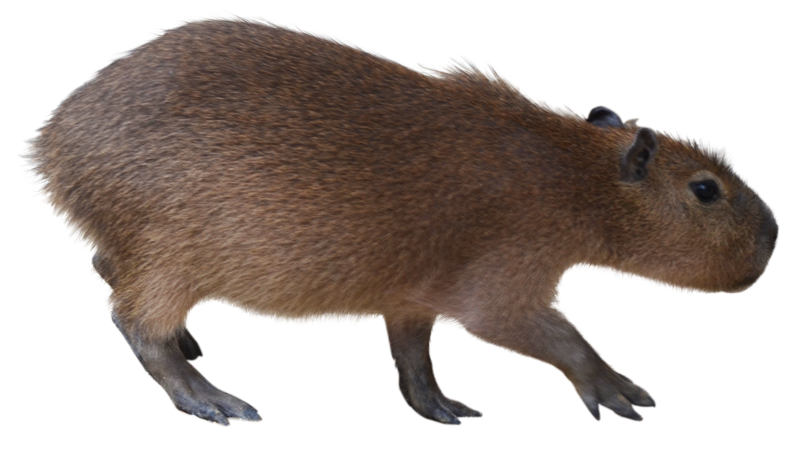
The capybara is the largest living rodent, reaching 100–130 cm in body length and sometimes exceeding 50 kg in weight. It is a semi-aquatic mammal with a rounded body and short limbs. Its eyes, ears, and nostrils are positioned high on the head, allowing it to remain mostly submerged while keeping watch above the water. Webbing between the toes aids in swimming and diving. Its coarse, sparse fur dries quickly, reflecting strong adaptation to a waterside lifestyle. Adult males possess a small raised structure between the eyes and nose called a “morrillo,” a scent gland used to mark territory and signal individual presence.
Caviomorph rodents, including the ancestors of the capybara, are thought to have originated from rodents that reached South America about 40 million years ago, likely by crossing the sea. Isolated on the continent, they diversified, and some lineages evolved large body sizes. The capybara belongs to this lineage. Around 3 million years ago, the Great American Biotic Interchange brought predators such as jaguars and pumas into South America, dramatically altering ecological conditions. Under such predation pressure, traits such as large body size, group living, and adaptation to aquatic environments likely conferred survival advantages.
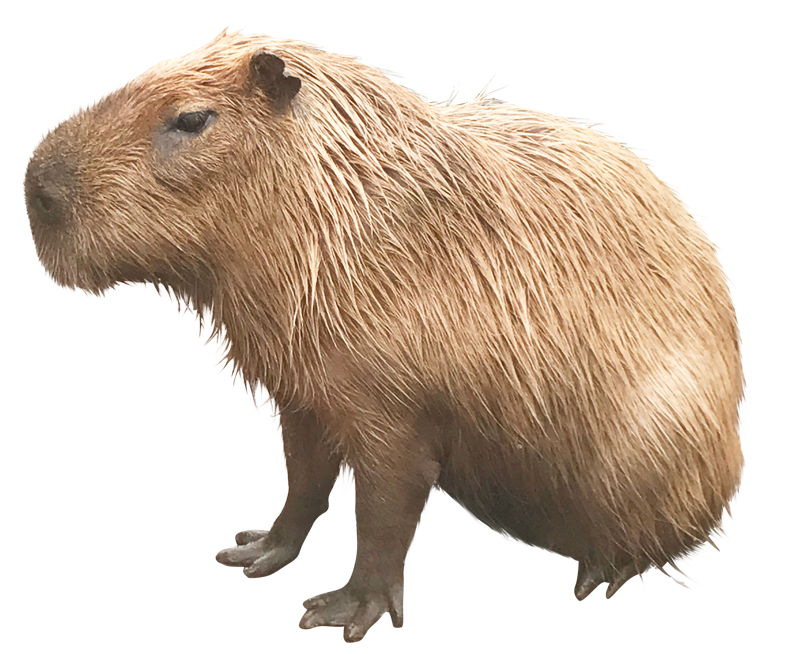
The species is widely distributed from southern Panama through much of South America to northern Argentina and Uruguay, particularly in wetlands and along river systems such as the Amazon and La Plata basins. However, it does not naturally occur in Chile. This is mainly due to the Andes Mountains, which act as a major geographic barrier, as well as the dry and cooler environments to the west. Because the capybara depends heavily on water, these conditions are unsuitable, restricting its natural distribution to the eastern side of the Andes.
参考文献
高知県立のいち動物公園 | 出会える動物 | カピバラ 2024年9月14日閲覧
市川市動植物園 | 飼育日誌 | 飼育日誌(1月27日~2月10日)カピバラ | (2024年2月16日) 2024年9月14日閲覧
CLOTH APP MAGAZINE | カピパラの毛皮は、すぐ乾く。| (2019年6月17日) 2024年9月14日閲覧
CAPYBARA CAPYGON | カピバラとは 2026年4月26日閲覧
“Capybaras (Hydrochoerus spp.) Fact Sheet: Distribution & Habitat” San Diego Zoo Wildlife Alliance Library. 2026年4月26日閲覧
ナショナルジオグラフィック | ニュース | 最大のげっ歯類、カピバラに独自のがん免疫療法 | (2018年10月2日) 2026年4月26日閲覧