
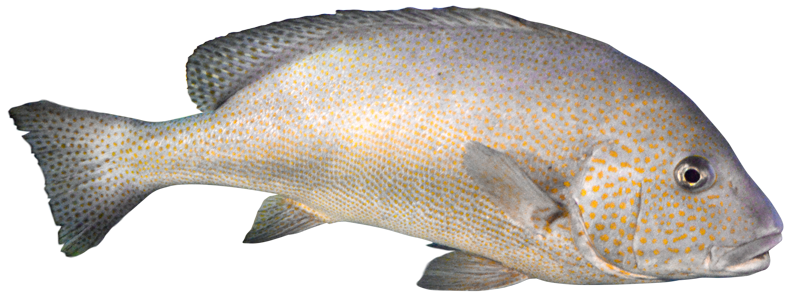
Diagramma pictum (Thunberg, 1792)
ウリ坊に似た幼魚の模様
Juvenile Patterns Resembling Wild Boar Piglets
コロダイはイサキ科に属する海水魚で、成魚は全長60cm前後、最大では1m近くに達します。インド洋から西太平洋の熱帯・亜熱帯域に広く分布し、日本では新潟県以南の日本海沿岸や茨城県以南の太平洋沿岸に見られます。浅い岩礁域やサンゴ礁周辺、砂礫底などに生息し、沿岸域を代表する大型魚のひとつです。
標準和名「コロダイ」は和歌山県での呼び名に由来するとされ、イノシシの子どもである“ウリ坊”を意味する方言「ころ」から名付けられたといわれています。幼魚の黄色と黒の縞模様がウリ坊の体色に似ていることが由来で、幼魚は細長い体をくねらせながら泳ぐ独特な姿を見せます。成長すると銀灰色の体に細かな黄色斑点が散る落ち着いた体色へ変化し、幼魚と成魚では印象が大きく異なります。
同じイサキ科のコショウダイとは姿や生息環境が似ていますが、コショウダイの成魚には体側に太い斜帯模様が入るため区別できます。どちらも食用魚として知られ、コロダイは白身で適度な弾力があり、脂の乗った味わいが特徴です。一方で個体によっては独特の磯の香りが感じられることもありますが、刺身や塩焼き、煮付けなど幅広い料理で利用される美味な魚です。
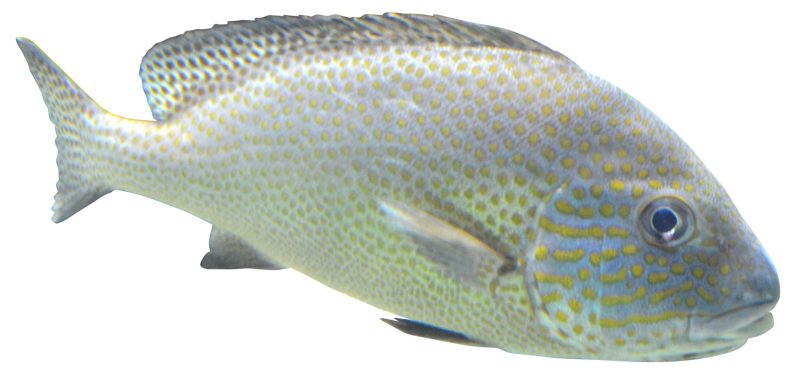
A relatively young individual showing the transition from juvenile stripes to the spotted pattern of adulthood.
Painted sweetlips are marine fish belonging to the family Haemulidae. Adults usually grow to around 60 cm in length, though some individuals can approach 1 meter. They are widely distributed throughout the tropical and subtropical waters of the Indo-West Pacific. In Japan, they occur along the coasts south of Niigata on the Sea of Japan side and south of Ibaraki on the Pacific side. They inhabit shallow rocky reefs, coral reefs, and sandy or gravel bottoms in coastal waters.
The Japanese name “Korodai” is said to originate from a dialect word used in Wakayama Prefecture, where young wild boars are called “koro.” The striped pattern of the juveniles resembles the markings of boar piglets, which inspired the name. Juveniles have elongated bodies and swim with a distinctive wriggling motion. As they mature, their appearance changes dramatically, developing a silvery-gray body covered with small yellow spots.
Painted sweetlips resemble the closely related blackspotted rubberlip, another member of the same family, but adult blackspotted rubberlips can be distinguished by their bold diagonal bands along the body. Both species are valued as food fish. Painted sweetlips have firm white flesh with a rich flavor, although some individuals may possess a characteristic ocean-like aroma. They are prepared in a variety of ways, including sashimi, grilled dishes, and simmered cuisine.
参考文献
新潟市水族館マリンピア日本海 | 生物図鑑 | コロダイ 2025年2月2日閲覧
サカナト | 記事 | コショウダイの仲間<コロダイ>の名前の由来や分類 <オシャレコショウダイ>との見分け方とは 2025年2月2日閲覧
魚と野菜のブログ | 魚介の雑学 | コロダイとコショウダイの違いと見分け方 | (2023年7月2日) 2025年2月2日閲覧
船橋市地方卸売市場 | 記事 | コロダイ~風味豊かで美味しい魚です~ | (2022年4月28日) 2025年2月2日閲覧