
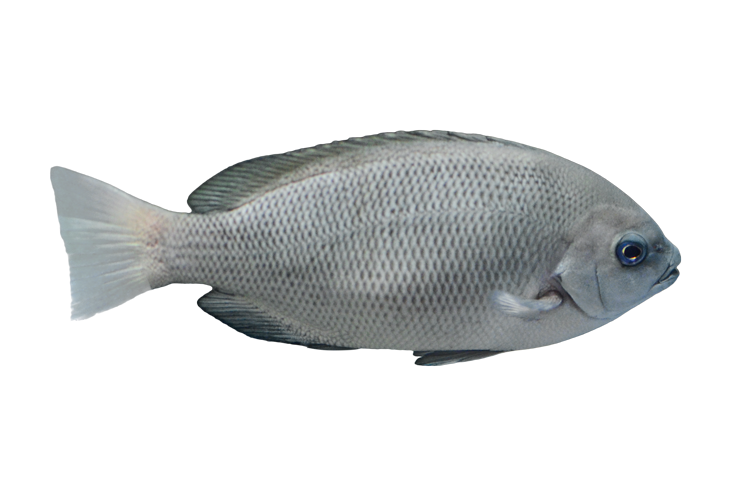
Girella punctata (Gray,1835)
さまざまな呼び名を持つ磯魚
A Rocky-Shore Fish with Many Names
日本各地の沿岸に広く分布し、岩礁域を主なすみかとするメジナ。全長50cmほどに達し、磯釣りを代表する魚のひとつです。釣り人には「グレ」や「クロ」、「クチブト」などの名で親しまれています。地域によって呼び名が異なり、関東では「メジナ」、関西や四国では「グレ」、九州では「クロ」と呼ばれることが多く、さらに各地にさまざまな地方名が残されています。「メジナ」の語源には、目が口に近いことから「目近魚(めぢかな)」と呼ばれ、それが転じたものとする説があります。
近縁のクロメジナも同じような環境に暮らすため、両者はよく似ています。釣り人の間では、メジナを「口太グレ」、クロメジナを「尾長グレ」と呼び分けるのが一般的です。クロメジナは鰓蓋の後縁が黒く、尾柄が比較的細く、尾びれが長く見えることなどから区別できますが、体色には個体差があるため、ひとつの特徴だけで判断することはできません。
メジナは幼魚のころには流れ藻に付随して生活し、成長すると岩礁域に移ります。仔魚期には小型の甲殻類などを食べますが、成長すると海藻や珪藻類など植物質の餌が重要になり、甲殻類や多毛類なども食べます。成長にともなって腸が長くなり、複雑に屈曲することも特徴です。繁殖期は地域によって異なりますが、春を中心とする2~6月ごろで、海中を漂う浮性卵を産みます。
磯釣りでは、潮通しのよい岩礁や防波堤などで狙われる中・上級者向けの魚で、地域によって異なる仕掛けや釣法が発達するほど、釣り文化との結びつきが深い魚です。「メジナ」「グレ」「クロ」といった呼び名が各地に残るのも、それだけ古くから沿岸の人々に身近な存在だったことを物語っています。
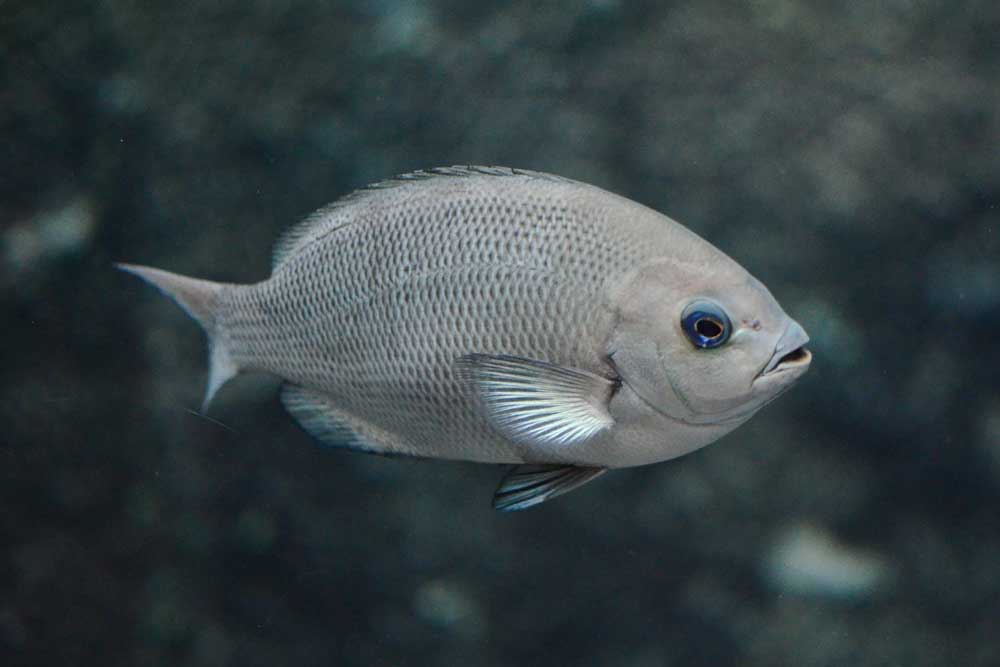
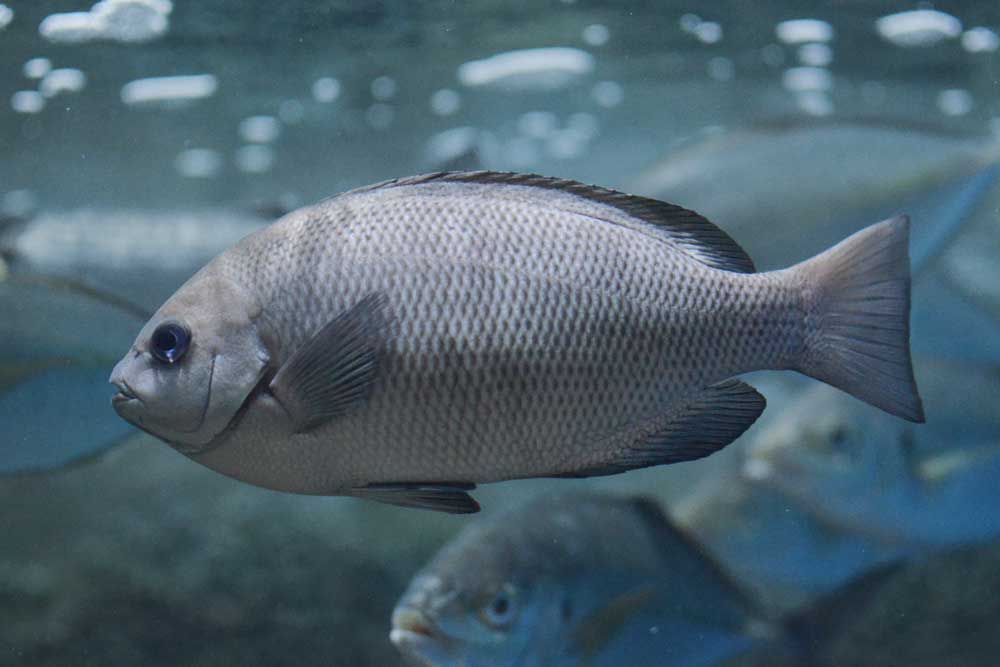
Widely distributed along the coast of Japan, the Japanese blackfish inhabits rocky shores and is one of the most iconic targets of shore anglers. It can grow to around 50 cm in length and is known to anglers by various names, including “Gure,” “Kuro,” and “Kuchibuto.” Its common names vary by region: it is generally called “Mejina” in the Kanto region, “Gure” in Kansai and Shikoku, and “Kuro” in Kyushu, while numerous other local names are used throughout Japan. One theory holds that the name “Mejina” derives from mejikana, meaning “a fish whose eyes are close to its mouth.”
The closely related Largescale Blackfish inhabits similar environments, and the two species can be difficult to distinguish. Among anglers, the Japanese blackfish is commonly called “Kuchibuto-gure,” or “thick-lipped Gure,” while the Largescale Blackfish is known as “Onaga-gure,” or “long-tailed Gure.” The latter can be distinguished by features such as the dark margin along the rear edge of the gill cover, a relatively slender caudal peduncle, and a seemingly longer tail, although body coloration varies among individuals and no single feature is sufficient for identification.
Young Japanese blackfish often associate with drifting seaweed before moving into rocky coastal habitats as they grow. During the larval stage, they feed on small crustaceans, but as they mature, algae and diatoms become increasingly important in their diet, while crustaceans and polychaete worms are also consumed. Their intestine becomes longer and more intricately folded as they grow. The breeding season varies by region but generally occurs from around February to June, with a peak in spring. The species releases buoyant eggs that drift in the sea.
For shore anglers, the Japanese blackfish is a challenging target found around current-swept rocky shores and breakwaters, and its importance in recreational fishing has given rise to regionally distinctive fishing techniques and tackle. The many names by which it is known—“Mejina,” “Gure,” and “Kuro”—reflect how closely this fish has been associated with coastal communities throughout Japan.
参考文献
三郎丸隆, 塚原博(1984)「福岡北部沿岸におけるメジナの生活史」『九州大學農學部學藝雜誌』39巻3号, 235–250. 2026年11月7日閲覧
森 主一, メジナ幼魚の社会構造 : 順位となわばり, 日本生態学会誌, 1955, 5 巻, 4 号, p. 145-150. 2026年11月7日閲覧
東京都島しょ農林水産総合センター | 東京おさかな図鑑 | メジナ 2026年11月7日閲覧
高知大学理工学部・海洋生物学研究室「2024年7月の魚:メジナ Girella punctata」 2026年11月7日閲覧
TSURINEWS | 『メジナ』の地方名がやたらに多いワケ 磯にいる魚は呼び名が増えがち?| (2023年1月13日) 2026年11月7日閲覧