
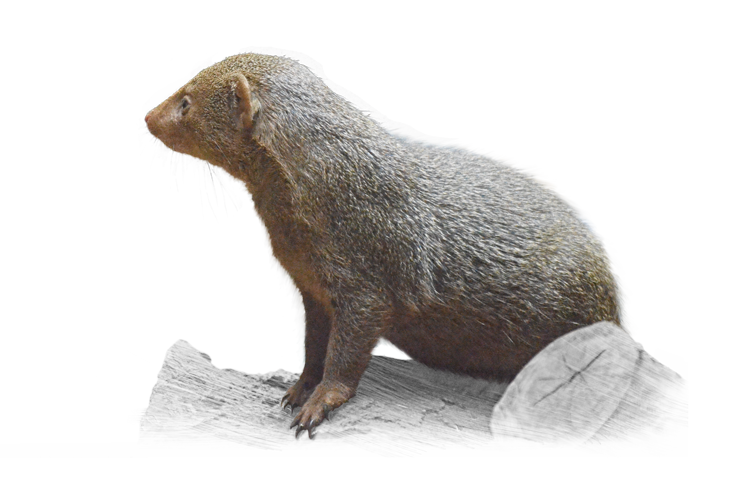
Helogale parvula (Sundevall, 1847)
サイチョウと助け合う小さなマングース
The Little Mongoose That Cooperates with Hornbills
体長18~28cm、体重200~350gほどのアフリカ最小のマングースです。サハラ砂漠以南の東部から南部アフリカにかけて広く分布し、サバンナや疎林、低木林、岩場などに生息しています。体は細長く、短い四肢と尖った吻をもち、体色は灰褐色から赤褐色です。地上での生活に適応しており、素早い動きで草むらや落ち葉の間を走り回ります。
昼行性で、昆虫類を中心にクモやムカデ、サソリ、小型の爬虫類、鳥の卵なども食べる雑食性です。鋭い嗅覚を頼りに餌を探し、前足で地面を掘り返して獲物を見つけます。夜間は岩の隙間や樹洞、放棄されたシロアリ塚などをねぐらとして利用します。乾燥した環境にもよく適応しており、アフリカ各地で比較的普通に見られる動物です。
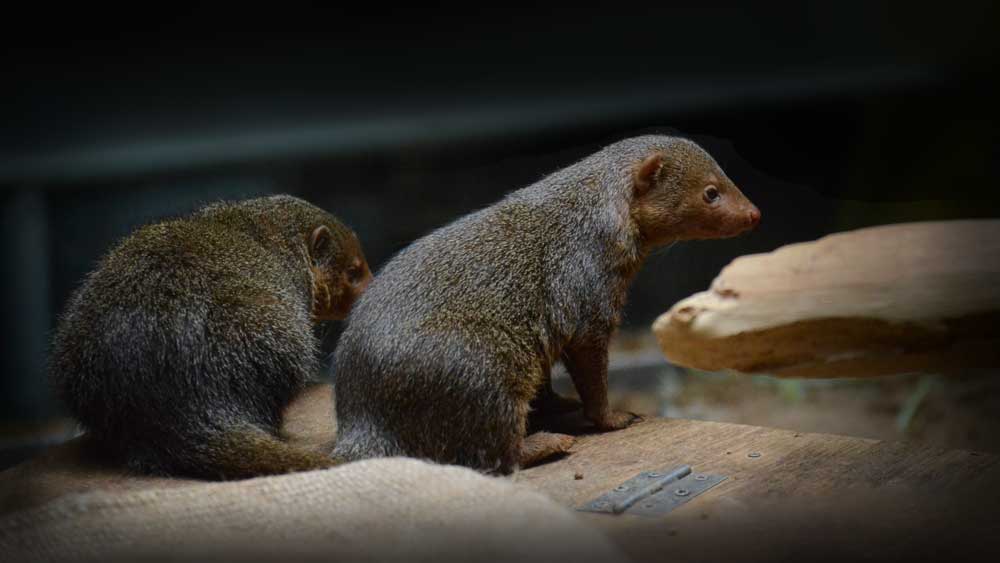
コビトマングースは高度な社会性を持つことでも知られています。通常は5~30頭ほどの群れで暮らし、群れの中では優位な雌雄が主に繁殖を行います。他の個体は子育てや見張りを手伝い、群れ全体で協力して生活します。採食中には一部の個体が高所に立って周囲を監視し、天敵を発見すると警戒声を発して仲間に危険を知らせます。このような役割分担は群れの生存率を高める重要な仕組みとなっています。
本種の生態で特に興味深いのが、サイチョウ類との関係です。アフリカではアカハシサイチョウやキバシサイチョウの仲間がコビトマングースの群れに付き従い、一緒に採食することがあります。マングースが地面をかき分けることで昆虫類が飛び出し、サイチョウはそれらを効率よく捕食できます。一方でサイチョウは高い位置から周囲を見渡し、猛禽類などの接近をいち早く察知して警戒行動を示します。こうした関係によって双方が利益を得ており、異なる種類の脊椎動物同士が築いた珍しい相利共生の例として知られています。
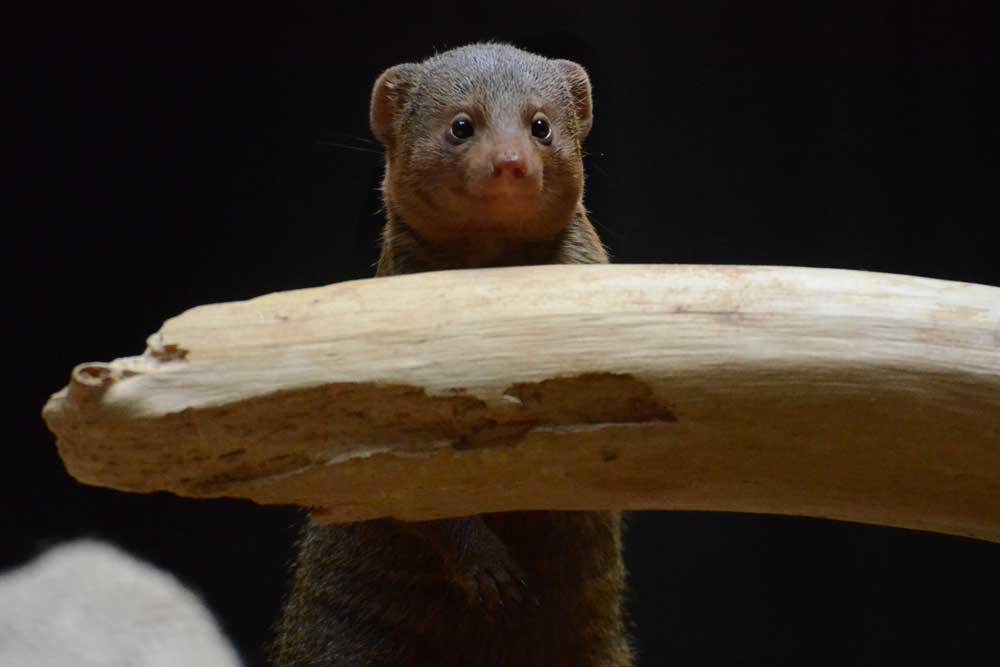
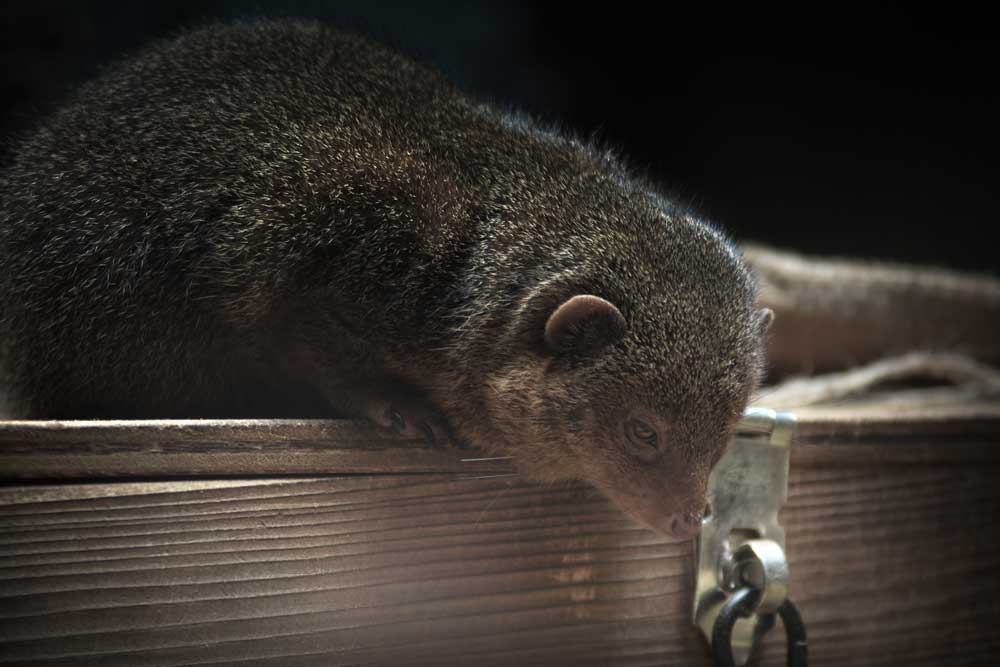
The common dwarf mongoose is the smallest member of the mongoose family, measuring 18–28 cm in body length and weighing approximately 200–350 g. It is widely distributed across eastern and southern sub-Saharan Africa, inhabiting savannas, open woodlands, scrublands, and rocky areas. Its body is slender, with short limbs and a pointed snout, and its coat ranges from grayish-brown to reddish-brown. Adapted to a terrestrial lifestyle, it moves swiftly through grass and leaf litter in search of food.
This species is diurnal and primarily feeds on insects, but it also consumes spiders, centipedes, scorpions, small reptiles, and bird eggs. Using its keen sense of smell, it searches for prey and digs through soil and debris with its forefeet. At night, it shelters in rock crevices, tree hollows, or abandoned termite mounds. Well adapted to dry environments, the common dwarf mongoose is among the more widespread and frequently encountered small carnivores in many parts of Africa.
The common dwarf mongoose is also renowned for its highly social behavior. Groups typically consist of 5–30 individuals, with a dominant breeding pair producing most of the offspring. Other group members assist with pup care and vigilance, creating a cooperative social system. While the group is foraging, some individuals act as sentinels, standing at elevated positions and watching for danger. When predators are detected, they give alarm calls that warn the rest of the group. This division of labor plays an important role in improving the survival of group members.
One of the most fascinating aspects of the species’ ecology is its association with hornbills. In parts of Africa, species such as red-billed and yellow-billed hornbills often accompany groups of dwarf mongooses while they forage. As the mongooses disturb the ground and vegetation, insects are flushed out and become easy prey for the birds. In return, hornbills benefit the mongooses by detecting approaching predators, particularly birds of prey, from their elevated vantage points and giving warning signals. Because both species gain advantages from the relationship, it is regarded as a remarkable example of mutualism between two different kinds of vertebrates.
参考文献
エコチル | 【天王寺動物園だより】10頭以上で群れを作りシロアリを探して移動「コビトマングース」| (2024年11月5日) 2026年6月20日閲覧
“Dwarf mongoose (Helogale parvula)” Kapama. 2026年6月20日閲覧
Smithsonian’s National Zoo and Conservation Biology Institute. (n.d.). Dwarf mongoose. 2026年6月20日閲覧