
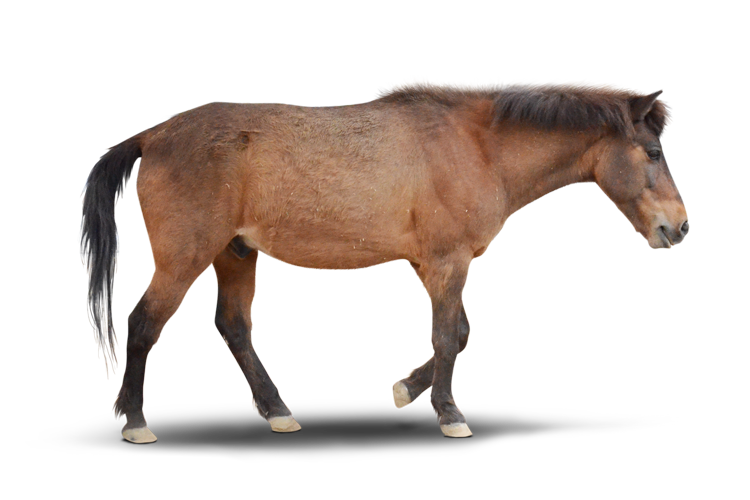
Yonaguni Horse (Japanese Horse Breed)
Equus caballus (Linnaeus, 1758)
日本に遅れてやって来た騎馬文化
Mounted Culture Arrives Late in Japan
ウマは体高1.4〜1.8mほど、体重300〜800kgになる大型の草食動物です。長く丈夫な四肢を持ち、優れた脚力と持久力を備えています。現生のウマ属「Equus」に属し、ロバやシマウマも近縁種に含まれます。現在では世界各地で飼育され、人類史に大きな影響を与えた代表的な家畜の一つとして知られています。
ウマの祖先は約5600万年前の始新世に北米で出現したと考えられています。初期の祖先は「ヒラコテリウム(エオヒップス)」と呼ばれる小型動物で、森林の中で生活していました。当時は前脚に4本、後脚に3本の指を持っていましたが、その後の気候変動によって草原環境が広がると、長距離を速く走ることに適応して進化していきます。指は次第に減少し、最終的には現在のような一本の蹄を持つ姿になりました。
約400万年前には現生のウマ属が北米で成立し、ベーリング地峡を経由してユーラシアやアフリカへ進出しました。この系統から現代のウマ、ロバ、シマウマが分岐したと考えられています。しかし約1万〜1万2000年前、北米の野生馬は絶滅し、ユーラシアに残った系統のみが生き残りました。
近年の古代DNA研究では、現代の家畜馬系統(DOM2)は約4200年前に黒海とカスピ海の間にある下ヴォルガ・ドン地域で成立し、その後まもなくユーラシア全域へ急速に拡散したことが示されています。人類は選択的な繁殖によって、従順さや持久力、速力などに優れた個体を増やし、ウマは移動、交易、運搬、戦争の在り方を大きく変化させました。
日本では3世紀頃の『魏志倭人伝』に「牛馬なし」と記されており、当時はまだウマが存在していなかったと考えられています。本格的に馬文化が伝来したのは古墳時代の4〜5世紀頃で、朝鮮半島を通じて騎馬技術や馬具とともにもたらされました。ユーラシア大陸ではすでに長い騎馬文化の歴史がありましたが、日本におけるウマ利用の歴史は比較的浅く、在来馬も体高130cm前後の小型馬が中心でした。
戦国時代には武士にとって重要な軍事資源となりましたが、ヨーロッパの重装騎兵や中央アジアの騎馬遊牧民のような大規模騎兵戦は発達しませんでした。山地の多い日本では大規模な騎兵運用が難しく、在来馬も比較的小型だったためです。そのため日本の騎馬武者は、重装騎兵のような集団突撃よりも、馬を用いて戦場を移動しながら弓や槍で戦う運用が中心でした。軍馬であっても平時には農耕や荷役に利用されることが多く、日本のウマ文化は大陸の騎馬文明とは異なる独自の発展を遂げました。
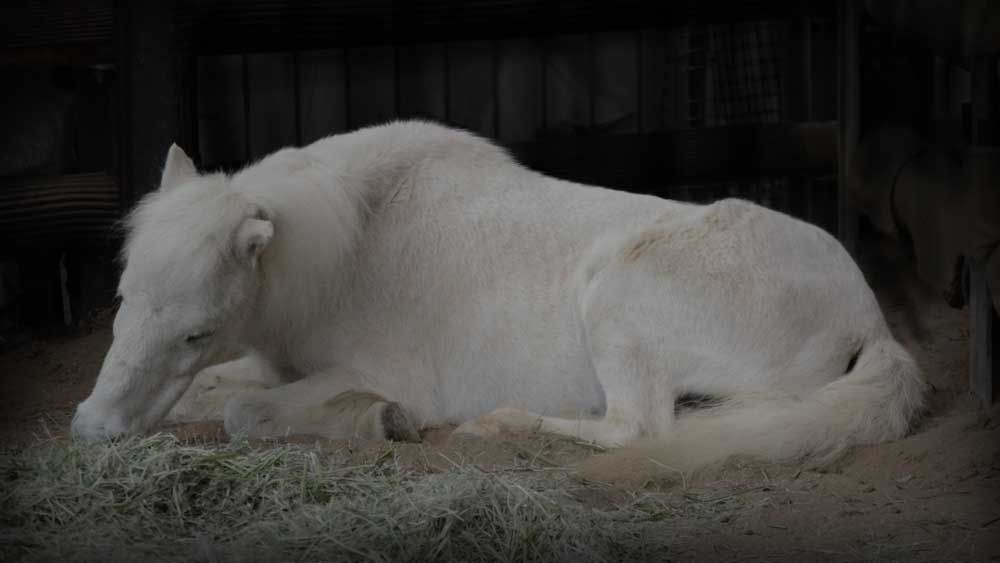
Noma Horse (Japanese Horse Breed)
Horses are large herbivorous mammals standing about 1.4–1.8 meters tall at the shoulder and weighing between 300 and 800 kilograms. They possess long, sturdy limbs and exceptional endurance and speed. Belonging to the genus Equus, horses are closely related to donkeys and zebras. Today they are bred worldwide and are regarded as one of the domestic animals that has had the greatest influence on human history.
The ancestors of horses are believed to have appeared in North America during the Eocene epoch around 56 million years ago. Early forms, known as Hyracotherium (or Eohippus), were small animals that lived in forests. They had four toes on the front feet and three on the hind feet. As grasslands expanded due to climatic changes, horse ancestors evolved for faster and more efficient long-distance running. Their toes gradually reduced in number, eventually forming the single hoof seen in modern horses.
Around four million years ago, the modern genus Equus emerged in North America and later spread into Eurasia and Africa via the Bering land bridge. From this lineage evolved modern horses, donkeys, and zebras. However, wild horses in North America became extinct around 10,000–12,000 years ago, leaving only Eurasian populations surviving.
Recent ancient DNA studies indicate that the lineage of modern domestic horses (DOM2) originated around 4,200 years ago in the lower Volga–Don region between the Black and Caspian Seas. Humans selectively bred horses for traits such as endurance, speed, and docility, allowing them to transform transportation, trade, warfare, and communication across Eurasia.
In Japan, the 3rd-century Chinese chronicle Records of Wei stated that there were “no cattle or horses” in the Japanese archipelago at that time. Horses and mounted culture are thought to have been introduced during the Kofun period in the 4th–5th centuries via the Korean Peninsula. While Eurasian societies already possessed a long history of horse culture, the history of horse use in Japan was comparatively short, and most native Japanese horses were small, standing around 130 centimeters tall.
During the Sengoku period, horses became important military resources for samurai warriors. However, unlike the heavily armored cavalry of medieval Europe or the mounted nomads of Central Asia, large-scale cavalry warfare did not develop in Japan. Mountainous terrain limited cavalry operations, and the relatively small horses lacked the power needed for shock cavalry tactics. As a result, mounted samurai mainly used horses for mobility while fighting with bows and spears. Even warhorses were often used for farming and transport during peacetime. In this way, Japanese horse culture developed along a path distinct from the great cavalry civilizations of the Eurasian continent.
参考文献
東京農業大学 | WEBジャーナル | 知的好奇心へのアドベンチャー VOL.23「馬と人の古くて新しい関係」 2026年5月30日閲覧
ナショナルジオグラフィック | NEWS | 謎だった家畜ウマの起源、ついに特定 | (2021年10月27日) 2026年5月30日閲覧
Podhajsky, Alois Wilhelm, Cothran, E. Gus. “horse”. Encyclopedia Britannica, 27 Oct. 2025. 2026年5月30日閲覧
いきもののわ | 馬と日本人とのかかわり | (2025年3月10日) 2026年5月30日閲覧
岡山県古代吉備文化財センター | 古代吉備を探る | 乗馬の風習 | (2019年10月15日) 2026年5月30日閲覧
特別展『両極の馬具』パンフレット(2021年)東京農業大学「食と農」の博物館 2026年5月30日閲覧
塚本 洋子「馬の歴史」 , 文化したら 第30号 (2016年3月17日), 愛知県設楽町 2026年5月30日閲覧
髙橋 正彦「馬事偶感」, BTCニュース第60号 (2005年7月1日), 軽種馬育成調教センター 2026年5月30日閲覧
PRESIDENT Online | 時代劇のサムライが乗る「立派な馬」は完全な虚構…日本固有の”足の短い在来馬”がほぼ絶滅した悲しい理由 | 星野 博美 (2026年5月22日) 2026年5月30日閲覧