
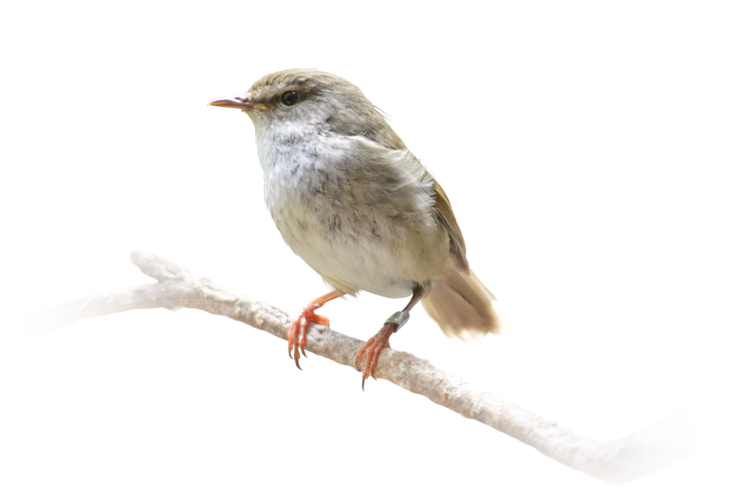
Horornis diphone (Kittlitz, 1830)
春告鳥と夏告鳥、その関係は?
Japan’s Spring and Summer Heralds
全長14〜16cm。極東アジアに分布し、日本では北海道から南西諸島、小笠原諸島まで、ほぼ全国で見られます。「ホーホケキョ」というさえずりで広く知られ、オオルリ、コマドリとともに日本三鳴鳥に数えられます。笹薮の多い林や藪地を好み、人里近くの平地から亜高山帯まで幅広い環境に生息します。個体数は多いものの警戒心が強く、藪の奥で行動するため、「声はすれども姿は見えず」を代表する鳥としても知られています。
体色はやや緑味を帯びた淡い茶褐色で、江戸時代にはその羽色に由来する「鶯茶」が流行色となりました。しかし現在の「鶯色」は、メジロを思わせる緑味の強い色として認識されています。これは明治時代以降、木綿よりも光沢のある絹織物が普及したことと関係があるとされます。絹地では色に深みと艶が生まれるため、染色職人がウグイスの羽毛に見られる緑色の光沢を強調するようになり、現在の鶯色へ変化していったと考えられています。
美しい鳴き声から「春告鳥(はるつげどり)」とも呼ばれ、古くから親しまれてきました。平安時代初期には、貴族たちが飼育したウグイスを持ち寄り、鳴き声を競わせる「うぐいす合わせ」が流行したと伝えられています。また『万葉集』には50首以上の歌にウグイス(鶯)が登場します。なお、『万葉集』で最も多く詠まれた鳥はホトトギス(霍公鳥)で、「夏告鳥(なつつげどり)」と知られる同種は150首以上に登場します。ホトトギスはウグイスの巣に托卵する習性を持ち、ウグイスはその接近に敏感に反応します。『万葉集』には高橋虫麻呂による「鴬の 卵の中に 霍公鳥…」という歌も残されており、両種の関係は古代から知られていたようです。
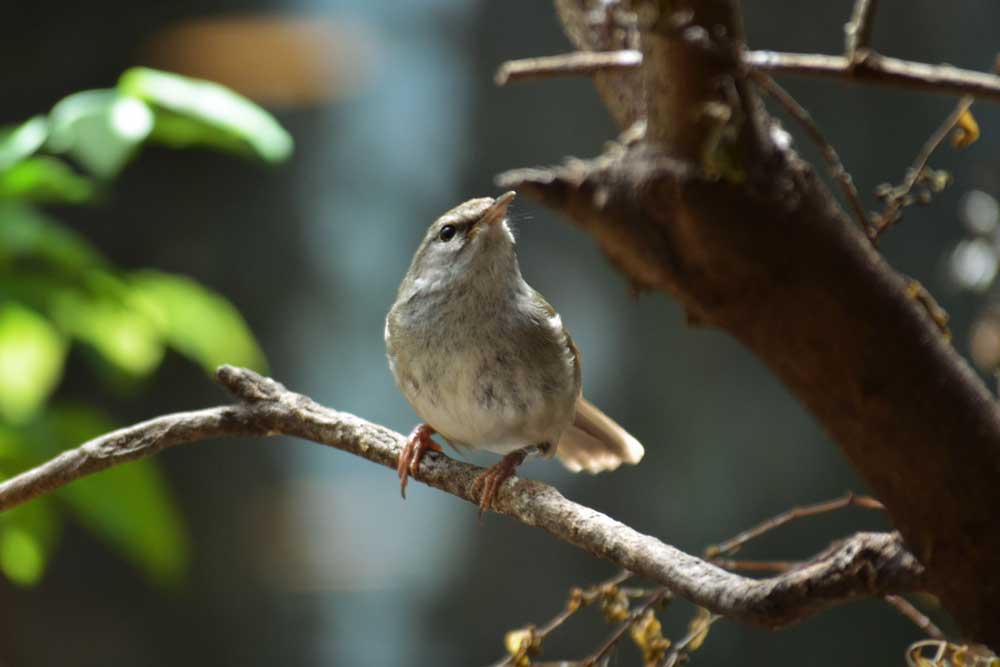
The Japanese Bush Warbler begins singing in late February
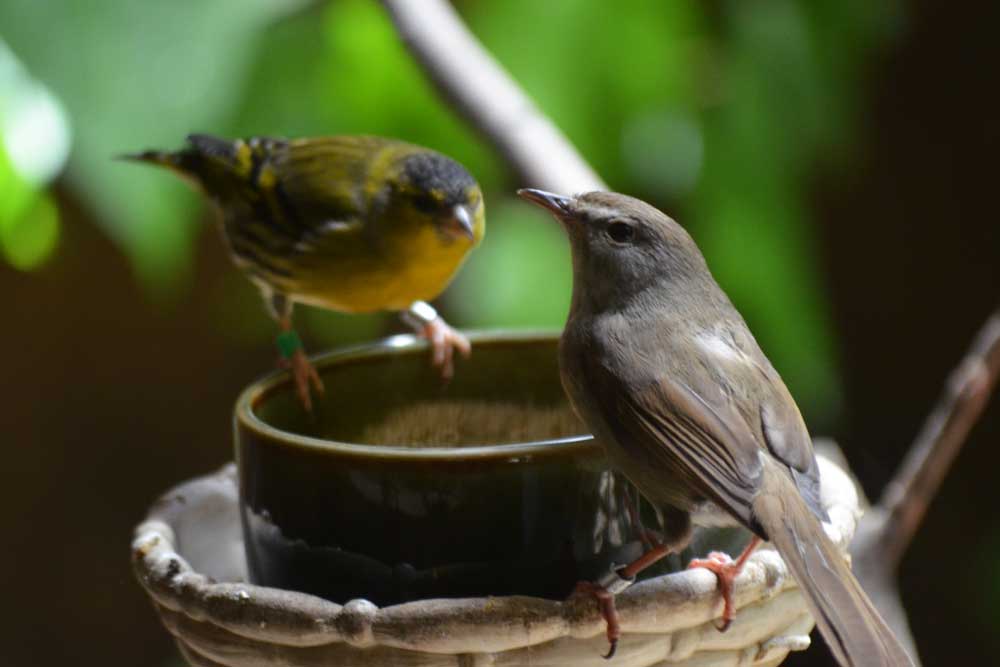
Japanese Bush Warbler and Eurasian Siskin
The Japanese Bush Warbler is a small passerine bird measuring 14–16 cm in length. It is distributed across East Asia, and in Japan it occurs throughout most of the country, from Hokkaido to the Ryukyu Islands and the Ogasawara Islands. Widely recognized for its distinctive “Hō-hokekyo” song, it is counted among the “Three Great Songbirds of Japan” alongside the Blue-and-white Flycatcher and the Japanese Robin. It inhabits dense thickets and bamboo undergrowth, ranging from lowland forests near human settlements to subalpine zones. Although it is common and widespread, its secretive nature and habit of staying deep within vegetation make it a classic example of a bird that is “heard but seldom seen.”
Its plumage is a muted brownish color with a slight olive-green tint. During the Edo period, a color known as “Uguisu-cha” (“Bush Warbler Brown”) became fashionable in clothing. However, the modern term “uguisu-iro” (“bush warbler green”) now refers to a brighter green shade resembling the plumage of the Japanese White-eye. This shift is believed to have occurred during the Meiji period, when silk fabrics replaced cotton as the dominant material for kimono. Because silk has a natural luster that gives colors greater depth, dyers likely emphasized the subtle green sheen found in the bird’s feathers, gradually creating the modern interpretation of “uguisu-iro.”
Because of its beautiful song, the Japanese Bush Warbler has long been loved as the “Harutsuge-dori,” or “bird that announces spring.” In the early Heian period, aristocrats reportedly held competitions called “Uguisu-awase,” in which they compared the songs of captive warblers. The bird also appears in more than fifty poems in the Man’yōshū, Japan’s oldest poetry anthology. Incidentally, the bird appearing most frequently in the Man’yōshū is the Lesser Cuckoo, with more than 150 references. The Lesser Cuckoo is known for its brood-parasitic habit of laying eggs in the nests of bush warblers, and the warblers react sensitively to its presence. A poem by Takahashi no Mushimaro includes the line, “Within the eggs of the bush warbler, the cuckoo…,” suggesting that the relationship between these two birds was already recognized in ancient times.
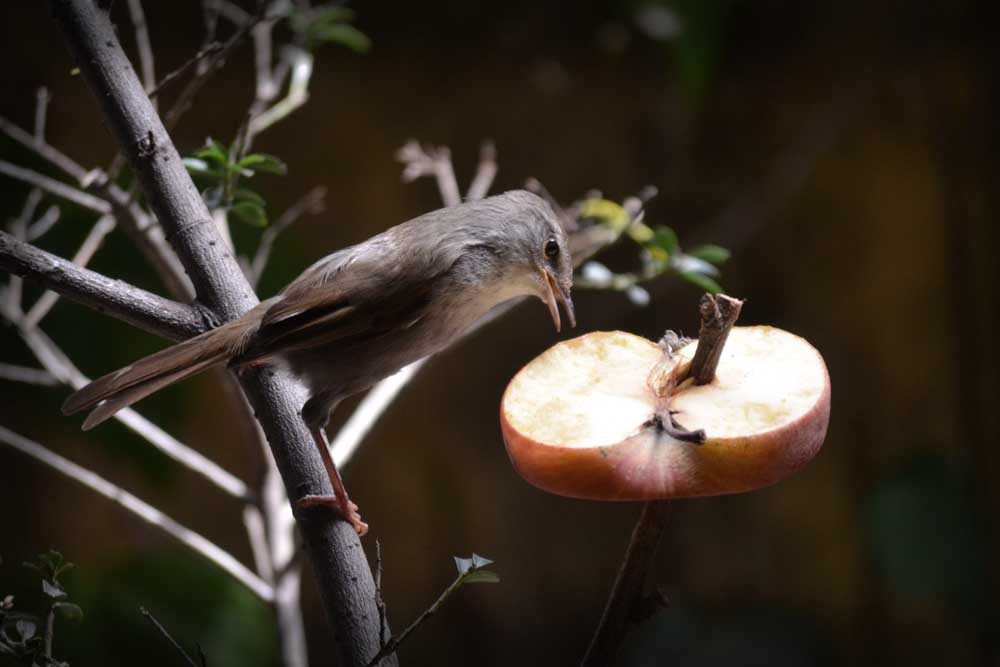
The Japanese Bush Warbler mainly feeds on insects, but it also pecks at fruits.
参考文献
暦生活 | ウグイス | 柴田佳秀 (2026年3月11日) 2026年5月23日閲覧
森と水の郷あきた | 野鳥シリーズ⑯ウグイス 2026年5月23日閲覧
平群庵 | うぐいす色(鶯色)の歴史(2) 2026年5月23日閲覧
日本鳥類保護連盟 | 自然発見 | ウグイスの不思議 | (2022年2月25日) 2026年5月23日閲覧
内田 博「本州におけるウグイスCettia diphoneに専門的に托卵するホトトギスCuculus poliocephalusの繁殖生態」日本鳥学会誌, 2011, 60 巻, 1 号, p. 78-87. 2026年5月23日閲覧
たのしい万葉集 | 鶯(うぐいす)を詠んだ歌 2026年5月23日閲覧
高岡市万葉歴史館 | まんれきブログ | 110回 大伴家持の長歌・その10~ホトトギスとフジ~【最終回】| (2022年7月27日) 2026年5月23日閲覧