
Zalophus californianus (Lesson, 1828)
保全へと導いた米国の保護法
The Law Behind Their Recovery
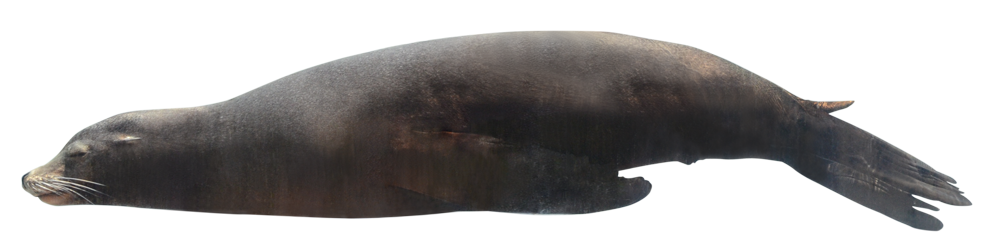
北アメリカ大陸西岸に広く分布するカリフォルニアアシカは、沿岸の岩礁や砂浜、港湾などに群れで生息する社会性の高い海棲哺乳類です。体長はオスで2〜2.5m、メスで1.8〜2m、体重はオスで200〜280kg、メスで70〜100kgと、明瞭な性的二形を示します。体色は一見黒っぽく見えますが、乾くと灰色や茶褐色を帯び、特にメスはやや明るい色合いになる傾向があります。歯が黒っぽく見えることがありますが、これは口腔内の細菌による色素沈着が関係していると考えられています。
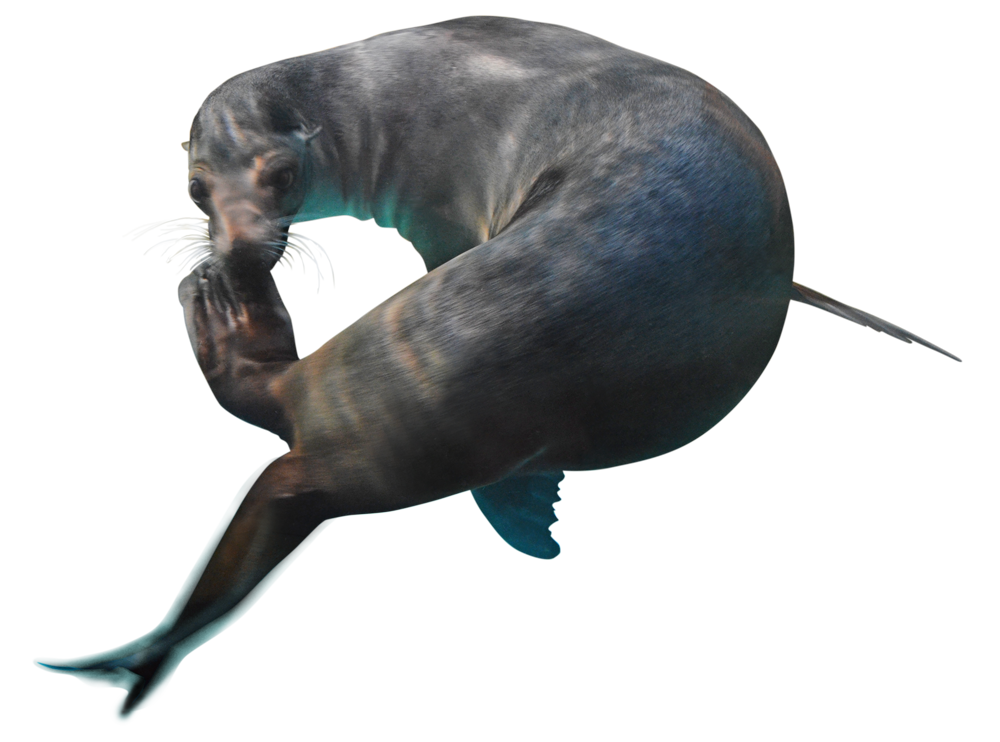
流線形の体と発達した前肢を使い、水中では高い遊泳能力を発揮し、魚類や頭足類を捕食します。繁殖期にはオスが縄張りを形成してハーレムをつくり、複数のメスを囲う行動が見られます。鳴き声や身振りによるコミュニケーションも発達しており、その高い学習能力と社会性から水族館でも広く知られています。
本種を含むカリフォルニアアシカ属には、ガラパゴスアシカや絶滅したニホンアシカが含まれます。ニホンアシカは本種と約200万年前に分岐した近縁種と考えられており、かつては日本沿岸にも生息していましたが、乱獲や環境変化により個体数が激減しました。1974年の記録を最後に確認されておらず、現在では絶滅したと考えられています。一方で本種も、20世紀半ばまでは狩猟や駆除、環境汚染の影響により個体数が大きく減少し、一時は数万頭規模まで落ち込んだとされています。しかしその後、1972年に制定された米国海産哺乳類保護法(MMPA)などによる保護の結果、個体数は回復に転じ、現在では約30万〜35万頭と推定されるまでに増加しました。
The California sea lion is a highly social marine mammal widely distributed along the western coast of North America, inhabiting rocky shores, sandy beaches, and even harbors in large groups. Adult males reach 2–2.5 m in length and weigh 200–280 kg, while females are smaller at 1.8–2 m and 70–100 kg, showing clear sexual dimorphism. Although they appear dark when wet, their coloration becomes gray to light brown when dry, with females generally being lighter in tone. Their teeth may appear blackish, which is thought to be caused by pigmentation from bacteria in the oral cavity.
With a streamlined body and well-developed foreflippers, they are strong swimmers and actively prey on fish and cephalopods. During the breeding season, males establish territories and form harems, gathering multiple females. They also exhibit complex communication using vocalizations and body movements, and their high intelligence and social behavior are well known, particularly in aquariums.
The genus Zalophus, to which this species belongs, also includes the Galápagos sea lion and the extinct Japanese sea lion. The Japanese sea lion is considered a closely related species that diverged from this species around 2 million years ago. It once inhabited the coasts of Japan, but its population declined drastically due to overhunting and environmental changes, and it has not been recorded since 1974, leading to its presumed extinction. The California sea lion also experienced population declines until the mid-20th century due to hunting, culling, and environmental pollution, with numbers dropping to only tens of thousands. However, following legal protection such as the Marine Mammal Protection Act of 1972, the population has recovered and is now estimated at approximately 300,000 to 350,000 individuals.
参考文献
千葉市動物公園 | 動物紹介・展示ゾーン | カリフォルニアアシカ | (2024年2月21日) 2024年9月14日閲覧
海響館 | 海響館の生き物たち |アシカのオスとメスの違い 2024年9月14日閲覧
エコチル | 【鶴岡市立加茂水族館だより】口の中をのぞいてみよう「カリフォルニアアシカ」 2024年9月14日閲覧
米澤 隆弘, 甲能 直樹, 長谷川 政美, (2018)「鰭脚類の起源と進化」統計数理(2008)第56巻 第1号 81–99 統計数理研究所 2024年9月14日閲覧
愛知県環境WEB情報提供システム | ニホンアシカ Zalophus japonicus (Peter) 2024年9月14日閲覧