
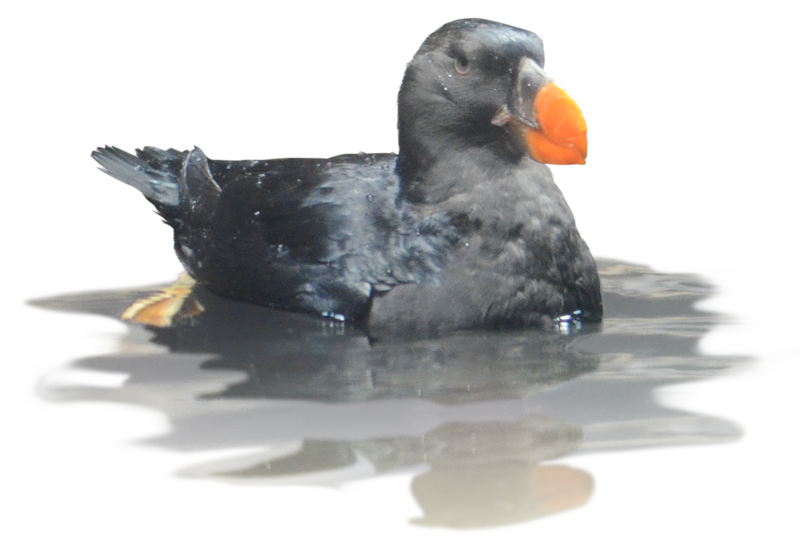
Fratercula cirrhata (Pallas, 1769)
美しい嘴に秘められた機能
The Hidden Function of a Beautiful Beak
全長約39cm。北太平洋に広く分布するウミスズメ科の海鳥で、世界の生息数は約350万羽以上と推定されています。日本ではかつて北海道東部の島々で繁殖していましたが、1970年代以降に急激に減少しました。現在、国内で安定した繁殖が確認されているのは、根室市沖の無人島であるユルリ島とモユルリ島にほぼ限られており、外来捕食者の影響や漁業との関係などが減少の要因と考えられています。そのため、これらの島では厳重な保護活動が続けられています。
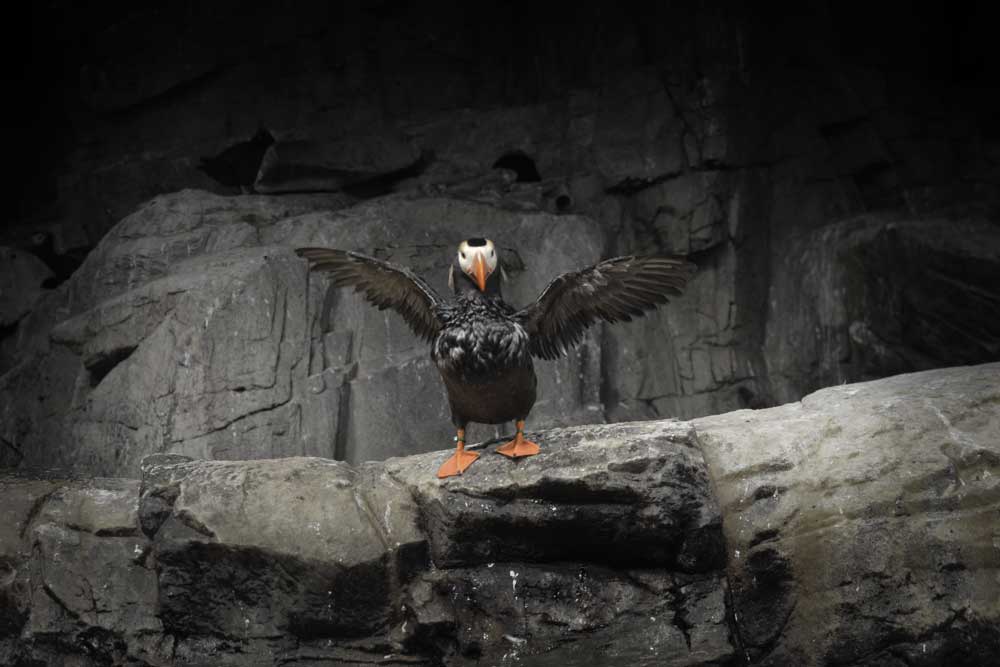
橙色の脚、黒い体、そして顔の半分ほどが白く染まる独特の配色に加え、後頭部には黄色い飾り羽をもつ点が特徴です。中でもひときわ目を引くのが、厚く鮮やかな橙色のクチバシです。「エトピリカ」という名称はアイヌ語に由来し、「クチバシ(etu)が美しい(pirka)」ことを意味します。このクチバシは繁殖期になると特に鮮やかさを増し、求愛や個体識別のためのディスプレーとして重要な役割を果たします。
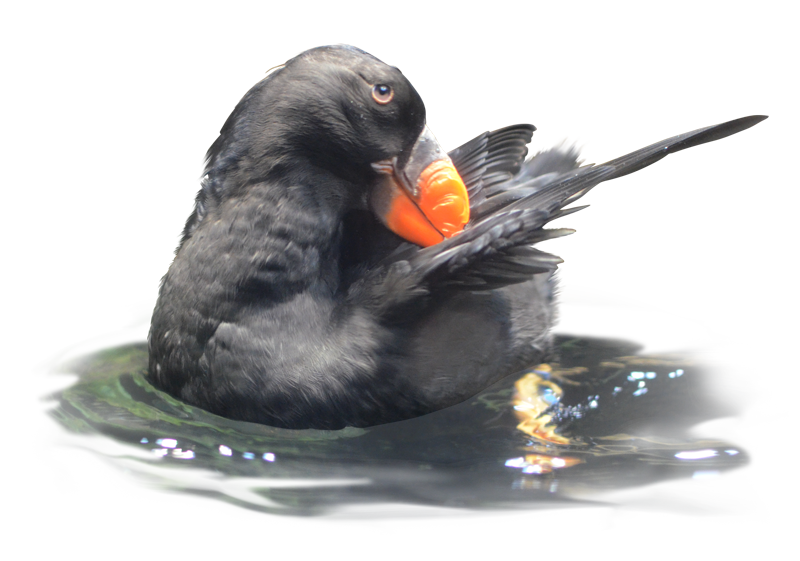
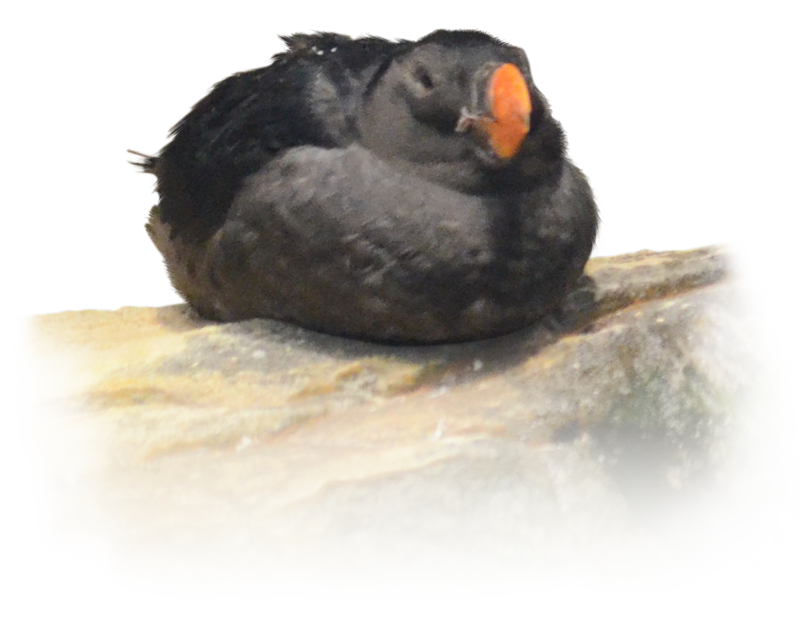
繁殖期の彼らは断崖や岩場の隙間に巣を作り、つがいで子育てを行います。親鳥は海に潜って小魚を捕らえ、大きなクチバシを巧みに使って数匹から十数匹、ときに20匹近い魚を一度にくわえたまま巣へと運び、ヒナに与えます。クチバシの内側には滑り止めのような構造があり、捕らえた魚を保持したままさらに別の魚を加えることができるため、効率よく給餌することが可能です。こうした行動は、限られた往復で多くの餌を運ぶための適応といえます。なお、繁殖期が終わるとクチバシ表面の乳白色の鞘は剥がれ落ち、羽衣も冬羽へと変化して、全体に目立たない色合いへと変わります。
Body length about 39 cm. This auk species is widely distributed across the North Pacific, with a global population estimated at over 3.5 million individuals. In Japan, it once bred on islands off eastern Hokkaido, but numbers declined sharply after the 1970s. Today, stable breeding is largely limited to the uninhabited islands of Yururi and Moyururi off Nemuro, where conservation efforts continue due to pressures such as introduced predators and interactions with fisheries.
It is characterized by orange legs, a black body, and a face that is partially white, along with distinctive yellow plumes extending from the back of the head. Most striking is its thick, bright orange bill. The Japanese name “Etopirika” derives from the Ainu language, meaning “beautiful (pirka) beak (etu).” During the breeding season, the bill becomes especially vivid and plays an important role in courtship displays and individual recognition.
During the breeding season, they nest in crevices on cliffs and rocky slopes, raising their chicks as pairs. The adults dive to catch small fish and skillfully use their large bills to carry multiple fish at once—typically several to over a dozen, and sometimes close to twenty—back to the nest to feed their chick. The inner surface of the bill has a serrated, gripping structure that allows them to hold onto captured fish while adding more, enabling highly efficient foraging. After the breeding season, the whitish outer sheath of the bill, made of keratin, is shed, and the plumage molts into a duller winter form in which the overall appearance becomes less conspicuous.
参考文献
環境省 | 保護増殖事業 | エトピリカ保護増殖事業 2025年1月19日閲覧
サントリーの愛鳥活動 | 日本と鳥百科 | エトピリカ 2025年1月19日閲覧
山階鳥類研究所 | 広報ブログ | エトピリカのくちばしの装飾は外れるのです | (2012年2月22日) 2025年1月19日閲覧
東京ズーネット | ニュース | エトピリカの鞘 | (2009年5月1日) 2025年1月19日閲覧
海響館 | 海響館の生き物紹介 | ここもきれいになります!-キングペンギン- 2025年1月19日閲覧
海遊館 | 生き物を知る | エトピリカの餌の食べ方の変化 | (2026年3月25日) 2026年4月11日閲覧
西遊旅行 | ワイルドライフ | エトピリカ Tufted Puffin(極東ロシア、チュクチ海)| (2015年9月6日) 2026年4月11日閲覧
畑山 優香「なぜ獲物を落とさない?エトピリカの狩りのテクニック」どうぶつと動物園 令和8年冬号, P26-29. 2026年4月11日閲覧