
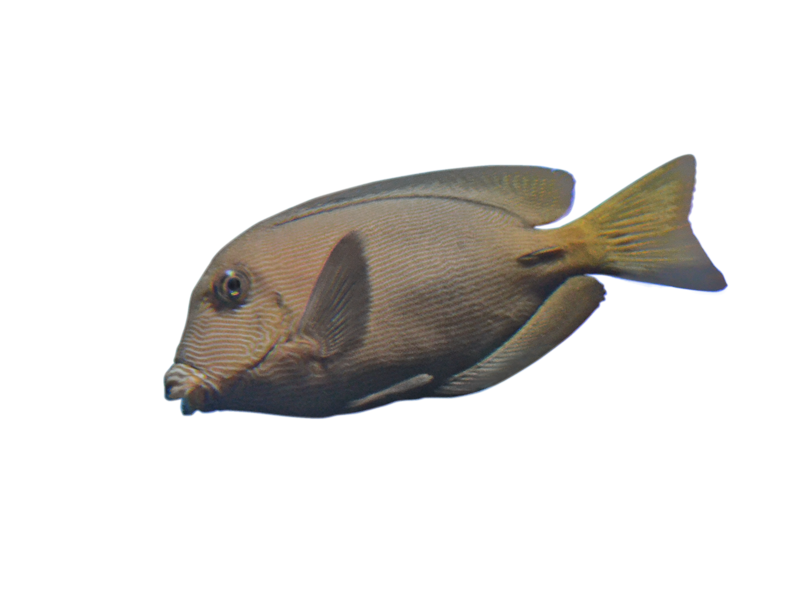
Ctenochaetus hawaiiensis (J. E. Randall, 1955)
成長とともに姿を変える迷路模様
A Maze Pattern Transformed with Growth
体長25cm。西部から中部太平洋のサンゴ礁や岩礁域に分布し、日本では琉球列島や小笠原諸島で見られます。ニザダイ科サザナミハギ属の一種で、英名 Chevron Tang は幼魚の体側に並ぶV字形(シェブロン)の模様に由来しています。一方、和名の「メイキュウサザナミハギ」は、この模様が迷路のように入り組んで見えることから付けられたもので、2000年代に提唱された比較的新しい和名です。それ以前は観賞魚の世界では「シェブロンタン」の名で広く知られていました。
本種は成長に伴う体色の変化が特に劇的な魚として知られています。幼魚は鮮やかな橙赤色の体に青紫色の細い線が複雑な迷路模様を描き、熱帯魚の中でもひときわ目を引く美しさを誇ります。しかし成魚になると印象は一変し、体全体が黒褐色から暗緑色となります。一見すると地味な姿ですが、近くで観察すると無数の細い緑色の横縞が浮かび上がり、落ち着いた気品ある美しさを備えています。幼魚と成魚が同じ魚とは思えないほど姿を変えることも、本種の大きな魅力です。
口には櫛状の細かな歯が並び、岩やサンゴの表面に付着したデトリタス(有機砕屑物)や珪藻、微細藻類などをブラシ状の歯で丁寧にこすり取って食べます。この採食活動はサンゴや岩の表面を覆う有機物や微細藻類を除去し、サンゴ礁生態系の健全な物質循環を支える重要な役割を担っています。幼魚の華やかな姿だけでなく、成魚へと移り変わる姿にも、この魚ならではの奥深い魅力が秘められています。
Reaching about 25 cm in length, the Chevron Tang inhabits coral reefs and rocky reefs across the western and central Pacific Ocean. In Japan, it occurs around the Ryukyu Islands and the Ogasawara Islands. Its English name, Chevron Tang, refers to the distinctive V-shaped (chevron) markings that cover the body of juveniles. The Japanese name Meikyū Sazanamihagi (“maze surgeonfish”) describes the intricate maze-like pattern formed by these markings. This Japanese name was proposed only in the 2000s and is therefore relatively recent. Before that, the species was widely known among aquarists simply as the “Chevron Tang.”
This species is renowned for its dramatic transformation in coloration as it matures. Juveniles display a brilliant orange-red body covered with fine bluish-purple lines that create an intricate maze-like pattern, making them one of the most striking reef fishes. As they grow, however, their appearance changes completely. Adults become dark brown to deep green, giving a much more subdued first impression. A closer look reveals countless fine green horizontal lines across the body, lending the fish a refined and elegant beauty. The remarkable contrast between juvenile and adult coloration is one of the species’ most fascinating characteristics.
Like other members of its genus, the Chevron Tang possesses comb-like teeth adapted for grazing. It uses these specialized teeth to brush detritus, diatoms, and microscopic algae from the surfaces of rocks and corals. Through this feeding behavior, the species helps remove accumulated organic matter and algal films, contributing to the healthy functioning and nutrient cycling of coral reef ecosystems. While the vibrant juvenile coloration is especially prized in the aquarium trade, the graceful beauty of the adult reminds us that this fish’s greatest appeal lies in the remarkable journey of its transformation.
参考文献
南国 Diving World | 海の図鑑 | メイキュウサザナミハギ 2026年8月11日閲覧
サイエンスミュージアムネット | 自然史標本詳細表示 | Ctenochaetus hawaiiensis Randall, 1955、メイキュウサザナミハギ 2026年8月11日閲覧