
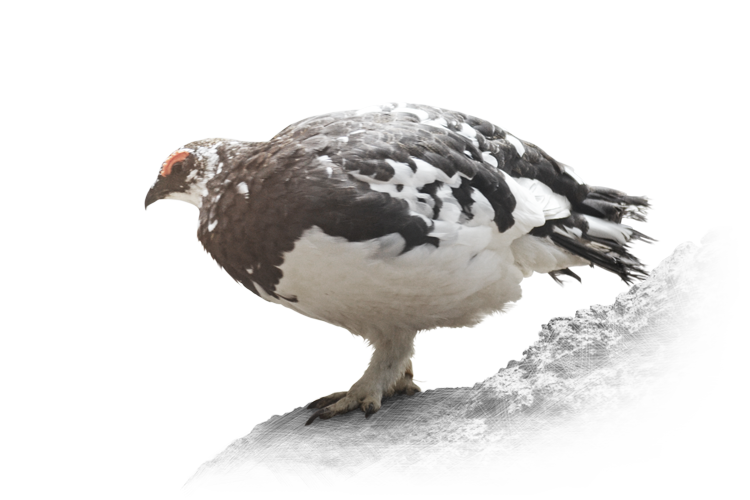
Lagopus muta (Montin, 1781)
高山に取り残されたキジ
A Pheasant Left Behind in the High Mountains
全長約37cm。キジ科に属する鳥で、日本では本州中部の高山帯にのみ生息する氷河期の遺存種です。世界中に広く分布するライチョウ Lagopus muta の亜種ですが、日本のライチョウは分布の最南端に孤立して生き残った集団であり、日本固有亜種として知られています。主な生息地は北アルプス、南アルプス、御嶽山、乗鞍岳などの森林限界を超えた高山帯で、ハイマツ帯や岩礫地、高山草原を生活の場としています。
季節によって羽色を大きく変えることが特徴です。夏には白・黒・褐色のまだら模様となり岩場や高山植物の中で優れた保護色となりますが、冬には尾羽の一部を除いて全身が白くなり、雪原に溶け込みます。この変化は天敵から身を守るための適応であり、厳しい高山環境を生き抜くための重要な戦略です。ライチョウ属はキジ科の中でも特に寒冷地への適応が進んだグループとして知られ、足先や鼻孔周辺まで羽毛に覆われるほか、冬には雪の中に潜って休息するなど、寒冷な環境で生きるためのさまざまな特徴を備えています。
食性は主に植物食で、高山植物の芽や葉、花、果実、種子などを採食します。雛の時期には昆虫類も多く利用し、成長に必要なタンパク質を補います。繁殖期は初夏で、雌はハイマツの根元など地上に浅い巣を作り、通常5~8個ほどの卵を産みます。孵化した雛は早成性で、まもなく親鳥に導かれて採食を始めます。
日本アルプスを象徴する鳥として親しまれていますが、近年は温暖化による生息環境の縮小、キツネやテン、カラスなどによる捕食圧の増加、シカの高山帯進出による植生変化などの影響を受けています。環境省レッドリストでは絶滅危惧ⅠB類に指定され、保護増殖事業や中央アルプスへの再導入など、各地で保全活動が進められています。日本の高山生態系の健全さを示す象徴的な存在であり、その未来は山岳環境全体の保全と深く結び付いています。
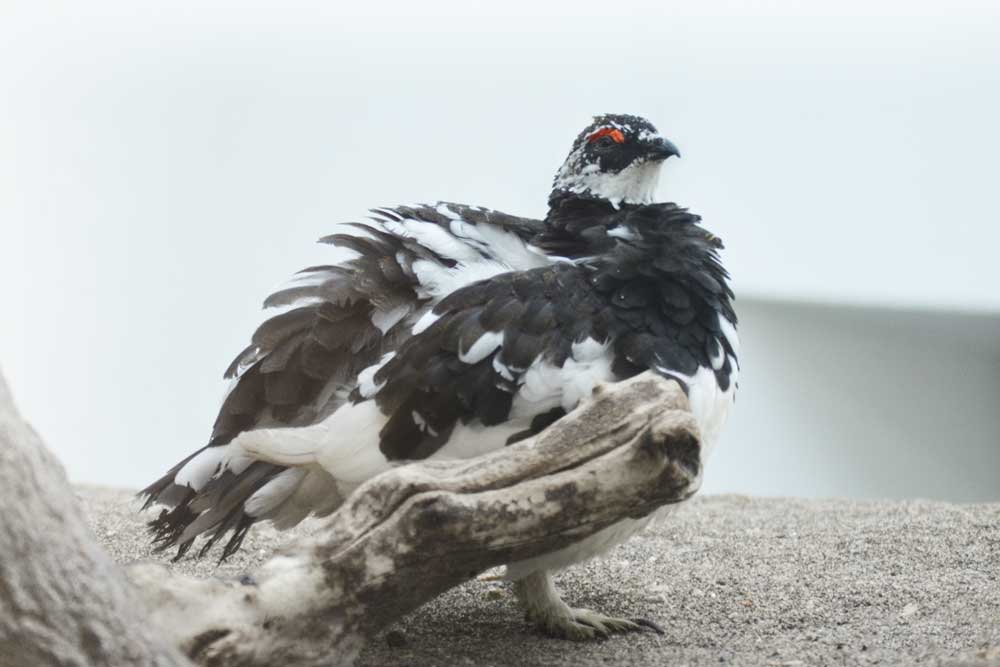
Body length approximately 37 cm. The Rock Ptarmigan is a member of the pheasant family and is a glacial relict species that survives in the alpine zones of central Honshu, Japan. It is a subspecies of the widely distributed Rock Ptarmigan (Lagopus muta), but the Japanese population represents an isolated southern outpost and is recognized as an endemic Japanese subspecies. Its principal habitats include the alpine regions above the tree line in the Northern and Southern Alps, as well as Mt. Ontake and Mt. Norikura, where it inhabits dwarf pine thickets, rocky slopes, and alpine meadows.
One of its most distinctive features is its dramatic seasonal change in plumage. During summer, its mottled white, black, and brown feathers provide excellent camouflage among rocks and alpine vegetation. In winter, however, nearly the entire body becomes white except for parts of the tail, allowing the bird to blend into snowy landscapes. This plumage change is an important adaptation for avoiding predators in a harsh mountain environment. Members of the genus Lagopus are among the most cold-adapted birds in the pheasant family. Their toes and even the area around the nostrils are covered with feathers, and they may rest within snow burrows during winter, demonstrating a variety of adaptations to life in severe alpine conditions.
The species feeds primarily on plant material, including buds, leaves, flowers, fruits, and seeds of alpine plants. Chicks also consume large numbers of insects, which provide the protein necessary for growth. Breeding takes place in early summer. Females construct shallow ground nests, often beneath dwarf pines, and typically lay five to eight eggs. The chicks are precocial and begin foraging shortly after hatching under the guidance of their parents.
The Rock Ptarmigan is cherished as a symbol of the Japanese Alps, yet its populations face increasing threats from climate change, shrinking alpine habitats, greater predation pressure from foxes, martens, and crows, and vegetation changes caused by the expansion of deer into high mountain areas. Classified as Endangered (EN) on Japan’s Red List, the species is the focus of conservation efforts that include captive breeding programs and reintroduction projects in the Central Alps. As an emblem of Japan’s alpine ecosystems, its future is closely tied to the preservation of the mountain environment as a whole.
参考文献
長野県 | ライチョウ保護スクラムプロジェクト | ライチョウの生態 2026年8月1日閲覧
環境省 | 自然環境・生物多様性 | ライチョウ 2026年8月1日閲覧
山と渓谷オンライン | 【インタビュー・中村浩志】ライチョウの命をつなぐ、自然と人が共に生きる未来のヒント | (2025年9月29日) 2026年8月1日閲覧
ニッポンドットコム | 「神の鳥」ニホンライチョウを守れ―中央アルプスで「復活作戦」| (2021年9月30日) 2026年8月1日閲覧
中村浩志国際鳥類研究所 | 中央アルプスにライチョウを復活させる事業 2026年8月1日閲覧