
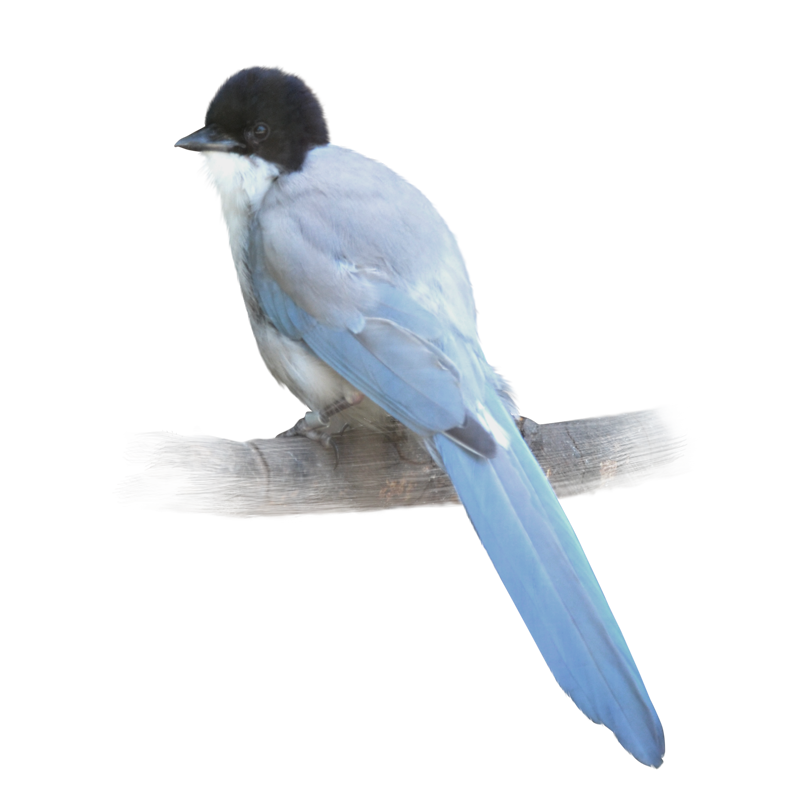
Cyanopica cyanus (Pallas, 1776)
東西に分かれる分布域の謎
The Mystery of Its East–West Disjunct Distribution
全長約37cm。黒い頭部はまるで帽子をかぶったように見え、翼と長い尾は淡い浅葱色(水色)を帯びます。尾羽の先端には白いワンポイントが入り、飛翔時にはそのコントラストがひときわ目を引きます。澄んだ声で鳴き交わし、群れで行動することが多いカラス科の鳥です。
本種が属するオナガ属(Cyanopica)は、ユーラシア大陸の東西に大きく隔たって分布するという特異な分布様式で知られています。東側は日本を含む東アジア、朝鮮半島、中国東部、ロシア東部に広がり、西側は遠く離れたイベリア半島にのみ分布します。かつては同一種と考えられていましたが、ミトコンドリアDNAの解析により両者は種レベルで区別されることが明らかになりました。イベリア半島の個体群はより基底的とされ「イベリアオナガ(Cyanopica cooki)」、アジアの個体群は「オナガ(Cyanopica cyanus)」とされています。両種は体色がよく似ていますが、イベリアオナガには尾羽先端の白斑がありません。
なぜこのように遠く離れた地域に分かれて生息するのかについては諸説あります。15世紀の南蛮交易船が日本からイベリア半島へ運んだという説もありましたが、近年の化石研究などから、かつてユーラシア大陸全域に広く分布していたものが、気候変動などにより中間域で絶滅し、両端の地域にのみ生き残ったという見解が有力になっています。
日本では主に関東地方から信州東部にかけて分布します。1960年代頃までは西日本にも生息していたとされますが、カッコウによる托卵の増加などの影響で減少したと考えられています。一方、東日本では都市環境への適応が進み、緑地の多い公園や住宅地周辺で繁殖する個体も増えており、人の生活圏と重なりながらその姿を見せています。
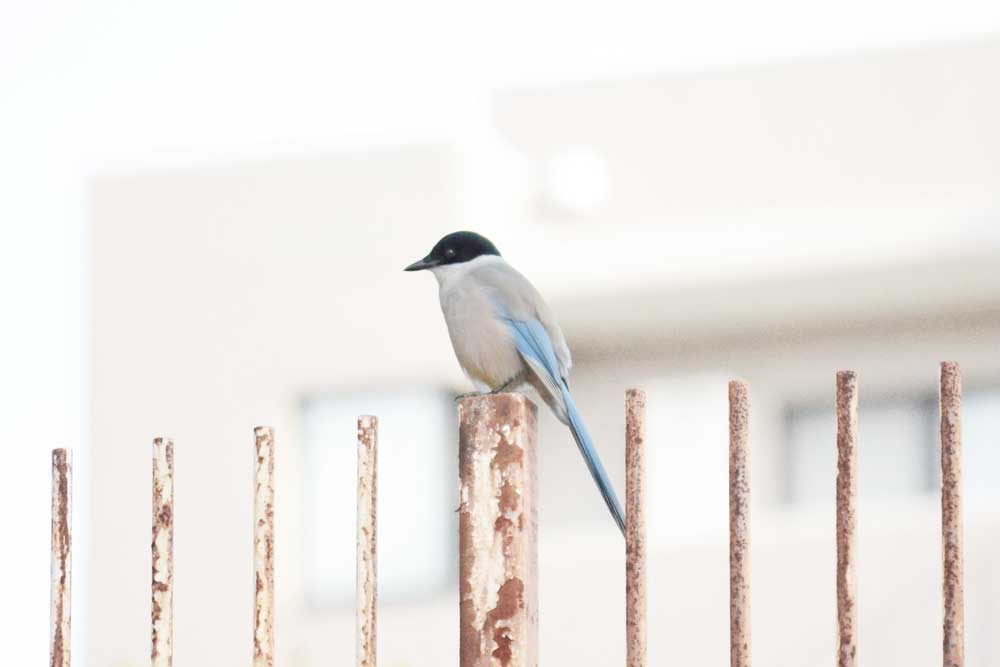
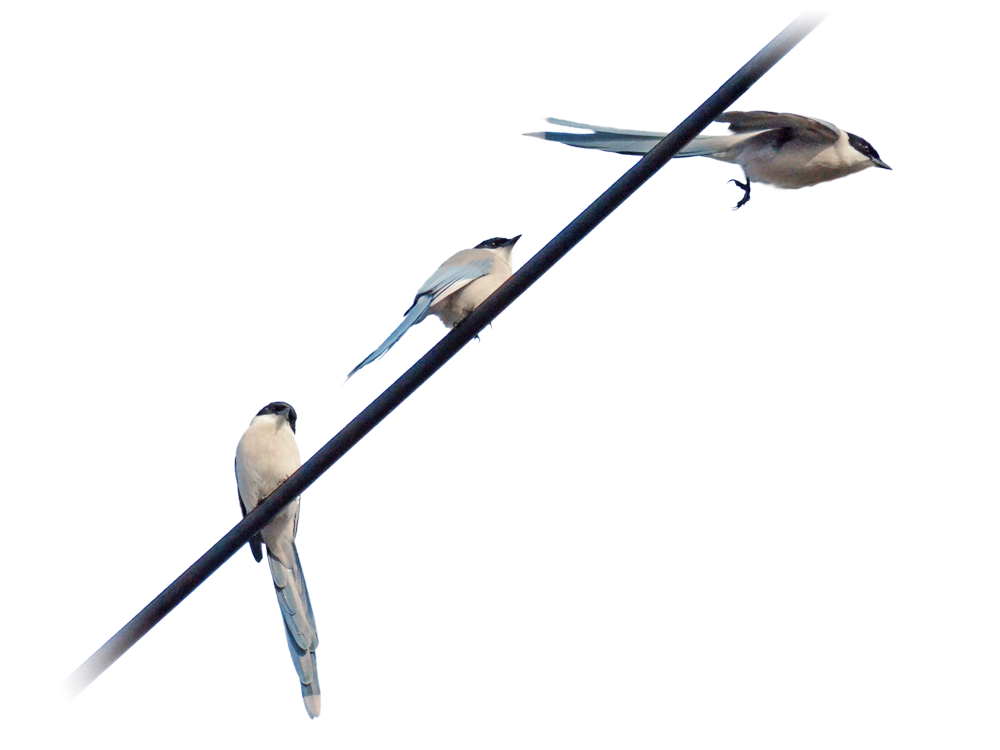
Total length about 37 cm. Its black head looks as if it is wearing a cap, while the wings and long tail are a pale bluish-green. A white spot at the tip of the tail feathers creates a striking contrast in flight. It is a member of the crow family and is often seen moving about in flocks, exchanging clear, ringing calls.
The genus Cyanopica has a remarkably disjunct distribution, occurring in two widely separated regions of the Eurasian continent. One population inhabits East Asia, including Japan, the Korean Peninsula, eastern China, and eastern Russia, while the other is confined to the Iberian Peninsula. Once regarded as a single species, mitochondrial DNA analyses have revealed that they are distinct at the species level. The Iberian population is considered more basal and is named the Iberian magpie (Cyanopica cooki), whereas the Asian population is known as the Azure magpie (Cyanopica cyanus). Although their plumage is very similar, the Iberian species lacks the white tip on the tail feathers.
Why do these birds occur in such distant regions? Various hypotheses have been proposed. One even suggested that 15th-century trading ships transported them from Japan to Iberia. However, recent fossil evidence supports the view that the genus once ranged widely across Eurasia and later became extinct in the central regions, leaving relict populations at the eastern and western extremes.
In Japan, the species is mainly distributed from the Kanto region to eastern Shinshu. It reportedly occurred in western Japan until around the 1960s, but numbers declined, possibly due to increased brood parasitism by cuckoos. In eastern Japan, however, populations appear to be increasing. Adapted to urban environments, Azure magpies now breed in parks and green spaces within residential areas, living in close proximity to human communities.
参考文献
三鷹市 | みたかいきもの図鑑 | オナガ(尾長)カラス科 | (2009年2月16日) 2024年10月5日閲覧
藤波 不二雄「緑の多い住宅街に進出するオナガ」『郷土はとがや』 第64号 (2009年11月18日) 2024年10月5日閲覧
いきもののわ | 大江戸八百野鳥 ~変化した?していない?江戸・東京の鳥たち~【第1回】関東尾長 | 細川 博昭 (2024年8月20日) 2024年10月5日閲覧
at home こだわりアカデミー | カッコウとオナガの闘い-托卵に見る進化 | 中村 浩志 (1993年11月) 2024年10月5日閲覧