
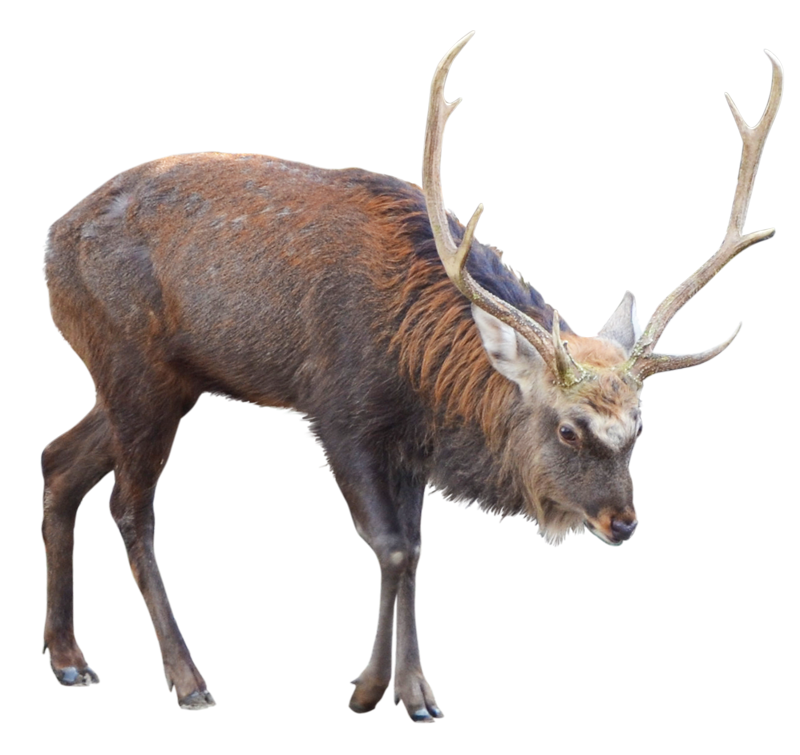
Cervus nippon yesoensis (Heude, 1884)
アイヌの暮らしと信仰を支えた「ユク」
The “Yuk” that Sustained Ainu Life and Belief
北海道に生息するニホンジカの亜種で、日本産シカ類の中では最大級です。頭胴長は140~190cm、体重は雄90~140kg、雌70~100kgほどで、雄は200kg近くに達することもあります。体色は季節で変化し、夏は赤褐色に白斑、冬は灰褐色となります。寒冷地に適応し、ベルクマンの法則に従って大型化するとともに、厚い冬毛や発達した蹄を備えています。
繁殖形態は一夫多妻制で、秋の発情期(9~10月頃)には雄同士の激しい争いが見られます。優位な雄はハレムブルとなり、複数の雌を従えて縄張り内にハーレムを形成します。角は毎年春に落角した後、夏に急速に成長し、秋には完成した立派な角となります。争いに敗れた雄は単独、あるいは雄同士の緩やかな群れで生活します。
主に草や木の葉、樹皮などを食べる草食性で、森林から草原まで幅広い環境に適応します。天敵はヒグマで、特に春には衰弱個体や仔ジカが捕食されます。近年は暖冬化や農地の拡大を背景に個体数が増加し、農林業被害や植生の衰退が深刻化しています。エゾシカの増加はヒグマにとって重要な食物資源の増加を意味し、その栄養状態や行動に影響を与える一方で、人里への出没を招く要因ともなっており、人身事故や被害リスクの上昇につながります。
本種は北海道の先住民族であるアイヌにとって極めて重要な動物であり、「ユク」と呼ばれてきました。肉は貴重な食料、皮は衣服や履物、角や骨は道具に加工されるなど、生活のあらゆる面で利用されてきました。また、シカは自然界の霊的存在(カムイ)が姿を変えて現れたものと考えられ、狩猟後には感謝を捧げる儀礼も行われました。このようにエゾシカは、物質的・精神的の両面でアイヌ文化を支えてきた存在であり、北海道の自然と人の関係を象徴する動物といえるでしょう。
A subspecies of the sika deer inhabiting Hokkaido, it is among the largest deer in Japan. Head-body length ranges from 140 to 190 cm, with males weighing 90–140 kg and females 70–100 kg; large males may reach nearly 200 kg. Coat color changes seasonally: reddish-brown with white spots in summer, turning grayish-brown in winter as the spots become indistinct. Adapted to cold climates, this subspecies follows Bergmann’s rule, growing larger in colder regions, and is equipped with thick winter fur and well-developed hooves suited for snowy environments.
The species is polygynous. During the autumn rut (September–October), males engage in intense competition. Dominant males, known as harem bulls, gather and defend groups of females within their territories. Antlers are shed annually in spring, regrow rapidly through summer, and reach full development by autumn. Defeated males live alone or form loose bachelor groups.
They are herbivorous, feeding mainly on grasses, leaves, and bark, and inhabit a wide range of environments from forests to grasslands. Their natural predator is the brown bear, which particularly preys on weakened individuals and fawns in spring. In recent years, populations have increased due to milder winters and agricultural expansion, leading to serious impacts on agriculture and vegetation. The increase in deer provides an important food resource for brown bears, influencing their condition and behavior, while also drawing them closer to human settlements and contributing to a higher risk of accidents and conflicts.
For the indigenous Ainu people of Hokkaido, this animal has long been of great importance and is known as “yuk.” Its meat served as a vital food source, while its hide, antlers, and bones were used for clothing, tools, and other daily necessities. Deer were also regarded as spiritual beings (kamuy) in animal form, and rituals of gratitude were performed after hunting. In this way, the Yezo sika deer has supported Ainu culture both materially and spiritually, and can be seen as a symbol of the relationship between nature and people in Hokkaido.
参考文献
『モユク・カムイ No.74』旭川市旭山動物園(2009年9月30日) 2024年9月16日閲覧
小泉 透 (1986)「北海道東部におけるニホンジカの狩猟管理」哺乳類科学第53号:43−46 2024年9月16日閲覧
北海道新聞 | ハーレムの決め手は形と大きさ エゾシカの角<旭山動物園わくわく日記> | (2017年1月9日) 2024年9月16日閲覧
公益財団法人アイヌ民族文化財団 | なるほどアイヌ文化エッセイ【ソンコdeソンコ】| Vol.57_ユㇰ(シカ)2016年12月号 2026年4月11日閲覧
下鶴 倫人「増えすぎたシカはヒグマにとって恵みか災いか? ヒグマとシカの種間関係に関する研究」北海道大学, 日本学術振興会(JSPS), 2019-04-01 – 2023-03-31, 科学研究費助成事業 2026年4月11日閲覧
橋本 操「北海道日高地域におけるヒグマの出没パターンとその規定要因」日本地理学会発表要旨集, 公益社団法人 日本地理学会, 2011, 2011s, 0, 111-111 2026年4月11日閲覧