
Dinemellia dinemelli (Rüppell, 1845)
バッファローの後を追う鳥
The Bird That Follows Buffalo
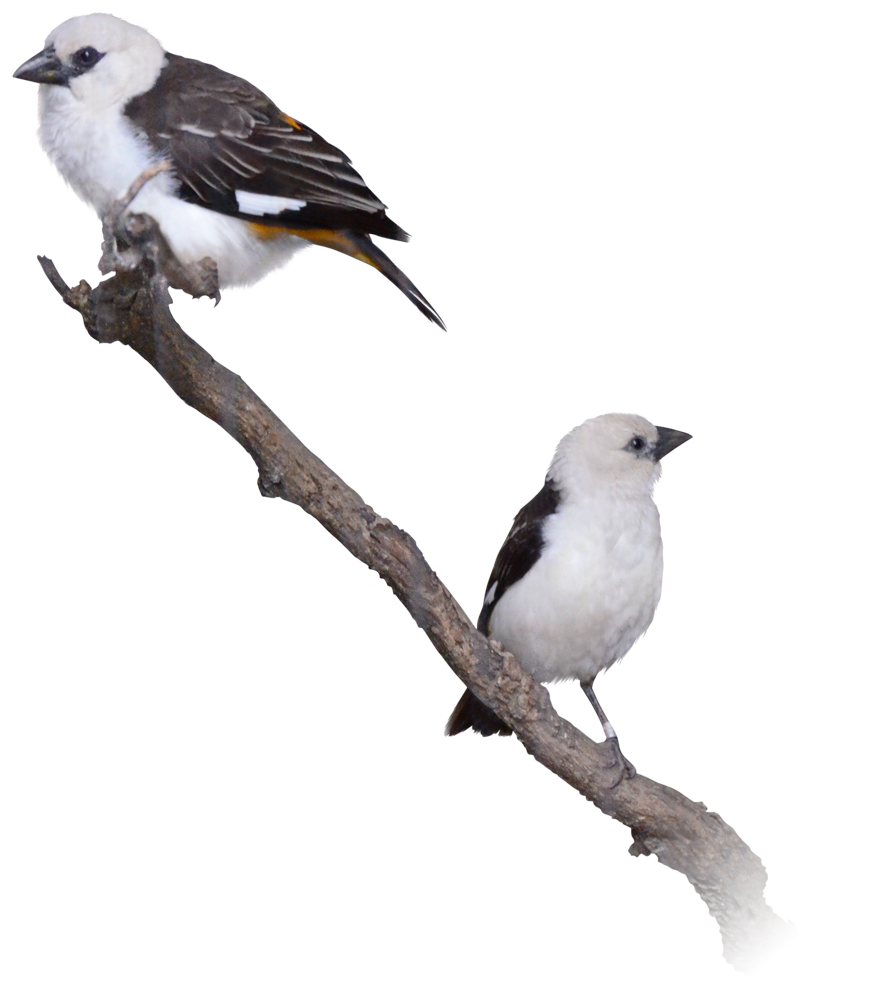
全長約18cm。東アフリカのサバンナやアカシア林に生息するハタオリドリの仲間です。頭部から腹部にかけての白色、黒い翼、そして飛翔時によく目立つ鮮やかな橙赤色の腰部が特徴で、雌雄はほぼ同じ姿をしています。太く頑丈なくちばしを持ち、他のハタオリドリ類に比べるとややがっしりとした体形です。
和名を漢字で書くと「白頭牛機織」です。「機織」は草や枝を編み込んで巣を作るハタオリドリ類の習性に由来し、「牛」は英名の Buffalo(アフリカスイギュウ)を訳したものです。本種はアフリカスイギュウなどの大型草食動物の近くで採食することが多く、動物が歩く際に草むらから飛び出した昆虫を捕らえることから、この名で呼ばれるようになりました。
食性は幅広く、甲虫類やチョウ類の幼虫などの昆虫を中心に、果実や種子も食べます。通常は3~6羽ほどの小群で地上を歩きながら採食し、ムクドリ類をはじめとする他種と混群をつくることも少なくありません。こうした群れでの行動は、効率よく餌を見つけたり、捕食者への警戒を高めたりするのに役立っていると考えられています。
巣は木の上に作られる大型の構造物で、枝や草を積み重ねて複数の部屋を備えた頑丈な住まいとなります。鮮やかな体色と社会性に富んだ行動、そして大型哺乳類とともに暮らす独特の生態によって、東アフリカのサバンナを代表する鳥の一つとして知られています。
The White-headed Buffalo Weaver is a member of the weaverbird family, measuring about 18 cm in length. It inhabits savannas and acacia woodlands of East Africa. Its striking appearance is characterized by a white head and underparts, black wings, and a vivid orange-red rump that is especially noticeable in flight. Both sexes look similar, and the species has a robust build with a thick, powerful bill compared with many other weaverbirds.
Its English name reflects a close ecological association with large grazing mammals, particularly the African buffalo. The Japanese name likewise combines the bird’s distinctive white head with its relationship to buffalo and its membership in the weaverbird family. Like other weavers, it constructs intricate nests by weaving together grasses and twigs.
An opportunistic feeder, the species consumes a wide variety of foods. Insects such as beetles and caterpillars form an important part of its diet, but it also eats fruits and seeds. Small groups of three to six birds typically forage on the ground, often near buffalo or other large herbivores. By following these animals, the birds can capture insects flushed from the vegetation as the mammals move through the grassland.
White-headed Buffalo Weavers are also highly social. They frequently join mixed-species feeding flocks with starlings and other birds, a behavior that may improve foraging efficiency and enhance vigilance against predators. Their nests, built high in trees, are large and durable structures made from sticks and grasses, often containing multiple chambers. With their vivid coloration, cooperative lifestyle, and unique relationship with Africa’s large mammals, these birds are among the most distinctive inhabitants of the East African savanna.
参考文献
“Buffalo Weavers” Weaver species category. Weaver Watch 2024年11月23日閲覧
“White-headed Buffalo-Weaver” Weaver species. Weaver Watch 2024年11月23日閲覧
“White-headed Buffalo-Weaver” oiseaux-birds.com 2024年11月23日閲覧
“White-headed buffalo weaver” Oregon Zoo. 2026年7月18日閲覧