
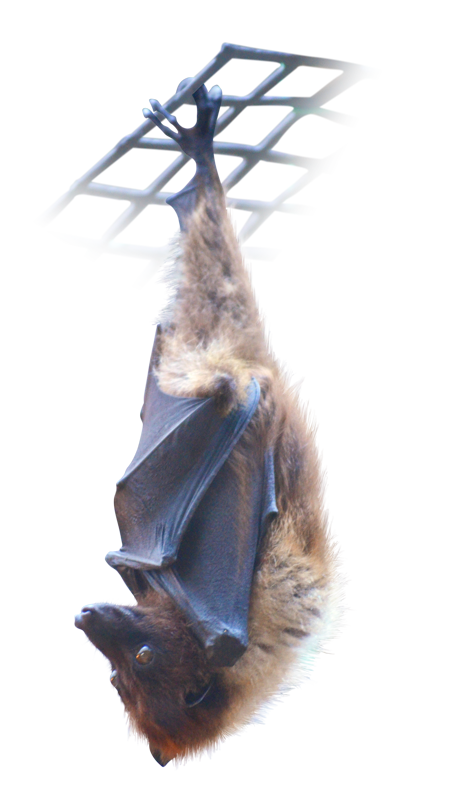
Pteropus dasymallus (Temminck, 1825)
日本の島嶼環境に生きるオオコウモリ
Flying Foxes Living in Japan’s Island Ecosystems
体長約21cm、体重300〜400g。翼を広げると1m前後に達する大型のコウモリで、オリイオオコウモリはクビワオオコウモリの一亜種として沖縄諸島(沖縄本島および周辺離島)に分布しています。背面は褐色の体毛に覆われ、首元には淡黄色の帯が入り、和名の由来となっています。
主に森林に生息する夜行性の動物で、昼間は樹上で休み、夕方から活動を始めます。市街地にも適応しており、街路樹や公園で果実を食べる姿が観察されます。食性は果実や花の蜜が中心で、葉も食べます。食物は噛んで汁を吸い、繊維質の残りを吐き出す習性があり、この過程で花粉を運び、種子を広範囲に拡散させるため、森林の維持・更新に重要な役割を担っています。
日本に生息するオオコウモリは、南西諸島に分布するクビワオオコウモリの仲間と、小笠原諸島に生息するオガサワラオオコウモリの大きく二つの系統に分けられます。クビワオオコウモリの仲間は、飛翔能力を持ちながらも海によって隔てられることで、島ごとに遺伝的な違いが蓄積し、本種のほか、南・北大東島のダイトウオオコウモリ、口永良部島のエラブオオコウモリ、八重山諸島のヤエヤマオオコウモリなどの亜種が見られます。
これら日本のオオコウモリ類は、生息地の減少や交通事故、電線への接触などにより個体数が減少傾向にあります。島嶼環境に依存する種であることから環境変化の影響を受けやすく、南西諸島と小笠原諸島の森林生態系を支える重要な存在として、その保全が求められています。
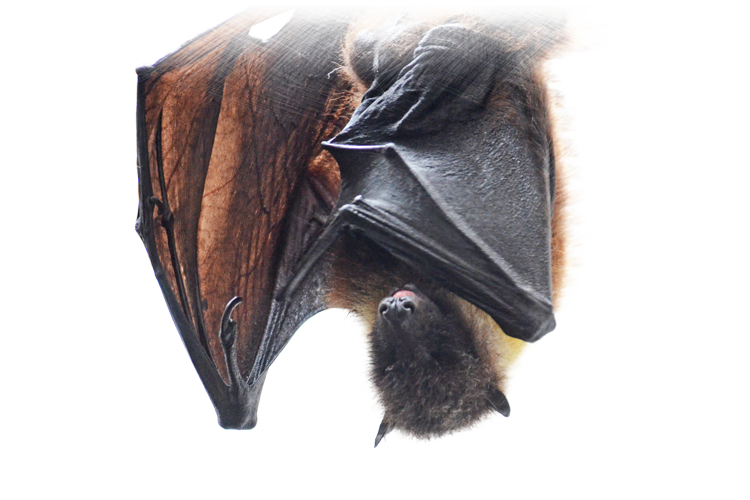
The wings are made of skin membranes called patagia. The claw on the first digit projects like a hook, allowing the bat to grasp tree branches. grasp tree branches.
The Orii’s fruit bat is a large bat with a body length of about 21 cm and a weight of 300–400 g. Its wingspan reaches around 1 meter. It is a subspecies of the Ryukyu flying fox and is distributed across the Okinawa Islands, including Okinawa Island and surrounding islets. Its back is covered with brown fur, and a pale yellow band around the neck gives the species its Japanese name.
This nocturnal species primarily inhabits forests, resting in trees during the day and becoming active at dusk. It has adapted well to urban environments and is often seen feeding on fruits in street trees and parks. Its diet mainly consists of fruits and flower nectar, though it also consumes leaves. It chews food to extract the juices and spits out the fibrous remains. Through this feeding behavior, it plays an important role in pollination and seed dispersal, contributing to the maintenance and regeneration of forest ecosystems.
Flying foxes in Japan are broadly divided into two lineages: those of the Ryukyu flying fox group distributed in the Nansei Islands, and the Bonin flying fox found in the Ogasawara Islands. Although capable of flight, the Ryukyu flying fox group has been geographically isolated by the sea, leading to the accumulation of genetic differences among island populations. As a result, several subspecies have evolved, including the Orii’s fruit bat of the Okinawa Islands, as well as distinct forms in the Daito Islands, Kuchinoerabu Island, and the Yaeyama Islands.
These flying foxes of Japan are declining due to habitat loss, traffic accidents, and collisions with power lines. As species dependent on island environments, they are highly vulnerable to environmental changes, and their conservation is essential as they play a crucial role in sustaining the forest ecosystems of the Nansei and Ogasawara Islands.
参考文献
東京ズーネット | どうぶつ図鑑 | オリイオオコウモリ 2024年9月16日
科学技術研究所 | かぎけん花図鑑 | オリイオオコウモリ | 柳下 瑞穂 | (2018年1月8日) 2024年9月16日
中本 敦・金城 和三「オキナワオオコウモリ」 p.91,「オリイオオコウモリ」p106『改訂・沖縄県の絶滅のおそれのある野生生物 第3版』 (2017年3月) 沖縄県文化環境部自然保護課編. 2024年9月16日
南大東村 | ダイトウオオコウモリ【自然】| (2026年1月1日) 2026年4月18日閲覧
鹿児島県教育委員会 | 国指定天然記念物一覧 | エラブオオコウモリ 2026年4月18日閲覧
嵩原 建二「小浜島におけるヤエヤマオオコウモリPteropus dasymallus yaeyamaeの餌植物について」小浜島総合調査報告書 (2004), P.75 -78, 沖縄県立博物館. 2026年4月18日閲覧