
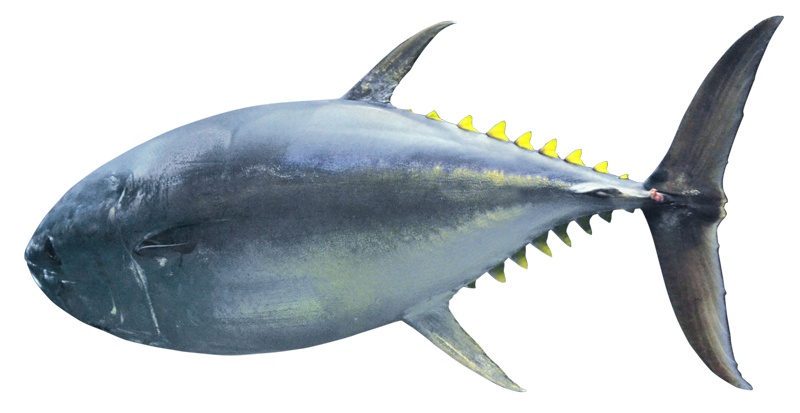
Thunnus orientalis (Temminck et Schlegel, 1844)
なぜマグロは泳ぎ続けるのか
Why Tuna Must Keep Swimming
クロマグロ(Pacific bluefin tuna)は最大で体長約3m、体重400kgに達する大型の回遊魚です。太平洋の熱帯から温帯域に広く分布し、日本沿岸にも来遊します。外洋を長距離移動しながら群れで行動し、小魚やイカ類などを捕食する高次捕食者です。日本周辺では、九州付近から太平洋側と日本海側に分かれて本州沿岸を回遊すると考えられており、季節によって水揚げされる地域が変化します。一般に秋から冬は南方、春から夏は北方での漁獲が多くなります。
日本はマグロの主要消費国であり、本種は「本鮪」として流通し、寿司や刺身などで高い人気を誇ります。一方で、漁獲個体の多くが未成熟魚であったことから資源量の減少が問題となり、かつては絶滅危惧種(VU)に分類されていました。資源管理の取り組みにより、2021年の評価では準絶滅危惧(NT)へと見直されましたが、現在も持続的な利用が求められています。
歴史的には、江戸時代にはマグロは評価が低く、脂の多いトロは「猫またぎ」と呼ばれ敬遠されていたとされます。当時は白身魚が好まれ、保存や流通の制約もあって価値は高くありませんでした。しかし近代以降、食文化の変化や冷蔵・冷凍技術の発達により評価は一変し、現在では代表的な高級食材となっています。
また、マグロは缶詰のツナとしても広く利用されます。「ツナ(tuna)」はマグロ類を指す英語名で、その語源はギリシャ語の「thynnus(突進するもの)」に由来します。クロマグロは遊泳しながら口に取り込んだ海水をエラに通して酸素を取り込むため、基本的に泳ぎ続ける必要があります。夜間には遊泳速度を落として代謝を下げることで休息状態に入ると考えられています。
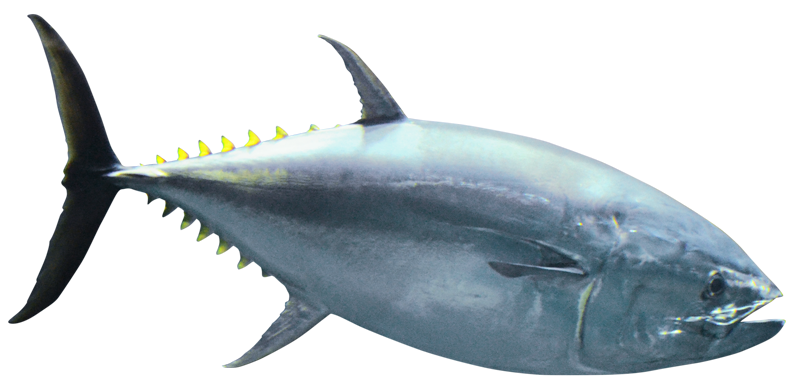
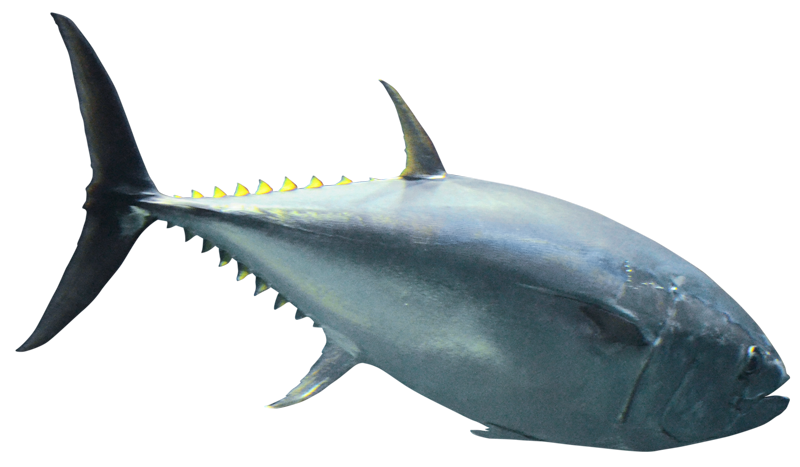
巡航速度は時速約7km程度とされますが、水中という高抵抗環境を考慮すれば高い運動能力といえます。実験下では瞬間的に時速50kmに達した例も報告されています。瞬間的なダッシュ能力や長距離を泳ぎ続ける能力を考えると、マグロは最強のスイマーであると言えます。
The Pacific bluefin tuna is a large migratory fish that can reach up to about 3 meters in length and weigh as much as 400 kilograms. It is widely distributed across tropical to temperate regions of the Pacific Ocean and also occurs along the coasts of Japan. This species travels long distances in the open ocean, forming schools and preying on small fish and squid as an apex predator. Around Japan, it is thought to migrate along both the Pacific and Sea of Japan sides after branching near Kyushu, resulting in seasonal differences in landing locations. In general, catches are more common in southern areas from autumn to winter and in northern areas from spring to summer.
Japan is one of the world’s leading consumers of tuna, and this species is marketed as “hon-maguro” (true tuna), highly prized for sushi and sashimi. However, many individuals caught have been juveniles, leading to concerns over stock depletion. It was once classified as Vulnerable (VU), but due to management efforts, its status was revised to Near Threatened (NT) in 2021. Nevertheless, sustainable use remains an important issue.
Historically, tuna was not highly valued in Japan during the Edo period. Fatty cuts such as toro were even avoided and nicknamed “neko-matagi,” implying that even cats would pass them by. At that time, white-fleshed fish were preferred, and limitations in preservation and distribution reduced tuna’s appeal. In modern times, however, changes in dietary culture along with advances in refrigeration and freezing technologies have greatly increased its value, making it one of the most popular high-end seafood items.
Tuna is also widely consumed in canned form as “tuna.” The word “tuna” refers broadly to species of the tuna group and derives from the Greek word thynnus, meaning “to rush” or “to dart.” Pacific bluefin tuna must keep swimming in order to breathe, as they obtain oxygen by passing water over their gills while moving. At night, they reduce their swimming speed and metabolic rate, entering a resting state.
Their cruising speed is around 7 km/h, which may seem slow at first glance, but is remarkable considering the resistance of water. Experimental observations have recorded bursts of up to 50 km/h. Given their ability for rapid acceleration and sustained long-distance swimming, tuna can be regarded as the ultimate swimmers.
参考文献
農林水産省 | 広報誌 aff (2015年8月号) | 特集 太平洋クロマグロの資源管理 クロマグロ食す・守る(2) 2025年2月2日閲覧
読売新聞オンライン | 太平洋クロマグロ、絶滅危惧種から引き下げ…資源回復で準危惧種に | (2021年9月6日) 2025年2月2日閲覧
IUCN | プレスリリース (2021年9月4日) | 海洋生物への圧力が増大しているにもかかわらず,マグロ類は回復しつつある- IUCNレッドリスト 2025年2月2日閲覧
クラシル | 記事 | 「大トロ」って昔は捨てられてたの?マグロと日本人の意外な歴史 | (2023年3月30日) 2025年2月2日閲覧
サライ | 下等な魚だった「まぐろ」が日本人の「ご馳走魚」に成り上がった理由 | (2016年11月29日) 2025年2月2日閲覧
アリナミン | 疲れの情報局 | なぜ、マグロは疲れないのか? | (2021年12月1日) 2025年2月2日閲覧
日本テレビ | 知識の宝庫!目がテン!ライブラリー | 世界初!(秘)マグロ 誕生 | (2007年1月14日) 2025年2月2日閲覧
松浦 啓一「したたかな魚たち」角川新書 pp.76 – 82, 92 -94