
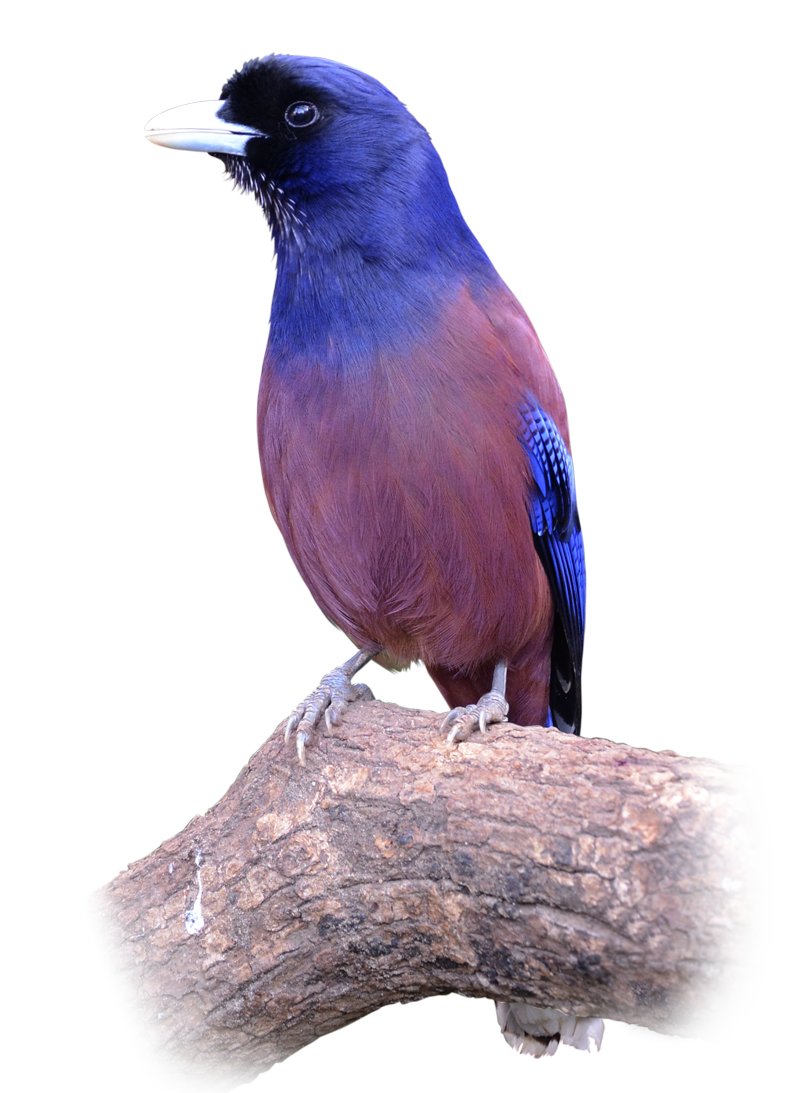
Garrulus lidthi (Bonaparte, 1850)
ヒマラヤと奄美を結ぶ鳥
The Bird That Connects the Himalayas and Amami
全長約38cm。奄美大島、加計呂麻島、請島などに生息する日本固有のカラス科の鳥です。ハトほどの大きさがあり、光沢のある青紫色の翼や尾羽と、赤褐色の頭部や胸部が織りなす鮮やかな体色は、日本の野鳥の中でもひときわ目を引きます。その美しさと希少性から国の天然記念物に指定されており、奄美の森を代表する鳥として広く知られています。主に常緑広葉樹林で暮らしますが、林縁や集落周辺に現れることもあります。昆虫や木の実、小動物などを食べる雑食性で、林内では「ギャー」「グルル」といった独特の声を響かせながら活動しています。
かつて奄美大島では、毒ヘビのハブ対策として持ち込まれたジャワマングースが野生化し、多くの固有種に深刻な影響を与えました。地上で採食することの多いルリカケスも捕食圧を受け、生息数の減少が懸念されましたが、その後の大規模な防除事業によってマングースはほぼ根絶されました。現在ではアマミノクロウサギやアマミヤマシギなどとともに個体数の回復が確認されており、世界自然遺産に登録された奄美の自然を象徴する生き物の一つとなっています。
ルリカケスはカケス属(Garrulus)に属します。同属にはユーラシア大陸に広く分布するカケスや、ヒマラヤ山麓からインド北部に生息するインドカケスが知られています。外見や分布からはカケスに近いようにも見えますが、ミトコンドリアDNAを用いた研究によって、ルリカケスはむしろインドカケスと近縁であることが示されました。この結果から、両種はかつてユーラシア大陸に広く分布していた共通祖先の系統に由来し、その後の気候変動や環境変化によって中央部の系統が失われる一方、奄美諸島とヒマラヤ周辺に取り残された集団が生き残った「遺存固有種」である可能性が指摘されています。鮮やかな姿で森を飛び回るルリカケスは、奄美の豊かな自然だけでなく、東アジアの古い森林生態系の歴史を今に伝える存在でもあるのです。
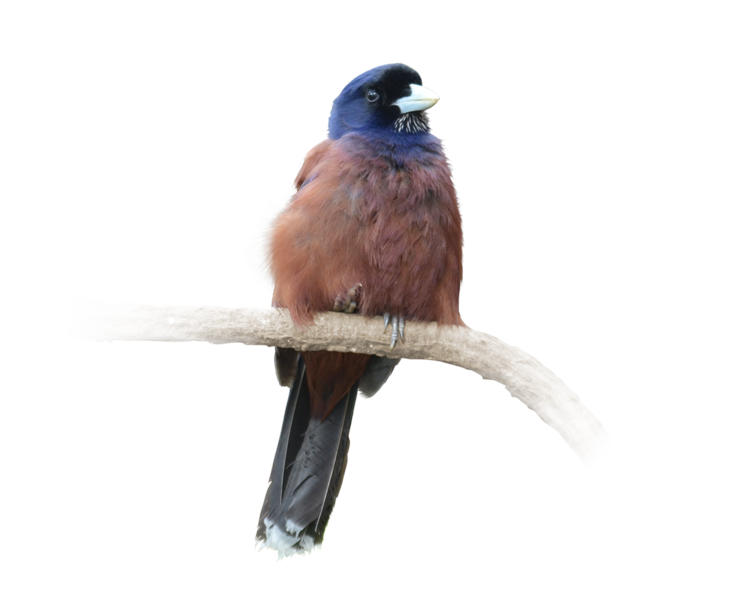
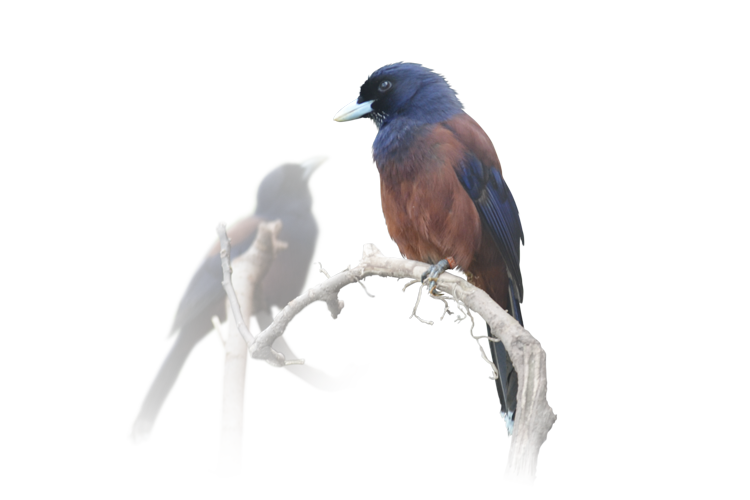
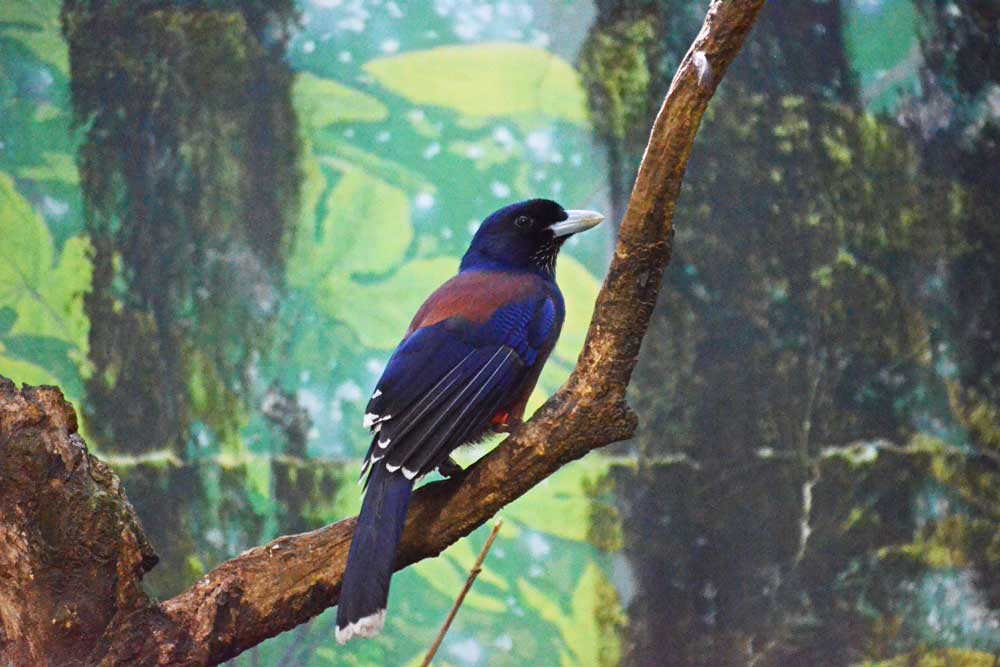
The Lidth’s Jay is a member of the crow family endemic to Japan, occurring only on Amami-Oshima, Kakeroma-jima, Uke-jima, and a few neighboring islands in the Amami archipelago. Reaching about 38 cm in length, it is roughly the size of a pigeon. Its striking plumage, combining glossy blue-violet wings and tail with a rich chestnut-brown head and breast, makes it one of Japan’s most beautiful wild birds. Owing to its rarity and distinctive appearance, it has been designated a National Natural Monument. Although it primarily inhabits subtropical evergreen broadleaf forests, it can also be seen along forest edges and around human settlements. An omnivorous species, it feeds on insects, fruits, seeds, and small animals while moving actively through the forest and producing a variety of harsh calls.
The species once faced a serious threat from the Small Indian Mongoose, which was introduced to Amami-Oshima in an attempt to control the venomous habu pit viper. The mongoose population expanded rapidly and preyed upon many endemic animals. Because Lidth’s Jays often forage on or near the ground, they were particularly vulnerable to predation, and their numbers declined. However, extensive eradication programs have since removed the mongoose from the island, allowing populations of native species such as the Amami Rabbit and the Amami Woodcock to recover. Today, the Lidth’s Jay is regarded as one of the symbolic animals of the Amami Islands, a region recognized as a UNESCO World Natural Heritage Site.
The evolutionary history of the species is especially intriguing. Lidth’s Jay belongs to the genus Garrulus, which also includes the widespread Eurasian Jay and the Himalayan and northern Indian species known as the Black-headed Jay. Despite its isolated island distribution, mitochondrial DNA studies have shown that Lidth’s Jay is more closely related to the Black-headed Jay than to the Eurasian Jay. This finding suggests that the two species may be descendants of an ancestral lineage that was once widely distributed across Eurasia. As climates and habitats changed over time, populations in the central part of the range disappeared, leaving isolated survivors in the Amami Islands and the Himalayan region. For this reason, the species is considered a possible relict endemic. More than a colorful island bird, the Lidth’s Jay represents a living remnant of the ancient forest ecosystems that once extended across eastern Asia.
参考文献
鹿児島県 | 県木・県鳥・県花 | ルリカケス 2024年6月23日閲覧
森林総合研究所 | 森林生物情報 | 森林生物 ルリカケス 2024年6月23日閲覧
石田 健 (1995)「ルリカケスは今 - 解明がまたれる興味深い生態 -」, 私たちの自然 No.404, 1995年7月号 2026年7月20日閲覧
石田 健「ルリカケス」Bird Research News Vol.7 No.4 (2010年4月21日) 2026年7月20日閲覧
石田 健 (2008)「ルリカケスが日本のレッドリスト(環境省)からはずれるにあたっての生息状況報告書(2008)」 2026年7月20日閲覧