
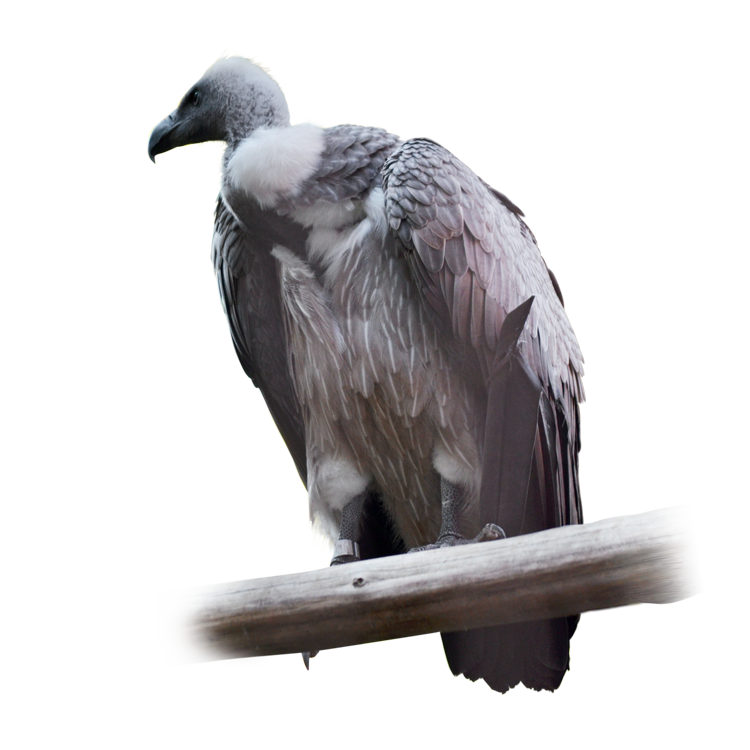
Gyps africanus (Salvadori, 1865)
密猟者が恐れる“空の目印”
The “Sky Marker” Feared by Poachers
コシジロハゲワシは、サハラ砂漠以南のアフリカに広く分布する大型のハゲワシで、アフリカのサバンナを代表する腐肉食性猛禽のひとつです。体長は78〜98cm、翼開長は約2mに達し、上昇気流を利用して長時間滑空します。和名の通り腰に白い羽毛を持ち、全身は褐色を基調としています。頭部には羽毛が少なく、これは腐肉を食べる際に血液や体液で羽が汚れるのを防ぐためと考えられています。また露出した皮膚は、強い日差しの下での放熱や体温調節にも役立っています。
主な生息地は樹木の点在するサバンナや疎林地帯で、ヌーやシマウマ、ガゼル、イボイノシシなど大型草食動物の死骸を餌としています。上空を旋回しながら広範囲を観察し、他のハゲワシや肉食獣の動きを手がかりに死骸を見つけることもあります。1羽が餌を発見すると周囲の個体も集まり、短時間で死骸を食べ尽くす光景が見られます。大量の肉を一度に食べるため、食後は腹を大きく膨らませ、地上で休息する姿も知られています。
死骸に群がる姿から不吉な印象を持たれることもありますが、ハゲワシ類は自然界の「掃除屋」として重要な役割を果たしています。腐敗する前に動物の死骸を素早く処理することで、病原菌の繁殖や拡散を抑え、生態系の衛生維持に貢献しているのです。特に大型哺乳類が多く生息するアフリカのサバンナでは欠かせない存在となっています。
近年は個体数の急激な減少が問題となっており、特に密猟に関連した毒殺が深刻視されています。密猟者は、上空を旋回するハゲワシの群れが監視隊やレンジャーに密猟現場の位置を知らせる目印になることを嫌い、ゾウなどの死骸に強力な農薬を仕込んで集まったハゲワシを大量に殺すことがあります。2019年にはボツワナで500羽以上のハゲワシが死亡する事件も報告されました。さらに生息地の減少や送電線への衝突・感電なども重なり、現在では国際的な保護活動が進められています。
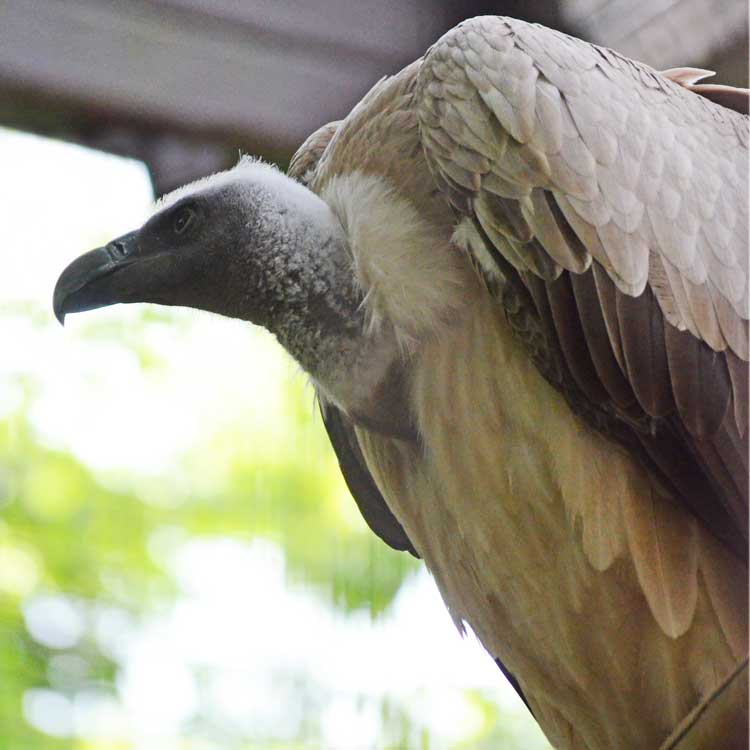
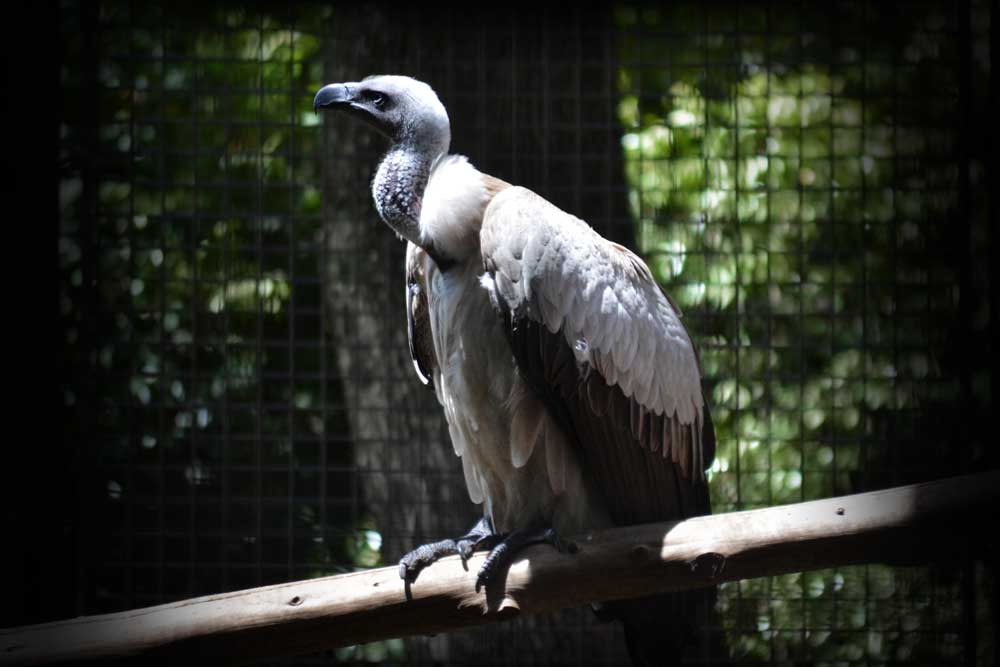
The White-backed Vulture is a large vulture found widely across sub-Saharan Africa and is one of the most iconic scavenging raptors of the African savanna. It measures 78–98 cm in length with a wingspan reaching about 2 meters, and is capable of soaring for long periods by using rising warm air currents. As its Japanese name suggests, it has distinctive white feathers on its lower back, while the rest of the body is mostly brown. Its head is sparsely feathered, an adaptation thought to help prevent blood and bodily fluids from sticking to the feathers while feeding on carcasses. The exposed skin also aids in releasing heat and regulating body temperature under the intense African sun.
This species inhabits savannas and open woodlands, where it feeds mainly on the carcasses of large herbivores such as wildebeests, zebras, gazelles, and warthogs. While soaring high overhead, it searches vast areas for carrion and may also rely on the movements of other vultures or carnivorous mammals to locate food. Once a carcass is found, many vultures quickly gather and can strip it clean in a short time. Because they consume large amounts of meat at once, they are often seen resting on the ground with swollen stomachs after feeding.
Although vultures are sometimes viewed negatively because they gather around dead animals, they play a vital role as nature’s “clean-up crew.” By rapidly disposing of carcasses before they decay, they help suppress the spread of bacteria and disease, contributing greatly to the health of the ecosystem. In the African savanna, where large mammals are abundant, they are considered indispensable scavengers.
In recent years, however, their population has declined dramatically, with poisoning linked to poaching becoming a major threat. Poachers sometimes lace elephant carcasses with highly toxic pesticides because circling vultures can reveal the location of illegal kills to rangers and patrol teams. In 2019, more than 500 vultures were reported dead in Botswana after feeding on poisoned carcasses. Habitat loss, collisions with power lines, and electrocution have also contributed to their decline, leading to growing international conservation efforts.
参考文献
White-backed vulture. NATIONAL GEOGRAPHIC. 2024年8月31日閲覧
ITmedia NEWS | 山形豪・自然写真撮影紀 | ハゲワシという鳥の存在意義 | 2011年10月21日 2024年8月31日閲覧
White-backed Vulture: Africa’s Endangered Scavenger. Working with Wildlife 2024年8月31日
CNN.co.jp「絶滅危機のハゲワシ、ゾウの死骸食べ500羽超死ぬ 密猟者が仕掛けた毒で ボツワナ」(2019年6月25日) 2026年6月7日閲覧