
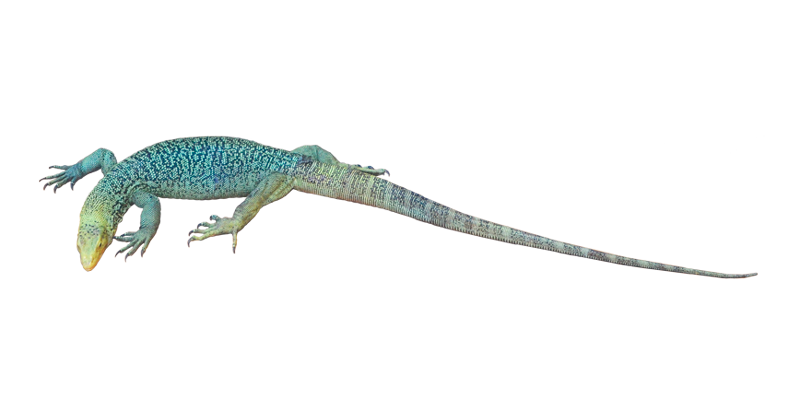
Varanus melinus (Böhme & Ziegler, 1997)
森林火災がきっかけ?新種オオトカゲの発見
A New Monitor Lizard Discovered After Wildfires
全長は約120cm。インドネシア東部のスーラ諸島にのみ生息するオオトカゲで、熱帯雨林の地表付近で生活しています。学名は Varanus melinus といい、1997年に新種として記載された比較的新しい種です。発見の契機となったのは、インドネシア各地で発生した大規模な森林火災で、焼失地の調査中に未知のオオトカゲとして注目されました。大型爬虫類でありながら近年まで科学的に知られていなかったことは、東南アジアの島嶼部に今なお未知の生物多様性が残されていることを示しています。
体色は鮮やかな黄色と黒色の網目模様が特徴で、幼体は暗色ですが、成長するにつれて黄金色が強くなります。英名 “Quince monitor” の “Quince” は西洋カリン(マルメロ)を意味し、その黄色い果実に似た体色に由来すると考えられています。また「イエローヘッドモニター」の別名でも知られます。近縁のマングローブオオトカゲ類には樹上性の種が多い一方、本種は比較的地上で活動する傾向が強いことで知られています。昆虫類や節足動物、小型爬虫類、小鳥、小型哺乳類などを捕食する肉食性です。
東南アジアはオオトカゲ類の多様性の世界的中心地であり、現在この地域だけで44種ものオオトカゲが記載されています。特にインドネシアやフィリピン周辺の島々では、島ごとに独自の進化を遂げた固有種が多く、新種の発見も現在まで続いています。一方で、美しい体色からペット目的で高値取引されることも多く、皮革利用も含めた乱獲が問題となっています。ワシントン条約によって国際取引は規制されていますが、島嶼部の個体群は調査が十分ではなく、生息状況の把握が追いついていません。ペット業界で流通する「モニター(monitor)」という名は、高い場所から周囲を見張るような行動に由来するとされ、世界中に熱心な愛好家が存在します。
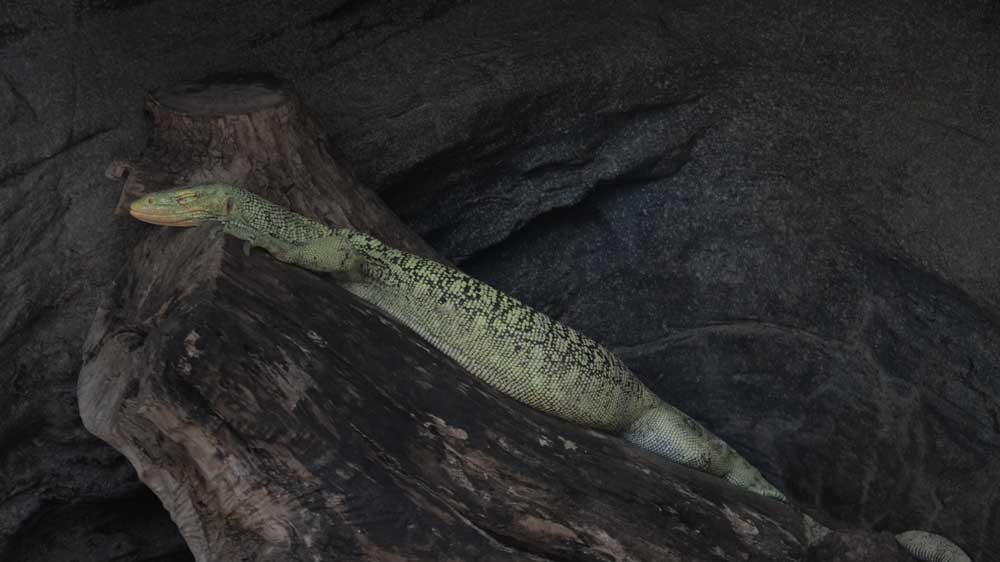
The Quince monitor is a large monitor lizard reaching about 120 cm in total length. It is endemic to the Sula Islands of eastern Indonesia, where it inhabits tropical rainforests and spends much of its time on the forest floor. Its scientific name is Varanus melinus, and it was described as a new species in 1997, making it a relatively recent discovery. The species first drew scientific attention after large-scale wildfires in Indonesia exposed previously unexplored habitats. The fact that such a large reptile remained unknown until recent decades highlights how much undiscovered biodiversity still exists on the islands of Southeast Asia.
This species is distinguished by its vivid yellow coloration with black reticulated markings. Juveniles are darker in color, gradually becoming brighter yellow as they mature. The English name “Quince monitor” is thought to derive from the quince fruit, whose yellow color resembles that of the lizard. It is also known as the “Yellow-headed monitor.” While many members of the mangrove monitor group are highly arboreal, this species is comparatively terrestrial in habit. It is carnivorous, feeding on insects, arthropods, small reptiles, birds, and small mammals.
Southeast Asia is considered the global center of monitor lizard diversity, with 44 species currently recognized from the region alone. Many islands in Indonesia and the Philippines harbor endemic species that evolved independently in isolation, and new monitor lizards continue to be discovered even today. However, their striking appearance has also made them targets for the pet trade and the leather industry. Although international trade is regulated under CITES, population monitoring in remote island habitats remains insufficient. The name “monitor,” commonly used in the pet trade, is thought to originate from the animals’ habit of climbing to elevated positions and appearing to “watch over” their surroundings, and monitor lizards have enthusiastic admirers around the world.
参考文献
All About | コガネオオトカゲ| 星野 一三雄 (2006年7月27日) 2024年9月1日閲覧
Vitt, Laurie. “monitor”. Encyclopedia Britannica, 30 Jul. 2024. 2024年9月1日閲覧