
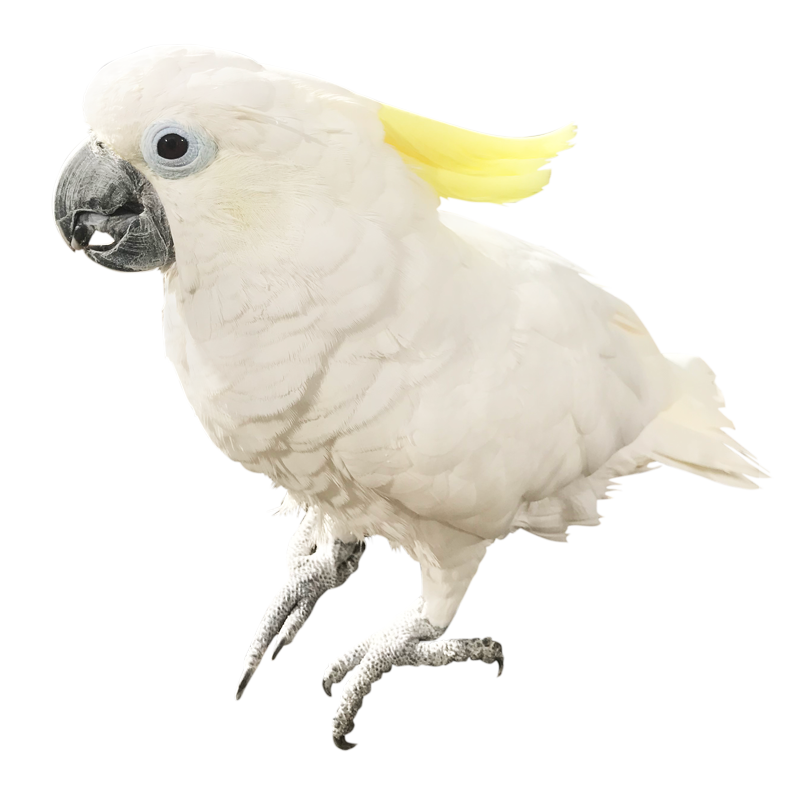
Cacatua galerita (Latham, 1790)
好奇心旺盛であらゆるものをかじるオウム
A Curious Cockatoo That Chews on Everything
体長約45~50cm、体重はおよそ700~900gに達する大型のオウムで、オーストラリア北部から東部、さらにニューギニア南部にかけて広く分布します。森林やサバンナ、農耕地、都市公園など多様な環境に適応し、人間の生活圏にも進出しています。頭部に備わる鮮やかな黄色の冠羽が特徴で、興奮や警戒時に大きく立ち上がり、個体間の意思表示にも用いられます。
雑食性で、種子や果実、木の芽、昆虫などを食べますが、強力なくちばしで農作物を荒らすこともあり、特に穀倉地帯では害鳥として問題視されています。一方で野生個体は法的に保護されており、無許可での捕獲や駆除は認められていません。高い知能と強い好奇心を持ち、有機物に限らず木材や人工物までかじる習性があり、飼育下でも破壊行動が見られることがあります。
社会性が強く、数十羽から時に数百羽の群れを形成し、夕暮れにはねぐらに集まります。繁殖期には樹洞を利用して営巣し、通常2~3個の卵を産み、雌雄で協力して抱卵と育雛を行います。鳴き声は非常に大きく甲高く、森林や都市部でも遠くまで響き渡ります。
日本では古くからオウム類を「バタン(巴旦)」と呼ぶことがあり、これは江戸時代にスマトラ島のパダンやジャワ島のバンタムといった交易港から輸入されたことに由来すると考えられています。現在でも愛嬌ある外見と高い知能から人気の飼育鳥ですが、長寿で大きな声と強い力を持つため、適切な飼育環境と十分な理解が求められます。
A large cockatoo measuring about 45–50 cm in length and weighing roughly 700–900 g. It is widely distributed across northern and eastern Australia as well as southern New Guinea. The species inhabits a broad range of environments, including forests, savannas, farmland, and even urban parks, showing a high level of adaptability to human-altered landscapes. Its most distinctive feature is the bright yellow crest on its head, which can be raised prominently when the bird is excited or alarmed and plays an important role in communication.
It is omnivorous, feeding on seeds, fruits, buds, and insects. However, its powerful bill can cause significant damage to crops, making it a pest in agricultural regions. Despite this, wild populations are legally protected, and capture or culling without permission is prohibited. Highly intelligent and curious, it tends to chew on a wide variety of objects, including wood and artificial materials, which can lead to destructive behavior in captivity.
This species is highly social, forming flocks ranging from dozens to sometimes hundreds of individuals, and gathering at communal roosts in the evening. During the breeding season, it nests in tree hollows, typically laying two to three eggs, with both parents sharing incubation and chick-rearing duties. Its loud, high-pitched calls carry over long distances, making it a conspicuous presence in both natural and urban environments.
In Japan, parrots were historically referred to as “Batan,” a name thought to derive from the trading ports of Padang in Sumatra and Bantam in Java, from which many birds were imported during the Edo period. Today, the species remains a popular companion bird due to its charming appearance and intelligence, but its longevity, loud voice, and strong beak require careful consideration and proper care.
参考文献
夢見ヶ崎動物園 | 動物紹介 | コバタン 2024年9月11日閲覧
Gigazine | オウムが「ゴミ箱のフタを開ける」という行為を急速に学んでいるという報告 | (2021年7月26日) 2024年9月11日閲覧
Newsweek日本版 | 空飛ぶギャング、怪鳥のごとき破壊鳥 ―迷惑だけど、憎めない野生の隣人たち:鳥編 | 平野 美紀 (2022年4月4日) 2024年9月11日閲覧