
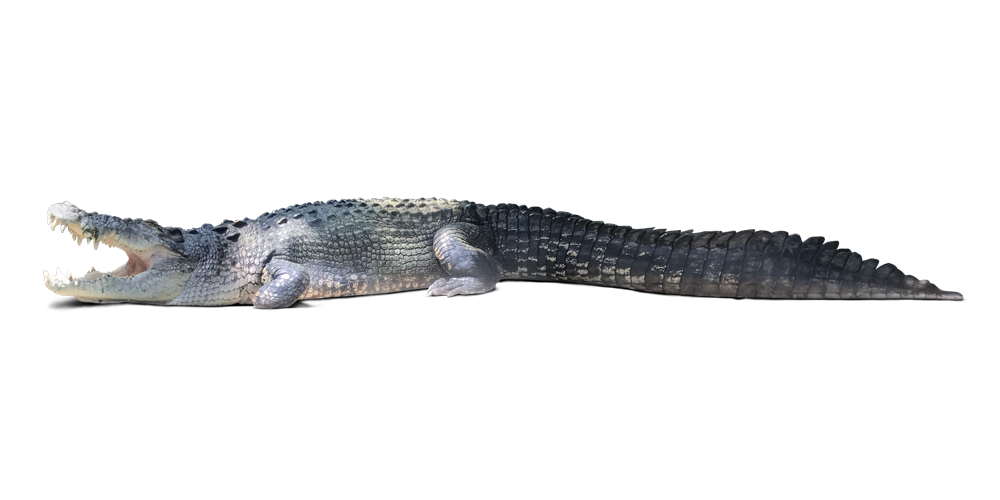
Crocodylus porosus (Schneider, 1801)
磁力を感知?巨大ワニの帰巣本能
Magnetic Sense? Homing Instinct of the Giant Saltwater Crocodile
インドから東南アジア、オーストラリアの海水と淡水が混ざる汽水域や河川、湖沼などに生息する、世界最大級の爬虫類です。平均で全長4m、体重450kgほどに成長しますが、大型の個体は全長6m、体重1tを超えることもあります。力強い顎と筋肉質の体を持ち、水辺で獲物がやってくるのをじっと待ち伏せし、スイギュウ、サル、イノシシ、さらにはサメなど、捕らえられるものは何でも捕食します。人間が襲われることもあり、現地では「人喰いワニ」として恐れられています。狩りの際には、しっぽを叩きつけるように振って水面から飛び出し、獲物を捕らえると水中に引きずり込み、溺れるのを待つ戦略を取ります。縄張り争いが激しいため、共食いすることも珍しくありません。
非常に強い帰巣本能を持ち、別の水系に移されても自分の生息地に戻ることができると考えられています。研究者の観察では、捕獲された個体が数十キロメートルを移動して元の河川や湖沼に戻る例も報告されています。この能力は、地球の磁力を感知することによって方位を割り出している可能性があり、広範囲にわたる縄張りや繁殖地を効率的に利用する手助けとなっていると考えられます。また、移動中は食料をあまり必要とせず、長時間水中でじっとして体力を温存することもできるため、危険な環境下でも安全に生息地へ戻ることができます。
古くからその皮革は高く評価され、古代エジプト時代には王族や貴族の装飾品、武器、装備品に利用されてきました。現代でも「ポロサス(スモールクロコダイル)」と呼ばれ、特に細かい鱗の配列が高級バッグや財布などに適しており、世界中で最上級の評価を受けています。ここでいう「スモールクロコダイル」とは体の大きさではなく、鱗の構造の細かさに由来する名称です。
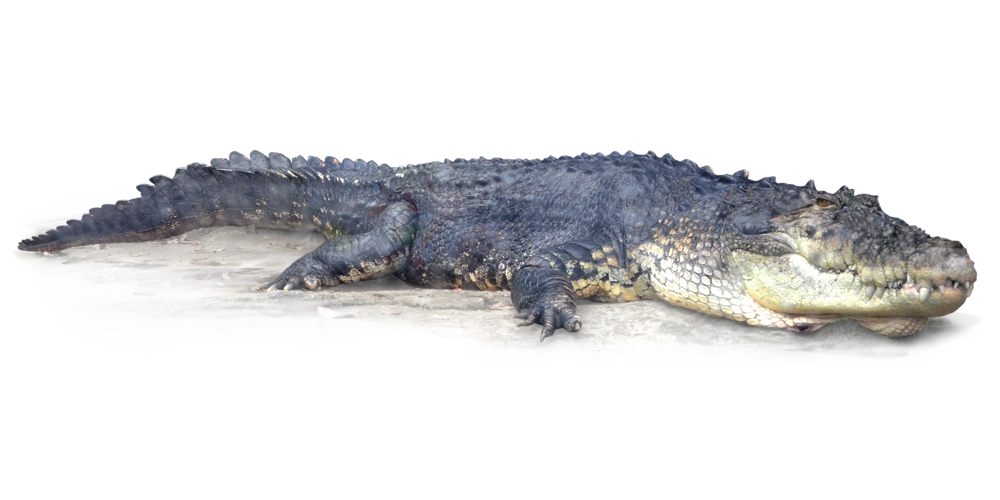
Saltwater crocodiles inhabit brackish waters, rivers, and lakes across India, Southeast Asia, and Australia. They are among the largest reptiles in the world, typically reaching 4 meters in length and 450 kg in weight, while large individuals can exceed 6 meters and weigh over a ton. With powerful jaws and muscular bodies, they patiently lie in wait at the water’s edge, preying on anything they can catch, including water buffalo, monkeys, wild pigs, and even sharks. Humans can also fall victim, and they are feared locally as “man-eating crocodiles.” During hunting, they swing their heavy tails to propel themselves from the water, seize prey, drag it underwater, and wait for it to drown. Territorial disputes are fierce, and cannibalism among individuals is not uncommon.
Saltwater crocodiles have an exceptionally strong homing instinct. Even when relocated to a different water system, they are often able to return to their original habitats, sometimes traveling tens of kilometers to do so. This remarkable ability is believed to rely on sensing the Earth’s magnetic field, allowing them to navigate as if using a natural compass. During these journeys, they require little food and can conserve energy by remaining submerged for long periods, which helps them survive in potentially dangerous environments while making their way back home.
Their leather has long been highly valued. In ancient Egypt, it was used for royal and noble ornaments, weapons, and equipment. Today, saltwater crocodile leather, known as “porosus” or “small crocodile,” remains highly prized. The fine scale pattern, rather than the animal’s size, makes it ideal for luxury handbags, wallets, and other items, earning top recognition worldwide.
参考文献
“Saltwater crocodile” Crocodiles of the World 2024年9月23日閲覧
Beatson, Cecilie (2020, November 19) “Estuarine Crocodile” Australian Museum 2024年9月23日閲覧
SBS | ワニ研究者・福田雄介さん、ワニへの思い強く ノーザンテリトリー政府でワニ研究 | (2022, June 20) 2024年9月23日閲覧
ニフレル | 生きもの図鑑 | イリエワニ 2024年9月23日閲覧
カラパイア | 体長6.1メートル、重さ1トンの巨大人食いワニがフィリピンで生け捕りにされる | (2011年9月7日) 2024年9月23日閲覧
東京クロコダイル | ブログ | 【クロコダイルの革の種類とその特徴】クロコダイルと呼べるのは4種類のワニ革だけ | (2016年1月17日) 2024年9月23日閲覧