
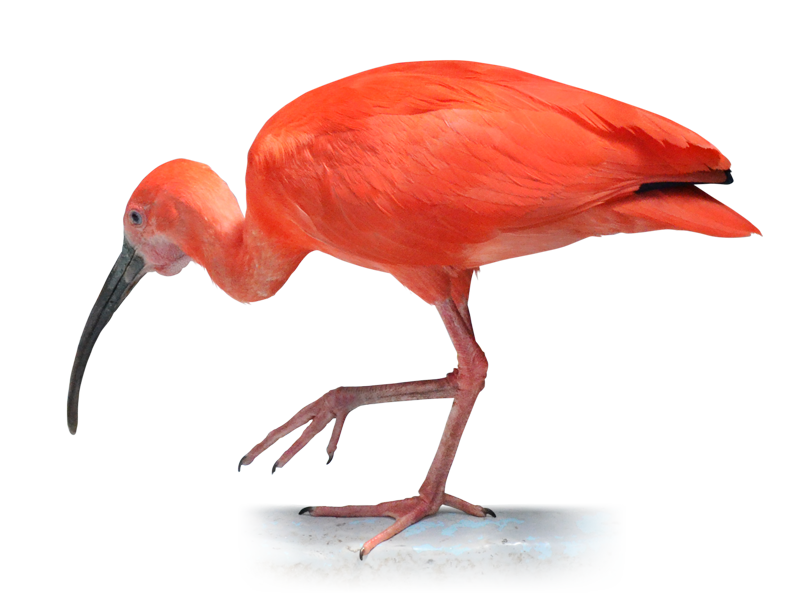
Eudocimus ruber (Linnaeus, 1758)
南米の湿地を彩る深紅の鳥
The Crimson Bird of South American Wetlands
体長約60cm。南アメリカ北部の沿岸部に分布し、河口のマングローブ林や干潟、湿地などに生息するトキの仲間です。全身を覆う鮮やかな朱赤色の羽毛が最大の特徴で、トキ類の中でもひときわ目立つ存在です。この赤色は体内で作られるものではなく、カニやエビなどの甲殻類に含まれるカロテノイド色素を餌から取り込むことで生じます。これはフラミンゴの羽色が赤くなる仕組みと同じです。
長く下向きに湾曲したくちばしを使い、浅い水辺の泥の中を探りながら甲殻類や小魚、昆虫などを捕食します。群れで生活することが多く、通常は数十羽規模ですが、繁殖期には数千羽から時に1万羽以上が集まる大規模なコロニーを形成します。樹上に巣を作り、集団で繁殖することで捕食者への警戒や防衛の効果を高めていると考えられています。
成鳥の鮮烈な赤色とは対照的に、幼鳥は灰褐色から黒褐色の羽毛に覆われています。成長に伴って徐々に赤色の羽が増え、完全な成鳥羽になるまでにはおよそ2年かかります。そのため群れの中では、黒っぽい若鳥から真っ赤な成鳥までさまざまな色彩の個体を見ることができます。
本種はアメリカシロトキと極めて近縁で、成鳥では全身が赤いショウジョウトキに対し、アメリカシロトキは白い体に黒い風切羽を持つことで区別できます。しかし幼鳥の羽色はよく似ており、外見だけで見分けることは容易ではありません。分布が重なる地域では自然交雑も確認されており、かつては同一種あるいは亜種とする説も提唱されましたが、近年の遺伝学的研究により現在は別種として扱われています。
和名の「猩猩(しょうじょう)」は、中国の伝説に登場する赤い顔をした霊獣に由来するとされています。日本では古くから鮮やかな赤色を示すものに「猩々」の名が用いられ、赤毛の類人猿であるオランウータンも「猩猩」と呼ばれてきました。本種もその印象的な朱赤色の羽毛から「ショウジョウトキ」と名付けられたのでしょう。群れで飛び立つ際に見せる一面の赤い羽は壮観で、南米の湿地を代表する鳥の一つとなっています。
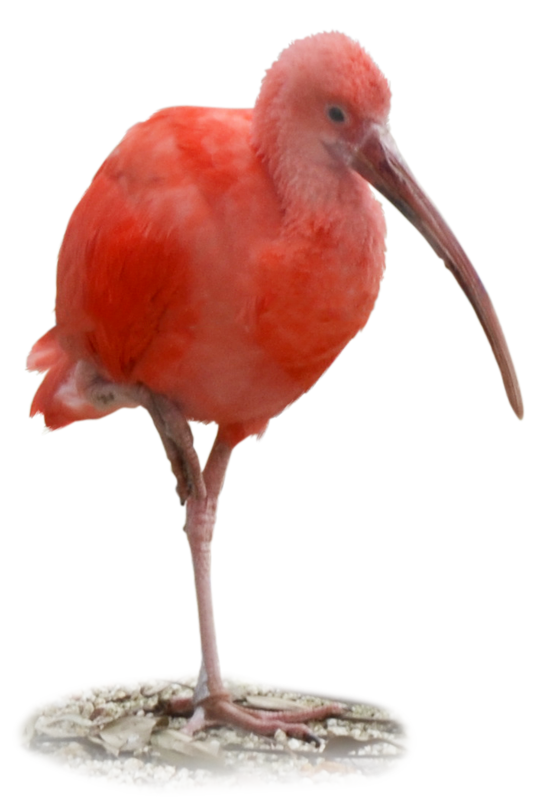
The Scarlet Ibis is a wading bird measuring about 60 cm in length. It is distributed along the northern coasts of South America, inhabiting mangrove forests, tidal flats, estuaries, and wetlands. Its most striking feature is its brilliant scarlet plumage, which makes it one of the most conspicuous members of the ibis family. This vivid coloration is not produced by the bird itself but comes from carotenoid pigments obtained through its diet, particularly from crabs, shrimp, and other crustaceans. This is the same mechanism responsible for the pink and red coloration of flamingos.
Using its long, downward-curved bill, the Scarlet Ibis probes soft mud in shallow waters to feed on crustaceans, small fish, insects, and other invertebrates. It is a highly social species, usually found in flocks of several dozen individuals. During the breeding season, however, thousands and sometimes more than 10,000 birds may gather to form enormous nesting colonies. They build their nests in trees, and colonial breeding is thought to improve protection against predators through collective vigilance.
In contrast to the brilliant red plumage of adults, juveniles are covered in grayish-brown to dark brown feathers. Their plumage gradually changes as they mature, and it takes about two years for them to acquire the fully red adult coloration. As a result, flocks often contain individuals displaying a wide range of colors, from dark immature birds to bright red adults.
The Scarlet Ibis is very closely related to the American White Ibis. Adults are easily distinguished, as the Scarlet Ibis is entirely red, whereas the American White Ibis has white plumage with black wing tips. Juveniles of the two species, however, are remarkably similar in appearance and can be difficult to tell apart. Natural hybridization has been recorded where their ranges overlap, and some researchers once proposed treating them as a single species or as subspecies. Recent genetic studies, however, support their classification as separate species.
The Japanese name Shojojitoki derives from “Shōjō,” a legendary creature in Chinese folklore characterized by its red face. In Japan, the term shōjō has long been associated with vivid red coloration and was also historically applied to orangutans because of their reddish hair. The Scarlet Ibis was likely given this name because its brilliant scarlet plumage evokes the image of this legendary being. When large flocks take flight, their sweeping waves of red create a spectacular sight, making the species one of the most iconic birds of South American wetlands.
参考文献
静岡県立日本平動物園 | 動物紹介 | ショウジョウトキ 2024年8月18日閲覧
海遊館 | ブログ「海遊館日記」 | 猩々緋(しょうじょうひ) | (2015年6月1日) 2024年8月18日閲覧
THE能.COM | 演目辞典 | 猩々(しょうじょう) 2024年8月18日閲覧