
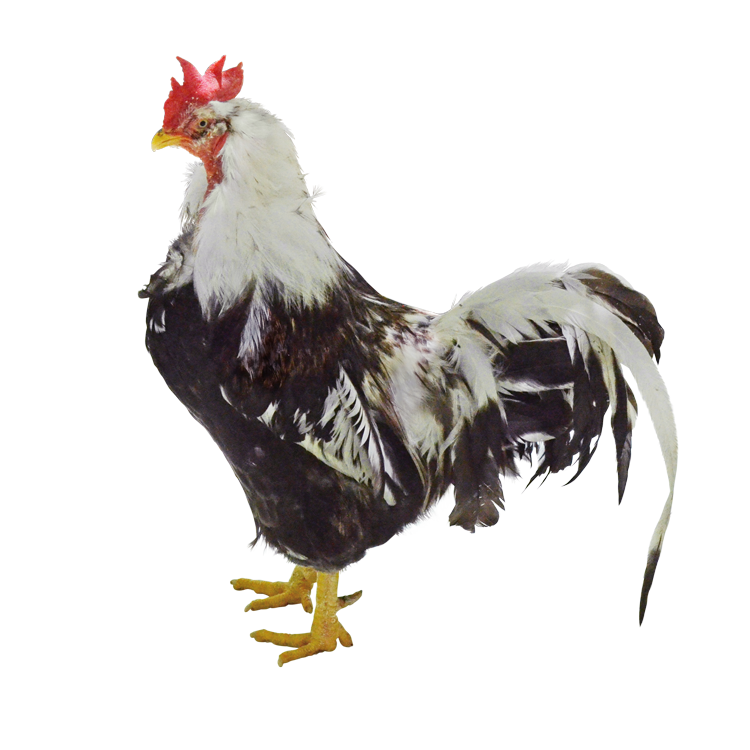
Gallus gallus domesticus
心を豊かにする鶏の声
The Sound of Chickens Enriches the Soul
今から約600年前、琉球王国時代に中国から沖縄へ伝来し、士族や富裕層の間で声や体形を楽しむ愛玩用として飼育されてきた鶏です。名称の「ウタイチャーン」は「唄うチャーン」を意味し、「チャーン」は中国語の唄鶏「チャンチィ」に由来するとされています。現在は沖縄県の天然記念物に指定されています。
本種は「ケッ、ケーーーーッ、ケッ」と三音節で唄うように鳴くのが最大の特徴です。その鳴き声は琉球古典音楽の散山節にたとえられ、打ち出し(ウチンザシ)、吹き上げ(フチンザシ)、声の引き止め(クゥイトメ)、しめ(チラシ)、声の長さ(クィーナギ)といった要素で鑑賞されます。さらに声質は三線の音色になぞらえられ、高音・中音・低音の調和が重視されます。
その澄んだ鳴き声は人々に心の豊かさをもたらすとされ、毎朝これを聞くことで清々しい気持ちで一日を始められるともいわれています。沖縄の伝統文化と深く結びついた、極めて独自性の高い家禽です。
The Utai-chaan is a breed of domestic chicken that was introduced to Okinawa from China approximately 600 years ago, during the Ryukyu Kingdom period. It was traditionally kept by members of the warrior class and wealthy families as an ornamental bird, appreciated for its voice and body form. The name “Utai-chaan” means “singing chaan,” with “chaan” believed to derive from the Chinese term “chan-chi,” referring to a singing chicken. Today, it is designated as a Natural Monument of Okinawa Prefecture.
This breed is distinguished by its song-like call, typically rendered in three syllables as “ke, keeeee, ke.” Its vocalization is often compared to the Ryukyuan classical piece “Sanjan-bushi,” and is evaluated based on several elements: the opening note (uchinzashi), the rising tone (fuchinzashi), the sustained note (kuitome), the closing phrase (chirashi), and the length of the call (kuinagi). The quality of the voice is further likened to the tones of the sanshin, encompassing high, middle, and low registers.
The clarity and beauty of its call are said to enrich the human spirit, and it is believed that hearing it each morning brings a sense of freshness to the start of the day. This remarkable breed represents a unique fusion of natural history and Okinawan cultural tradition.
参考文献
沖縄こどもの国 | 動物図鑑 | ウタイチャーン(沖縄在来鶏) 2025年8月30日閲覧
うるま市 | 県指定の文化財 | チャーン 2025年8月30日閲覧
うるま市チェーン愛好会 | 沖縄県指定天然記念物 チャーン 2025年8月30日閲覧
琉球新報 (2016年12月31日)「チャーン 歌うような美声 高らかに響く」YouTube. 2025年8月30日閲覧