
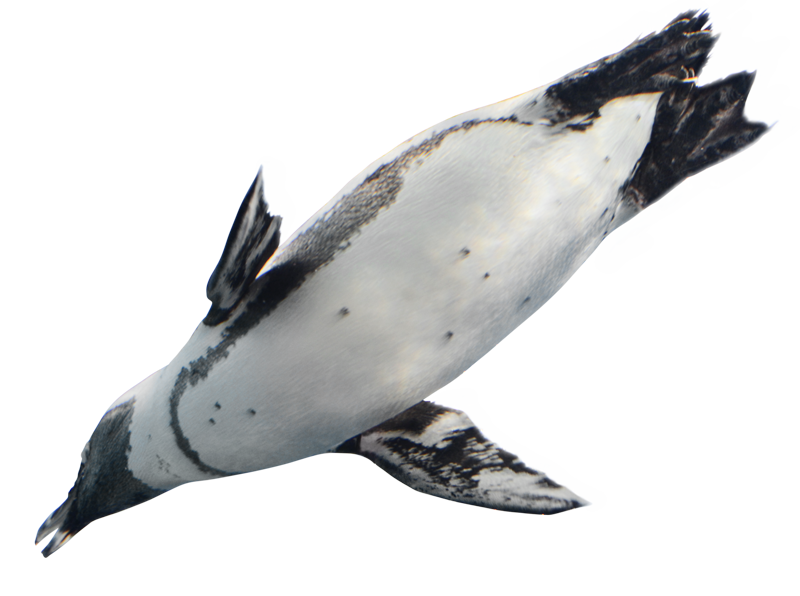
Spheniscus demersus (L., 1758)
ロバのように鳴く南アフリカのペンギン
The South African Penguin That Brays Like a Donkey
アフリカ南端のナミビア南部から南アフリカ共和国沿岸にかけて分布するペンギンです。全長は約60〜70cm、体重は2〜3kgほどで、温暖な海域に適応したペンギンとして知られています。沿岸の島々や岩礁地帯に集団で繁殖し、巣穴や岩陰を利用して産卵します。鳴き声がロバのいななきに似ていることから、英語では “Jackass Penguin” と呼ばれることもあります。
優れた遊泳能力を持ち、普段は数十m程度を潜水して餌を探しますが、深い場合には130m前後まで潜ることもあります。主食はカタクチイワシやニシン類などの小魚で、ほかに甲殻類やイカ、タコなども捕食します。海中では翼をヒレのように使って素早く泳ぎ、群れで行動する魚を追い込みながら捕食します。
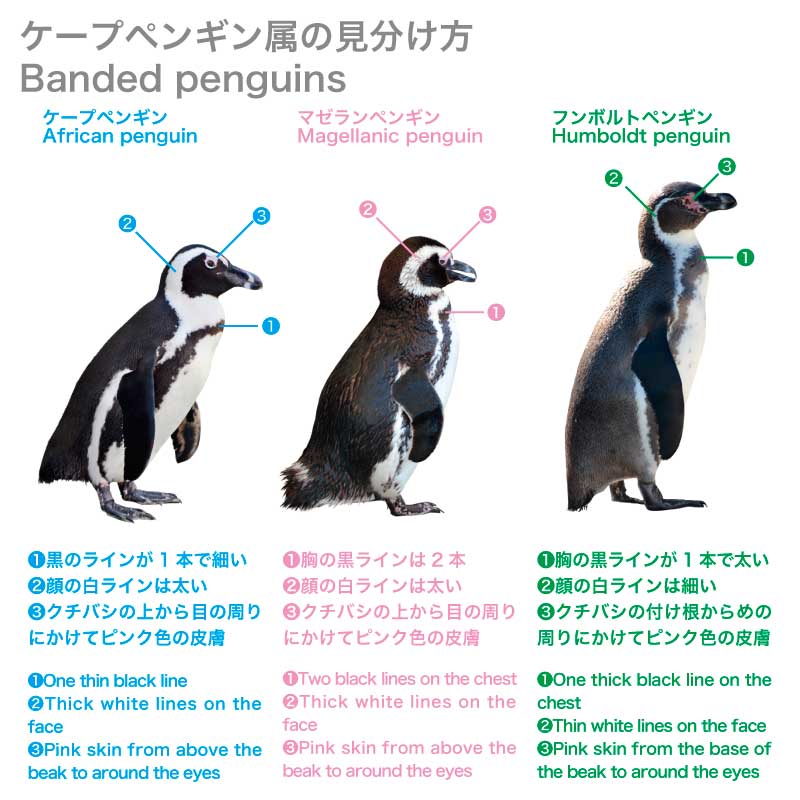
同じケープペンギン属(バンデッドペンギン属)に分類されるフンボルトペンギン、マゼランペンギン、ガラパゴスペンギンとはよく似ていますが、胸の黒帯が細く1本のみであることや、顔の白い部分が広いことなどが本種の特徴です。また、目の上にはピンク色の皮膚が露出しており、ここを通る血管で熱を逃がすことで体温調節を行っています。寒冷地のペンギンとは異なり、暑い環境への適応が見られる点も特徴です。
19世紀初頭には約400万羽が生息していたと推定されていますが、近年は急激に減少しており、2019年頃には繁殖個体数が2万つがい前後まで落ち込んだとされています。主な原因は、過剰漁獲や気候変動による餌資源の減少です。特にイワシ類の減少は深刻ですが、一方でイワシ漁は地域経済を支える重要な産業でもあり、全面禁漁は地元漁業に大きな打撃となります。そのため南アフリカでは、繁殖地周辺に限定的な漁業規制区域を設け、巻き網漁を制限する保護策が検討されています。
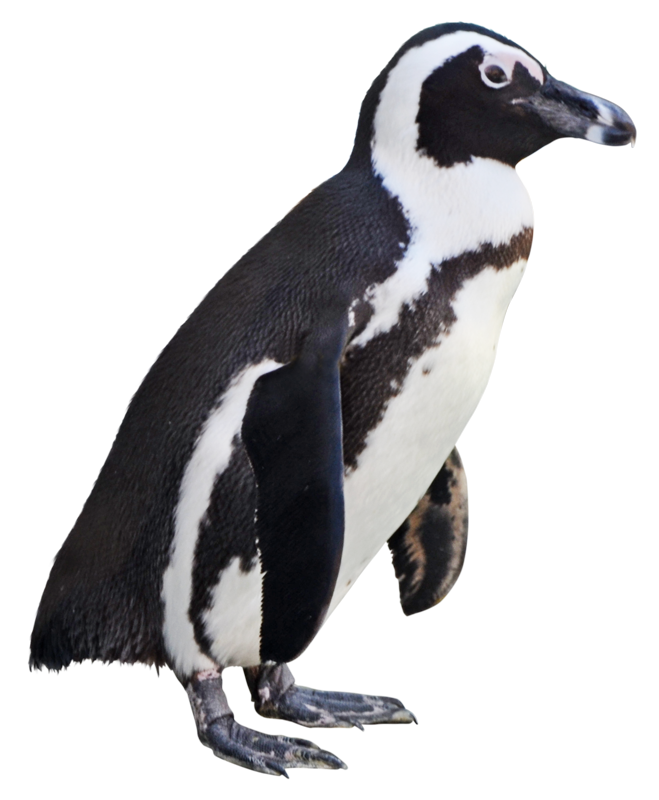
The African penguin is distributed along the coasts of southern Namibia and South Africa at the southern tip of Africa. Adults measure about 60–70 cm in length and weigh around 2–3 kg. Unlike Antarctic penguins, this species is adapted to relatively warm marine environments. They breed colonially on offshore islands and rocky shores, nesting in burrows or beneath rocks. Because their calls resemble the braying of a donkey, they are also known in English as the “Jackass Penguin.”
They are highly skilled swimmers and divers. Although they usually forage at depths of several tens of meters, they are capable of diving to around 130 m. Their diet mainly consists of small schooling fish such as anchovies and sardines, but they also feed on crustaceans, squid, and octopus. Underwater, they use their flipper-like wings to propel themselves rapidly while chasing schools of fish.
African penguins belong to the genus Spheniscus, which also includes the Humboldt, Magellanic, and Galápagos penguins. These species closely resemble one another, but the African penguin can be distinguished by its single narrow black band across the chest and the relatively large white patches on the face. Another notable feature is the pink bare skin above the eyes, where blood vessels help release excess heat and regulate body temperature. This adaptation reflects their life in warmer climates compared with cold-adapted penguins of Antarctica.
The population is believed to have numbered around four million individuals in the early nineteenth century, but it has declined drastically in recent decades. By around 2019, the breeding population had fallen to only about 20,000 pairs. The primary cause is the depletion of food resources due to overfishing and climate change. In particular, the decline of sardine populations has become a serious problem. However, sardine fisheries are also economically important to local communities, and a complete fishing ban would severely affect regional livelihoods. As a result, South Africa has considered establishing limited marine buffer zones around breeding colonies where purse-seine fishing would be restricted.
参考文献
ニフレル | 生きもの図鑑 | ケープペンギン 2024年9月1日閲覧
ナショナルジオグラフィック | 撮影ストーリー | ケープペンギンが危ない、15年後に絶滅の恐れも 写真12点 | (2021年11月13日) 2024年9月1日閲覧
Cannon, John C. (2017年3月24日) “生態学的罠(ecological trap)」が絶滅危惧種のケープペンギンを罠に掛ける”. MOGABAY 2024年9月1日閲覧
“African Penguin Spheniscus demersus”. San Diego Zoo Wildlife Alliance. 2024年9月1日閲覧
Thompson, Helen (2014, July 30) “Scientists Decode African Penguin Calls” Smithsonian Magazine. 2026年5月23日閲覧