
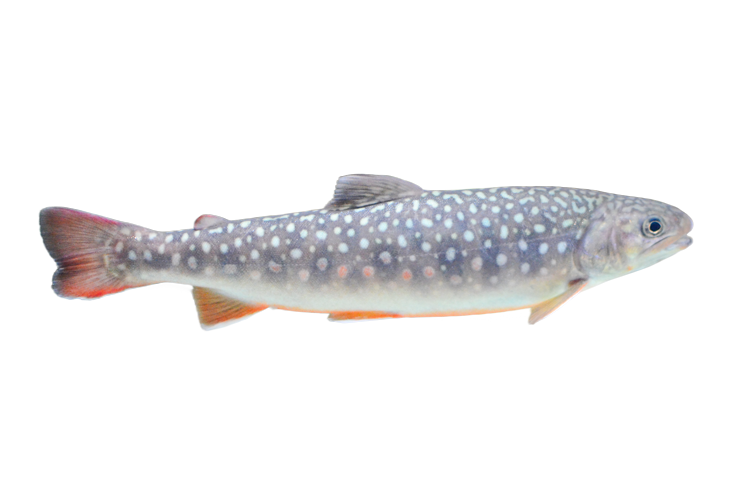
Salvelinus leucomaenis pluvius (Hilgendorf, 1876)
冷たい渓流に生きる白斑のイワナ
A Whitespotted Char of Cold Mountain Streams
日本の山地を流れる冷たい渓流に生息する、サケ科イワナ属の魚です。現在は一般にイワナ(Salvelinus leucomaenis)の地域型として扱われていますが、かつてはニッコウイワナに相当する個体群を独立種 Salvelinus pluvius とし、その後は亜種 S. l. pluvius とする分類も用いられてきました。主に本州の東北地方から中部地方にかけて分布し、河川の最上流部や支流など、水温の低い環境で暮らします。
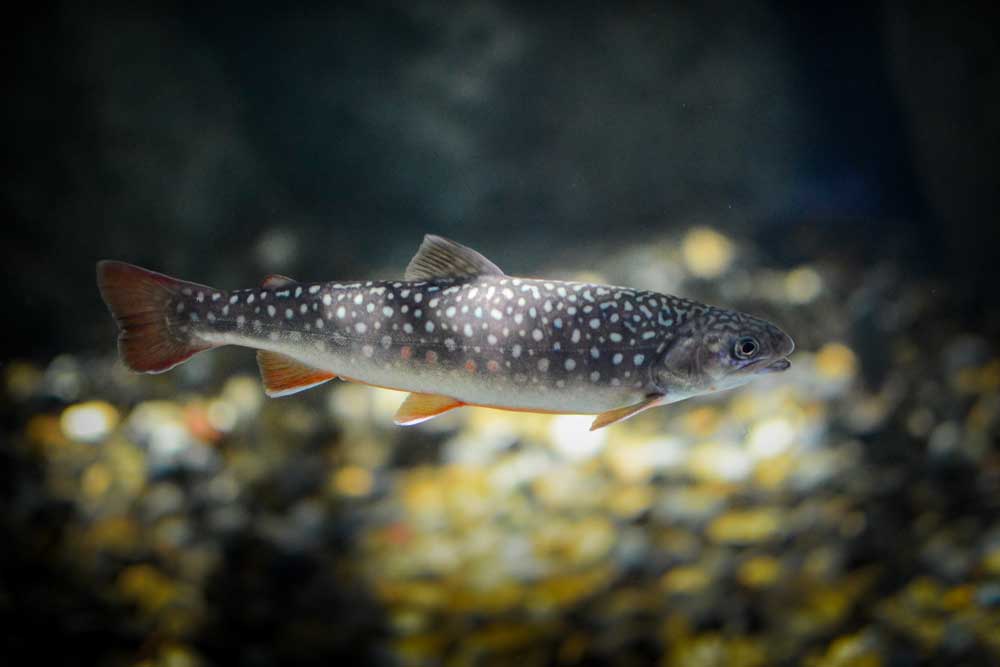
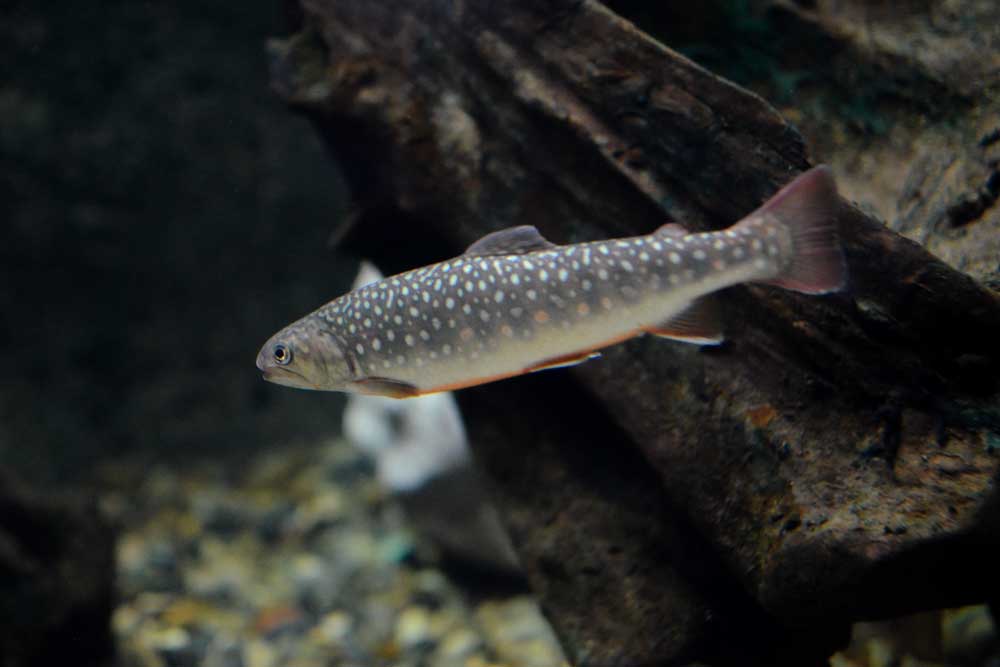
体色は暗い褐色から緑褐色を帯び、体側には白色の斑点が並び、その間に黄色から橙色、赤みを帯びた斑点が現れます。こうした斑紋には地域差や個体差があり、同じイワナ類でもヤマトイワナなどとは色彩の傾向が異なります。ニッコウイワナでは白色斑が比較的よく目立つことが特徴ですが、斑紋だけで地域型を明確に区別できない場合もあります。また繁殖期には、特に雄の有色斑が鮮やかになることがあり、赤みを帯びて見える個体もいます。ただし、赤みのある体色すべてを婚姻色とみなすことはできません。
肉食性で、水生昆虫を主な餌としながら、水面に落ちてくる陸上昆虫や小魚なども捕食します。冷水を好み、夏の最高水温が13~15℃程度以下となるような最上流部にも生息します。流れの中で餌を待ち、昆虫が水面に落ちると素早く食いつくほか、季節や成長に応じて利用する餌を変えます。
秋になると産卵期を迎え、9月下旬から11月上旬ごろ、支流や細い谷川などの砂礫底に産卵床をつくります。雌が尾を使って砂礫を掘り、卵を産むと雄が放精し、その後、雌は卵の上に砂礫をかぶせます。ニッコウイワナはこのような冷たい山間の河川環境に適応した生活を送り、日本の渓流を代表する魚の一つとなっています。
The Whitespotted Char is a salmonid fish of the genus Salvelinus that inhabits cold mountain streams in Japan. It is now generally regarded as a regional form of the Japanese char, Salvelinus leucomaenis. In the past, however, the population corresponding to the Whitespotted Char was described as a separate species, Salvelinus pluvius, and was later also treated as a subspecies, S. l. pluvius. It is found mainly from the Tohoku to central regions of Honshu, where it inhabits cool environments such as headwaters and tributary streams.
Its body is generally dark brown to greenish brown, with white spots along the sides and yellow, orange, or reddish spots scattered among them. The pattern varies among individuals and regions, and differs in tendency from that of other regional forms of Japanese char, such as the Yamato Char. The conspicuous white spots are one of its characteristic features, although coloration alone cannot always be used to clearly distinguish regional forms. During the breeding season, the colored spots, particularly in males, may become more vivid, and some individuals may appear noticeably reddish. However, not all reddish coloration should be regarded as breeding coloration.
The Whitespotted Char is carnivorous, feeding mainly on aquatic insects, while also taking terrestrial insects that fall onto the water and small fish. It prefers cold water and can inhabit the uppermost reaches of streams where summer maximum water temperatures remain around 13–15°C or lower. It waits in the current for prey and quickly takes insects that fall onto the water surface, while adjusting its diet according to the season and its stage of growth.
The breeding season comes in autumn, generally from late September to early November. Fish move into tributaries and small mountain streams, where they create spawning redds in gravel beds. The female uses her tail to excavate the gravel and deposits her eggs, after which the male releases sperm. The female then covers the eggs with gravel. The Whitespotted Char is highly adapted to the cold, clear waters of mountain streams and is one of Japan’s characteristic freshwater fish.
参考文献
国立研究開発法人 水産研究・教育機構 | 日本のサケ科魚類 2026年10月12日閲覧
国立環境研究所 | 侵入生物データベース | イワナ 2026年10月12日閲覧
長野県 | 水産試験場 | 信州の魚たち | イワナ 2026年10月12日閲覧