
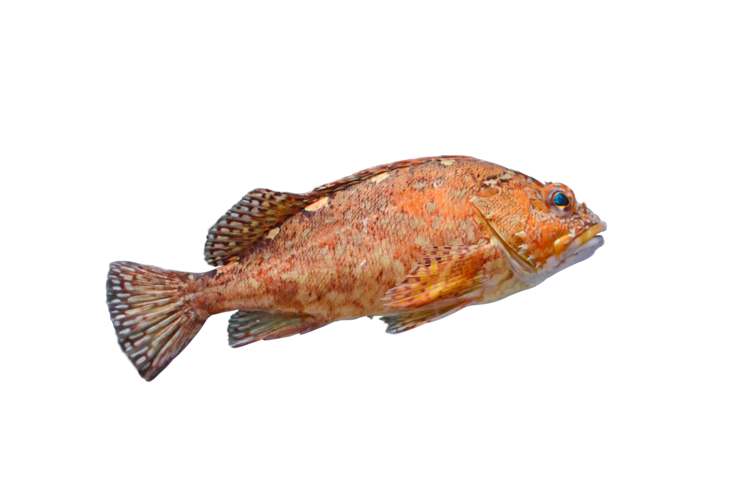
Sebastes marmoratus (Cuvier, 1829)
魔除けになった魚
The Fish That Became a Talisman
カサゴは、日本近海で身近に見られるメバルの仲間です。北海道南部からフィリピンにかけての西太平洋に分布し、日本では沿岸の岩礁や転石帯など、海底に起伏のある場所で暮らしています。岩陰や岩の隙間などを生活場所とし、最大で全長36cmほどになります。
大きな頭と口、太い体、頭部から背鰭にかけて並ぶ鋭い棘が特徴です。体色は褐色から赤褐色、暗色まで変化があり、体側には不規則な斑紋が入ります。岩礁の複雑な景観に紛れやすい姿をしており、背鰭などの棘の基部には毒腺があります。刺されると強い痛みを生じるため、扱う際には注意が必要です。
カサゴは海底近くで甲殻類や魚類などを捕らえる肉食性の魚です。東京湾の調査では、成魚の餌としてエビやカニなどの甲殻類が特に重要で、クモヒトデ類や端脚類も利用していました。成長すると魚類を利用する割合が高くなることも報告されています。また、卵を体外に産み出すのではなく、体内で胚を発生させて仔魚を産む「胎生」も大きな特徴です。
人との関わりも古く、江戸時代の『和漢三才図会』には「笠子魚」として記載されています。武骨で鋭い棘を持つ姿から、端午の節句の祝魚に用いられたとする記録もあります。さらに佐渡では、カサゴの干物を軒先に吊るして魔除けにしたという風習が伝えられています。食用としてだけでなく、そのいかつい姿そのものが、人々の暮らしの中で特別な意味を持っていたことがうかがえます。
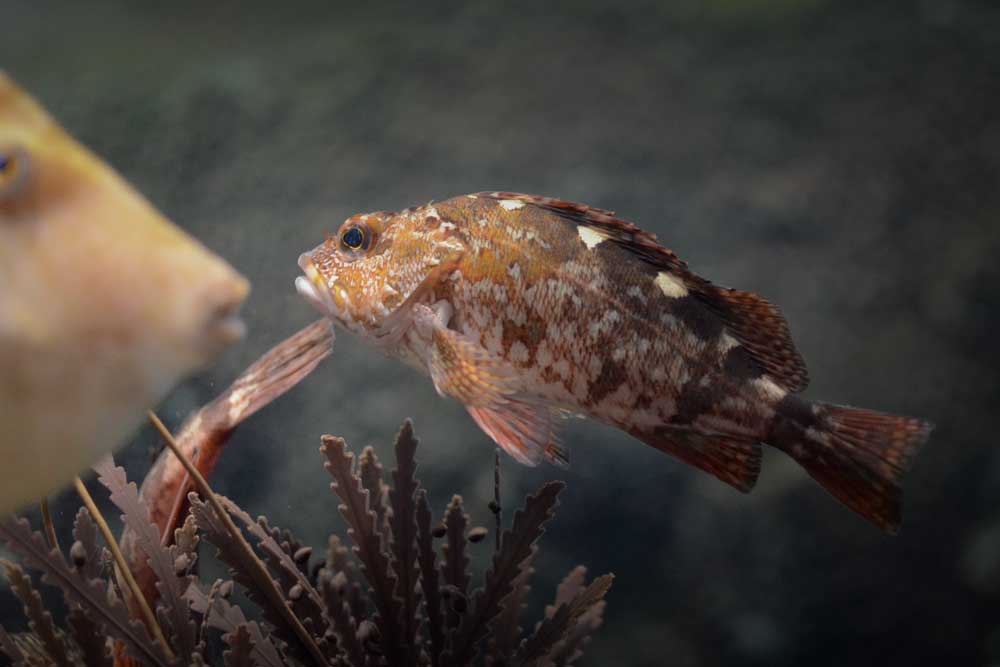
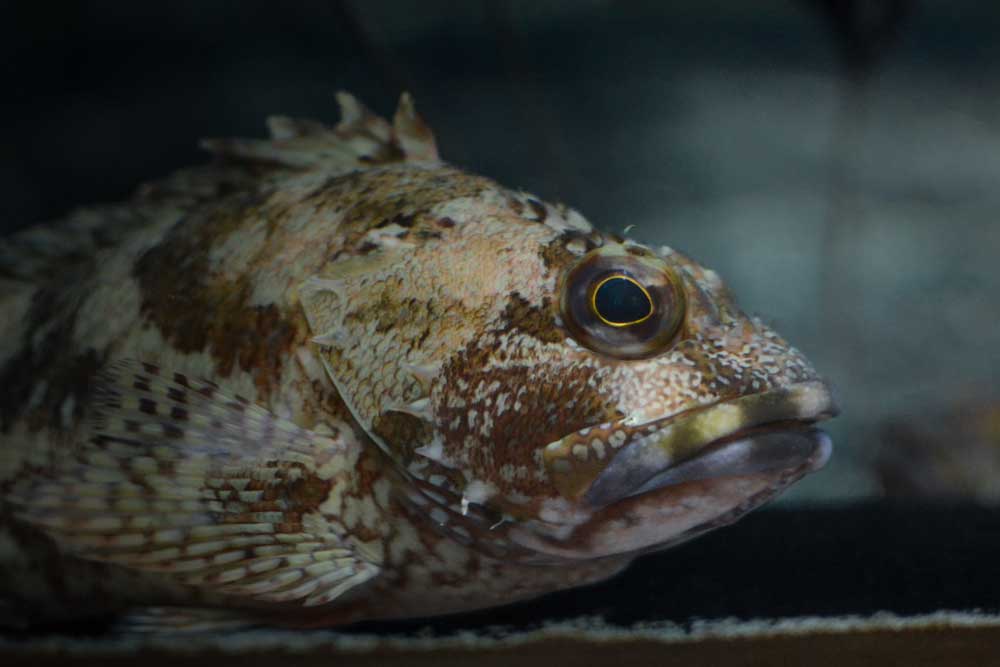
The False Kelpfish is a familiar member of the rockfish family found in waters around Japan. It occurs in the western Pacific from southern Hokkaido to the Philippines, inhabiting coastal rocky reefs and areas of scattered rocks where the seafloor is uneven. It often stays among crevices and beneath rocks, and can reach about 36 cm in total length.
Its distinctive features include a large head and mouth, a stout body, and a row of sharp spines extending from the head to the dorsal fin. Its coloration varies from brown and reddish brown to dark shades, with irregular markings along the sides of the body. This mottled appearance allows it to blend into the complex surroundings of rocky reefs. The bases of its dorsal and other spines contain venom glands, and a puncture can cause intense pain, so care should be taken when handling the fish.
The False Kelpfish is a carnivorous fish that feeds near the seafloor on crustaceans and fish. A study in Tokyo Bay found that crustaceans, particularly shrimps and crabs, were important prey for adults, along with brittle stars and amphipods. The proportion of fish in its diet also increases as it grows. Another notable feature is its reproductive strategy: rather than releasing eggs into the water, it develops embryos inside the body and gives birth to larvae.
The fish has also had a long association with people. It was described as “Kasago” in the Wakan Sansai Zue, an encyclopedia compiled during the Edo period. Its rugged appearance and sharp spines are also said to have led to its use as a ceremonial fish for the Boys’ Festival. On Sado Island, there is a tradition of hanging dried False Kelpfish under the eaves of houses as a form of protection against evil. Thus, the fish was valued not only as food but also for its distinctive, formidable appearance, which came to hold a special place in local traditions.
参考文献
Froese, R. & Pauly, D. (eds.) — FishBase: Sebastiscus marmoratus 2026年10月3日閲覧
寺島良安(1712頃)『和漢三才図会』巻第四十八・四十九「魚類」 2026年10月3日閲覧
海洋生物環境研究所 | 海の豆知識 Vol.34 カサゴ 2026年10月3日閲覧
橋本慎治・岩本善(2023)「東京湾沿岸域におけるカサゴ成魚の食性」『水産増殖』71(2): 115–118. 2026年10月3日閲覧