
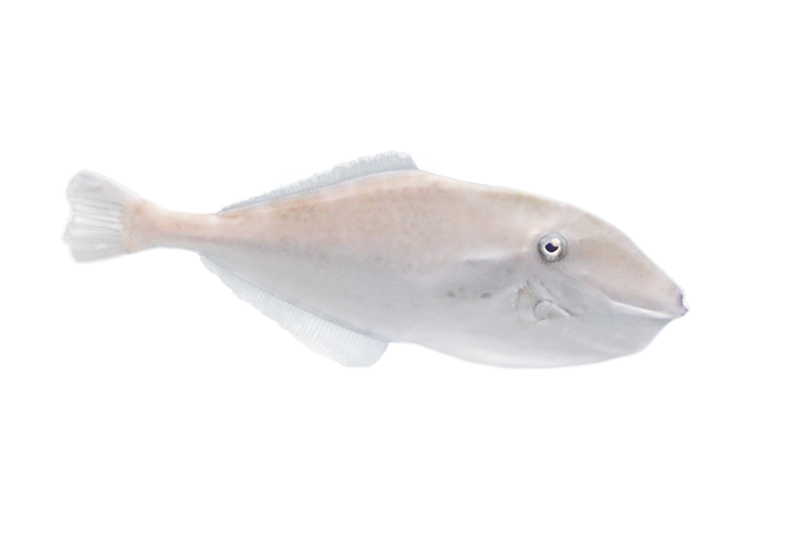
Aluterus monoceros (Linnaeus,1758)
海を漂う幼魚、海底を泳ぐ成魚
Drifting Juveniles, Seafloor-Dwelling Adults
ウスバハギは、カワハギ科のなかでも大型になる魚で、全長70cmを超え、最大では約76cmに達します。世界の温帯から熱帯海域に広く分布し、日本では北海道以南の沿岸で見られます。体は著しく左右に平たく、灰色から灰褐色をした大きな体は、まるで一枚の葉のようです。「ウスバハギ」という和名も、この薄く平たい体つきに由来します。英名の「Unicorn Leatherjacket」は、頭部から角のように突き出す細長い第1背鰭棘にちなんだものです。
この第1背鰭棘には、カワハギ類特有のロック機構があります。棘を立てると、その後ろにある非常に小さな第2背鰭棘が基部とかみ合い、直立した状態を保ちます。第2棘は皮膚の下にほぼ埋もれているため、外からはほとんど見えません。立てた第1棘は、岩の隙間などに体を引っ掛けて捕食者に引きずり出されにくくしたり、体を大きく見せて飲み込まれにくくしたりする防御に役立つと考えられています。
幼魚は成魚とは異なり、海面を漂う流れ藻やクラゲなどの浮遊物に身を寄せて生活します。こうした浮遊物は隠れ場所になるだけでなく、幼魚を広い海域へ運ぶ「いかだ」のような役割を果たす可能性もあります。成長すると浮遊生活を離れ、海底近くで暮らすようになります。食性も変化し、幼魚では動物プランクトンや小型の底生動物、小魚などを利用しますが、成魚では魚類や甲殻類などを中心に食べます。
成魚は単独やペアで見られるほか、海藻などの浮遊物の下に群れをつくることもあります。繁殖は年間を通して行われると考えられ、ベンガル湾では複数の産卵期が確認されています。薄く平たい体と角のような背鰭棘、そして漂流する幼魚期。ウスバハギは、成長に伴って暮らす場所と食生活を大きく変える、個性的なカワハギの仲間です。
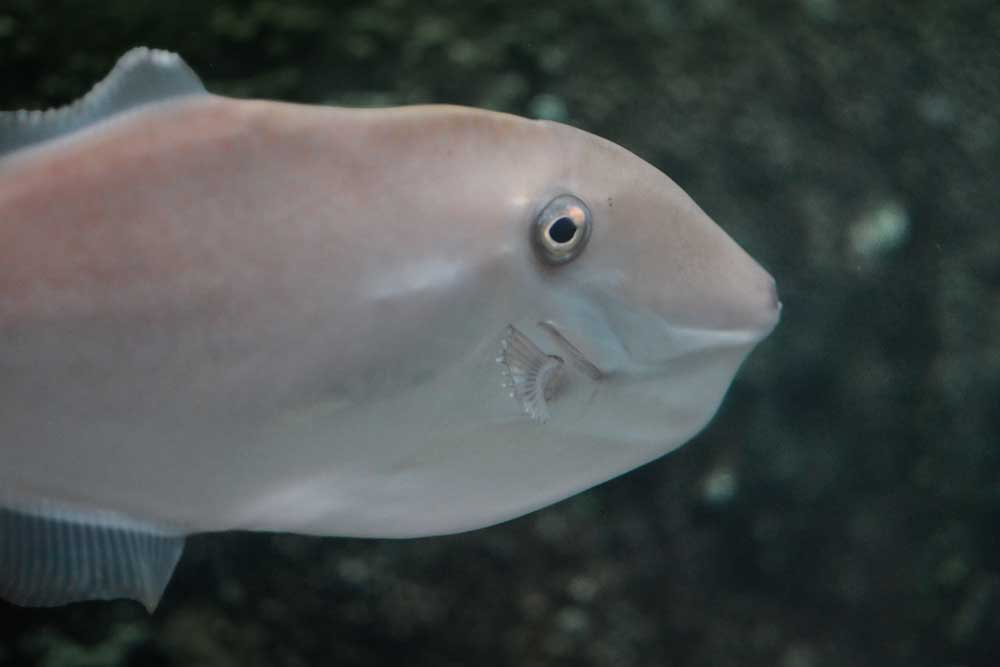
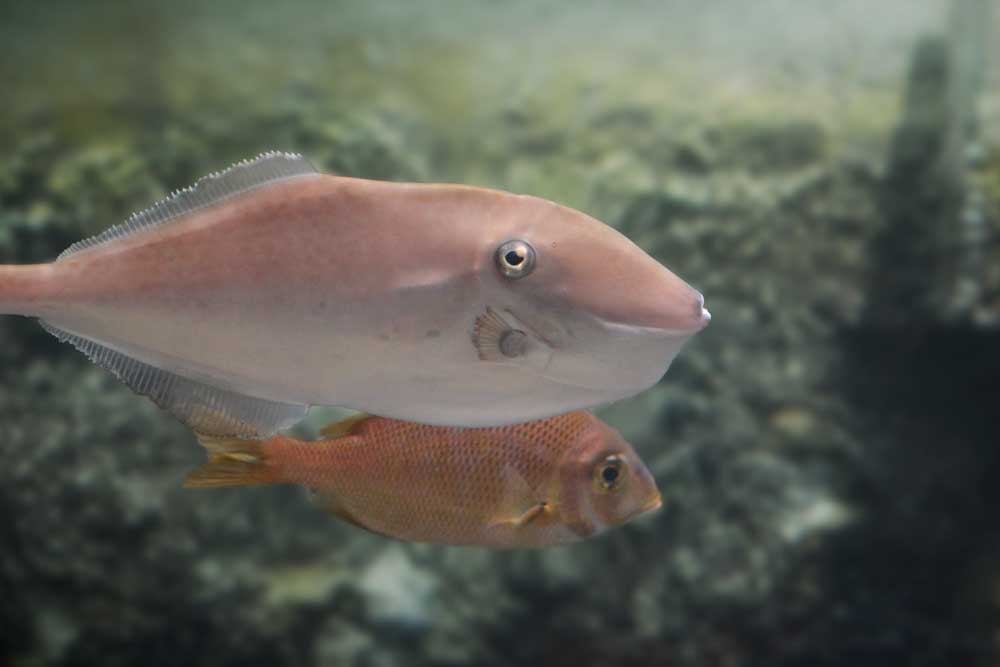
The unicorn leatherjacket is one of the larger members of the filefish family, growing to over 70 cm in length, with a maximum recorded length of about 76 cm. It is widely distributed in temperate and tropical waters, and in Japan it occurs along the coast from Hokkaido southward. Its body is remarkably compressed from side to side, and its large gray to grayish-brown body resembles a single broad leaf. The Japanese name Usubahagi refers to this thin, flattened body shape. Its English name, “Unicorn Leatherjacket,” comes from the slender first dorsal spine that projects from the head like a horn.
This first dorsal spine has a locking mechanism characteristic of filefishes. When the spine is raised, a very small second dorsal spine immediately behind it engages with the base of the first spine, allowing it to remain upright. The second spine is highly reduced and almost completely embedded beneath the skin, making it barely visible externally. The raised first spine is thought to help protect the fish by allowing it to wedge its body into crevices and resist being pulled out by predators, while also making the body more difficult to swallow.
Unlike adults, juveniles live among floating objects such as drifting seaweed and jellyfish near the surface. These floating objects provide shelter and may also act like “rafts,” helping the juveniles disperse across wide areas of the ocean. As they grow, they leave this drifting lifestyle and move closer to the seafloor. Their diet changes as well: juveniles feed on zooplankton, small benthic organisms, and small fish, while adults mainly consume fish and crustaceans.
Adults are usually seen alone or in pairs, but they may also form groups beneath floating seaweed and other drifting objects. Reproduction is thought to occur throughout the year, with multiple spawning periods reported in the Bay of Bengal. With its remarkably flattened body, horn-like dorsal spine, and drifting juvenile stage, the unicorn leatherjacket is a distinctive filefish whose habitat and diet change considerably as it grows.
参考文献
“Aluterus monoceros (Linnaeus, 1758)” FishBase. 2026年9月27日閲覧
ぼうずコンニャクの市場魚介類図鑑 | ウスバハギ 2026年9月27日閲覧