
Amphiprion ocellaris (Lacépède, 1802)
白帯の数で変わる縄張り行動
Territorial Behavior Shaped by the Number of White Bars
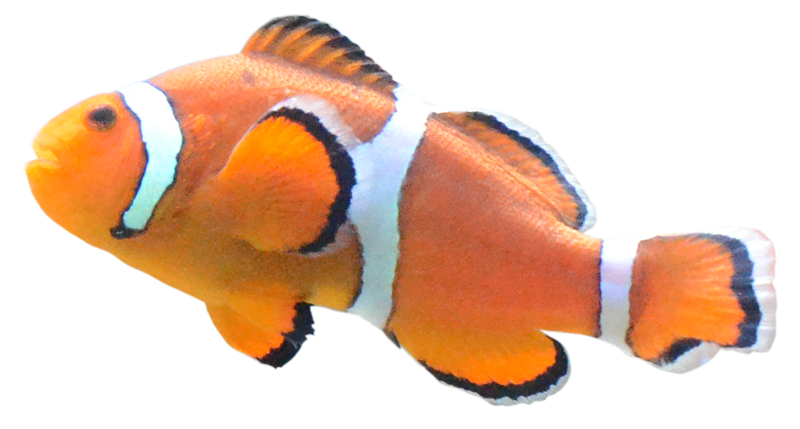
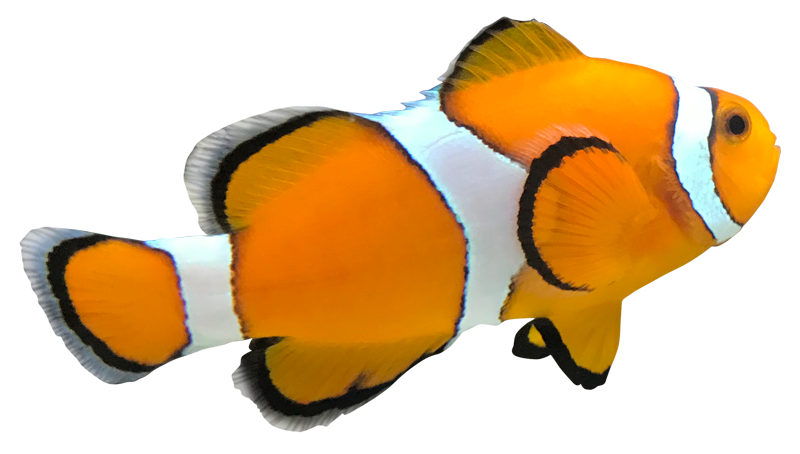
体長は約8cmで、クマノミ類の中ではやや細長い体形をしています。インド太平洋に広く分布し、フィジーやトンガなどのサンゴ礁域で普通に見られます。イソギンチャクと共生し、触手の中に身を隠して外敵から身を守りながら生活する一方、餌を運ぶなどして宿主にも利益を与える相利関係を築いています。体色は鮮やかなオレンジ色に3本の白帯が入るのが基本ですが、地域によって変異があり、オーストラリア北部ダーウィン周辺では体色が黒から暗褐色になる個体も確認されています。
本種は単独ではなく、1つのイソギンチャクに複数個体で暮らす群れを形成し、その内部には明確な順位構造が存在します。最大個体がメス、次に大きい個体がオスとなり、その他は未成熟個体として共存します。この序列は体サイズによって維持され、上位個体がいなくなると下位個体が性転換や成長によってその地位を引き継ぎます。イソギンチャクは生活の場であると同時に縄張りでもあり、侵入者に対しては強い攻撃行動が見られます。
近年の研究では、この攻撃行動に体側の白帯の本数が関係している可能性が示されています。縄張りに侵入した個体に対し、白帯が3本で自種に近い相手ほど強く攻撃し、帯の数が少ない相手には攻撃性が低下することが確認されました。さらに、白帯の数のみを再現した模型にも同様の反応が見られたことから、本種は帯の本数を手がかりに相手を識別し、脅威の度合いを判断していると考えられます。
The clownfish Amphiprion ocellaris reaches about 8 cm in length and has a slightly more slender body than other anemonefishes. It is widely distributed across the Indo-Pacific and is commonly found on coral reefs, particularly around Fiji and Tonga. This species lives in symbiosis with sea anemones, sheltering among their tentacles to avoid predators while providing benefits in return, such as delivering food. The body is typically bright orange with three white bars, although regional variation occurs; in northern Australia around Darwin, individuals with black to dark brown coloration have been reported.
Rather than living alone, this species forms small groups within a single host anemone. These groups have a strict size-based hierarchy: the largest individual is a female, the second largest is a breeding male, and the remaining individuals are non-breeding juveniles. This social order is maintained by body size, and when a dominant individual disappears, subordinates ascend in rank, with males capable of changing sex into females. Because the host anemone functions both as shelter and territory, intruding individuals are met with strong aggression.
Recent studies suggest that this aggression is influenced by the number of white bars on the body. Intruders with three bars, resembling the same species, receive stronger attacks, whereas individuals with fewer bars elicit weaker responses. Experiments using models that replicate only the number of bars have shown similar reactions, indicating that these fish may assess competitors by “counting” the bars and judging the level of threat. This behavior provides insight into cognitive abilities and social interactions in fishes.
参考文献
Marine Diving Web | 海のいきもの | 第43回 カクレクマノミとニモの話 2024年9月15日閲覧
Spectrum Brands | カクレクマノミ飼育の魅力6つのこと | (2021年11月8日) 2024年9月15日閲覧
Amphiprion ocellaris. Discover Fishes. FLORIDA MUSEUM. 2024年9月15日閲覧