
Rhinoceros unicornis (Linnaeus, 1758)
鎧を纏った孤高の一角獣
The Armored, Solitary One-Horned Giant
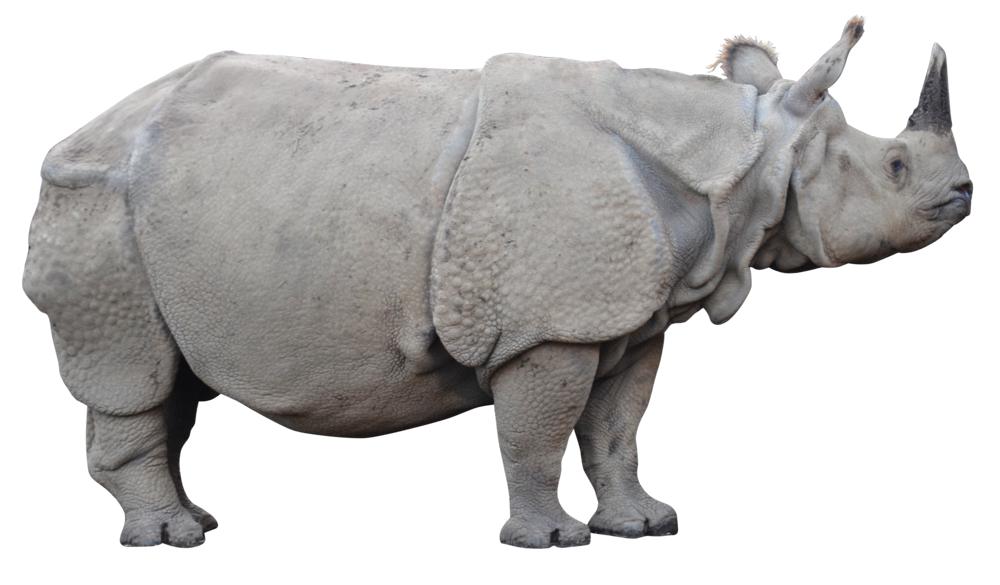
頭胴長310〜420cm、尾長60〜80cm、肩高170〜200cm、体重1,500〜3,500kgに達する大型のサイで、現生するサイの中ではアフリカのシロサイに次ぐ巨体を誇ります。主にインド北東部からネパール南部にかけて分布し、ガンジス川流域の氾濫原や草原、湿地帯など水辺環境に強く依存して生息します。かつては広範囲に分布していましたが、20世紀初頭にはスポーツ狩猟や角の需要による乱獲、生息地の開発によって100頭程度まで激減しました。しかし各国の保護政策や国立公園の整備、密猟対策の強化により個体数は回復し、2022年時点で約4,000頭にまで増加しています。
最大の特徴は1本の角と、まるで鎧をまとったように見える厚く折り重なった皮膚です。皮膚は最厚部で約5cmにも達し、外敵や環境から身を守る役割を果たしていますが、実際には柔軟性があり関節部の可動性を確保しています。視力は弱い一方で嗅覚と聴覚が発達しており、危険察知に重要な役割を担います。食性は草食で、イネ科植物を中心に水生植物や果実なども食べ、しばしば水中に入り採食します。泥浴びや水浴びを好むのも特徴で、体温調節や寄生虫対策に役立っています。
基本的に単独性で、繁殖期や母子を除いて単独で行動しますが、水場などでは複数個体が緩やかに集まることもあります。縄張り意識が強く、特にオス同士は激しく争うことがあります。寿命は野生で35〜40年ほどとされます。なお仏教経典に見られる「犀の角のようにただ独り歩め」という言葉は、本種の単独性に由来するとされ、人間の生き方を説く比喩として知られています。
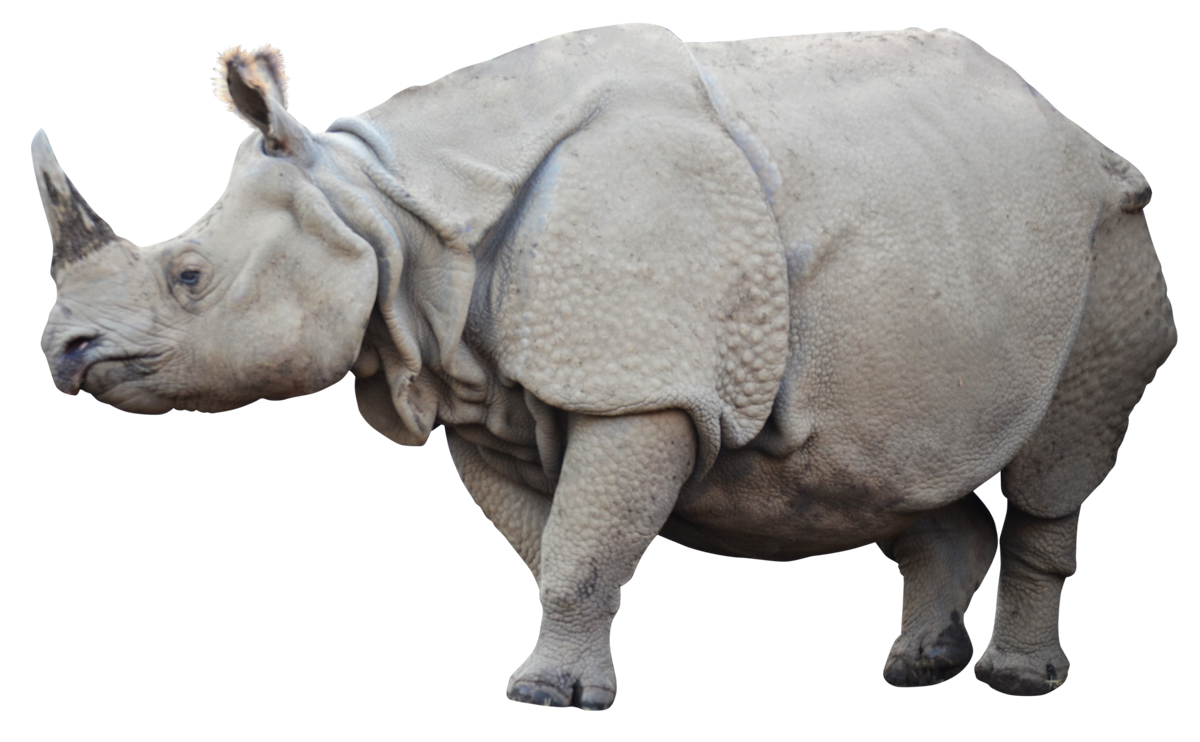
The Indian rhinoceros is a large species, measuring 310–420 cm in head-body length, with a tail length of 60–80 cm, a shoulder height of 170–200 cm, and a weight ranging from 1,500 to 3,500 kg. It is the second-largest of all living rhinoceroses, surpassed only by the African white rhinoceros. This species is distributed across northeastern India and southern Nepal, inhabiting floodplains of the Ganges River, grasslands, and wetlands, showing a strong dependence on water-rich environments. Although it once ranged widely, its population declined to around 100 individuals in the early 20th century due to sport hunting, poaching for its horn, and habitat loss. However, through conservation policies, the establishment of national parks, and strengthened anti-poaching efforts, the population has recovered to approximately 4,000 individuals as of 2022.
Its most distinctive features are a single horn and thick, folded skin that resembles armor. The skin can reach up to 5 cm in thickness at its thickest parts, providing protection from predators and environmental factors, while maintaining flexibility that allows joint movement. Although its eyesight is relatively poor, it possesses highly developed senses of smell and hearing, which are crucial for detecting danger. It is herbivorous, feeding mainly on grasses but also consuming aquatic plants and fruits, often foraging in water. It is also known for wallowing in mud and bathing in water, behaviors that help regulate body temperature and reduce parasites.
Generally solitary, adults live alone except during the breeding season or when females are accompanied by their young. However, several individuals may loosely gather around water sources. They are territorial animals, and males in particular may engage in intense conflicts. Their lifespan in the wild is estimated to be around 35 to 40 years. The Buddhist phrase “walk alone like the horn of a rhinoceros” is said to originate from the solitary nature of this species and is widely known as a metaphor for an independent way of life.
参考文献
yanakiji | 皮膚の硬さは鎧なみ!?世界一皮膚が硬いサイの生態を学ぶ | (2022年9月22日) 2024年9月16日閲覧
WWFジャパン | ネパールのインドサイ保護に成果 | (2011年5月9日) 2024年9月16日閲覧
Ellis, S. & Talukdar, B. 2019. Rhinoceros unicornis. The IUCN Red List of Threatened Species 2019: e.T19496A18494149. 2024年9月16日閲覧
幻冬舎plus | お釈迦様のいう「犀(さい)の角のようにただ独り歩め」とはどういうこと?| 『老いて、自由になる。』平井 正修 著 2024年9月16日閲覧
“Greater One-horned Rhino”. International Rhino Foundation. 2024年9月16日閲覧