
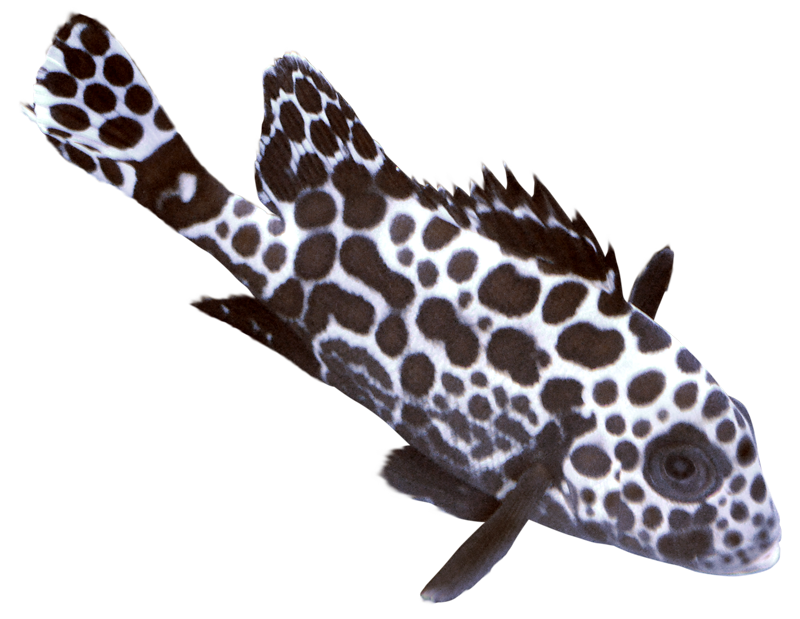
Plectorhinchus chaetodonoides (Lacepède, 1801)
白い斑紋から黒い斑点へ
From White Blotches to Black Spots
体長50cm。インド洋から西太平洋の熱帯・亜熱帯域に広く分布し、サンゴ礁や岩礁周辺の浅い砂底に生息するコショウダイの仲間です。幼魚は赤褐色の体に黒く縁取られた大きな白色斑が並ぶ非常に目立つ姿をしていますが、成長とともにその大胆な模様は崩れて姿を消し、成魚では白っぽい体に無数の黒い斑点が散りばめられた姿へと劇的に変化します。この成長に伴う大きな体色変化は本種の大きな特徴です。
種小名の chaetodonoides は「チョウチョウウオ属(Chaetodon)のような」という意味で、大きく発達した鰭を持つ姿に由来します。近縁のアジアコショウダイ(Plectorhinchus picus)によく似ていますが、本種は体の斑点がより大きく、鰓蓋後方に黒い縁取りがないことで見分けられます。
幼魚は白黒の大胆な模様を持ち、鰭だけでなく体全体をくねらせながら泳ぐ独特の姿が人気で、観賞魚として流通しています。この泳ぎ方は、有毒生物への擬態によって捕食者を惑わせる効果がある可能性も指摘されています。一方、成魚になると厚い唇と力強い体つきを備えた典型的なコショウダイらしい姿となり、小魚や甲殻類、底生無脊椎動物などを捕食します。沖縄では食用魚としても親しまれ、市場で見かけることもあります。
Reaching about 50 cm in length, the Manyspotted Sweetlips inhabits shallow sandy bottoms around coral reefs and rocky reefs throughout the tropical and subtropical Indo-West Pacific. Juveniles are strikingly colored, with a reddish-brown body marked by large white blotches outlined in black. As they mature, these bold markings gradually disappear, transforming into the adult pattern of a pale body covered with numerous black spots. This dramatic change in coloration is one of the species’ most distinctive characteristics.
The species name chaetodonoides means “resembling the butterflyfishes (Chaetodon),” referring to its large, well-developed fins. It closely resembles the Spotted Sweetlips (Plectorhinchus picus), but can be distinguished by its larger spots and the absence of a black margin behind the gill cover.
Juveniles display bold black-and-white markings and swim with an unusual, undulating motion that involves the entire body as well as the fins. Their unique appearance and behavior make them popular in the aquarium trade. This distinctive swimming style is thought to mimic venomous marine animals, potentially deterring predators. As adults, they develop the thick lips and robust body typical of sweetlips, feeding on small fishes, crustaceans, and benthic invertebrates. In Okinawa, they are also valued as a food fish and are sometimes found in local markets.
参考文献
ぼうずコンニャクの市場魚貝類図鑑 | チョウチョウコショウダイ 2025年3月29日閲覧
海と島の雑貨屋さん | Fishes of Mina – 水納島の魚たち – | チョウチョウコショウダイ 2025年3月29日閲覧
“Plectorhinchus chaetodonoides” Reef Life Survey. 2025年3月29日閲覧