
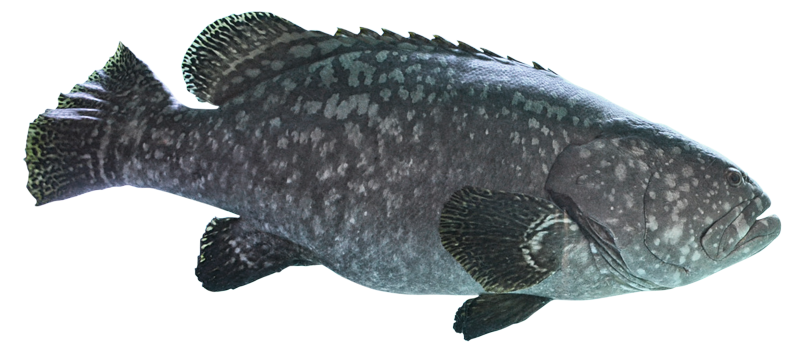
Epinephelus cyanopodus (Richardson, 1846)
海底を掘削する巨大魚
The Giant Fish That Excavates the Seafloor
体長60cmほどに達する大型のハタの仲間で、最大では1mを超えることがあります。インド洋から西太平洋の熱帯域に広く分布し、日本では南西諸島などの暖かい海域で見られます。サンゴ礁や岩礁域、砂泥底が広がる沿岸域などに生息し、岩陰だけでなく海底の環境を巧みに利用して暮らしています。
和名の「ツチホゼリ」は、砂や泥の海底に穴を掘る習性に由来します。大きな体を使って海底を掘り返し、自らが隠れられる巣穴や休息場所をつくります。ハタの仲間の多くは岩の隙間などを利用しますが、本種は柔らかな底質を積極的に改変する点が特徴です。掘削によって周囲の砂や泥が舞い上がることもあり、その姿はまるで海底を耕しているようにも見えます。
体色は白色から灰褐色を基調とし、黒色や淡い斑模様が現れます。成長段階や生息環境、興奮状態などによって模様の濃さや色合いが変化するため、個体によって印象が異なります。鮮やかな色彩を持つ魚が多いサンゴ礁域の魚類の中では控えめな色合いですが、岩や砂泥底に溶け込むための保護色として役立っています。
食性は肉食性で、魚類や甲殻類などを捕食します。ハタ類特有の大きな口と瞬発力を生かし、巣穴の近くで獲物を待ち伏せ、素早く飲み込みます。大型個体では周囲の生態系における上位捕食者の一員として重要な役割を担っています。
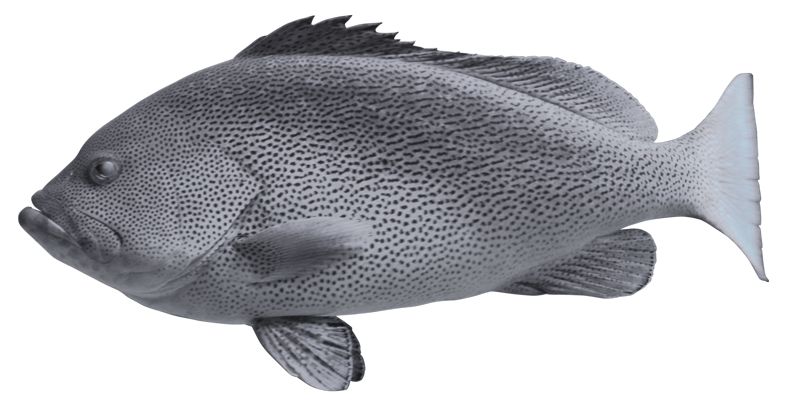
It is a large grouper that can grow to around 60 cm in length, with some individuals exceeding 1 m. It is widely distributed throughout tropical regions of the Indian and western Pacific Oceans, and in Japan it can be found in warm waters such as the Ryukyu Islands. It inhabits coral reefs, rocky areas, and coastal environments with sandy or muddy bottoms, skillfully making use of the seafloor environment rather than relying only on rocky crevices.
The Japanese name “Tsuchihogeri” comes from its habit of digging holes in sandy or muddy seabeds. Using its large body, it excavates the bottom to create burrows where it can hide and rest. While many groupers utilize gaps and spaces among rocks, this species is distinctive in that it actively modifies soft sediments. The disturbance caused by its digging can send clouds of sand and mud into the water, making it appear as though it is cultivating the seafloor.
Its body coloration is based on white to grayish brown tones, with black markings and faint patterns appearing across the body. The intensity of these patterns and shades varies depending on growth stage, habitat conditions, and states of excitement, giving each individual a slightly different appearance. Compared with many brightly colored reef fishes, its coloration is rather subdued, but it functions as camouflage, helping it blend into rocky and sandy-muddy environments.
It is a carnivorous fish that feeds on other fishes and crustaceans. Using the large mouth and rapid striking ability typical of groupers, it waits near its burrow for prey and quickly engulfs its target. Large individuals play an important role as top predators within their ecosystems.
参考文献
ぼうずコンニャクの市場魚貝類図鑑 | ツチホゼリ 2024年7月28日閲覧
新潟市水族館マリンピア日本海 | 生物図鑑 | ツチホゼリ 2024年7月28日閲覧
大方洋二の魚って不思議! | 驚き!ツチホゼリの体色変化 | (2027年10月27日) 2024年7月28日閲覧