
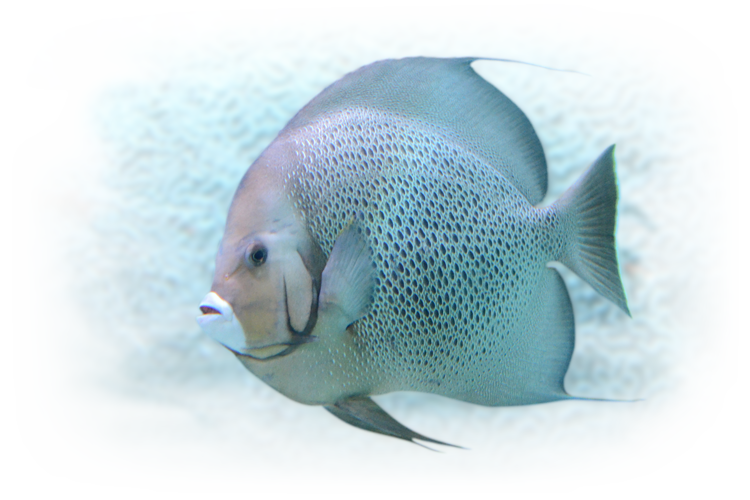
Chaetodontoplus poliourus (Randall and Rocha, 2009)
大西洋の地味なヤッコ
The Modest Angelfish of the Atlantic
全長約40cm、最大では60cm近くに達する大型のキンチャクダイ科魚類です。西大西洋に広く分布し、北はアメリカ東岸のニューイングランド沿岸から、カリブ海、メキシコ湾を経て、南はブラジルのリオデジャネイロ周辺まで見られます。主にサンゴ礁や岩礁域に生息し、海綿や藻類、底生生物などをついばんで暮らしています。
体色は灰色を基調とし、細かな鱗模様が網目状に見える落ち着いた姿ですが、幼魚と成魚では外見が大きく異なります。幼魚は黒地に鮮やかな黄色の縦帯が入り、成長に伴って現在の灰色の姿へ変化します。このような劇的な模様の変化は、近縁のサザナミヤッコなどにも共通する特徴です。若魚の派手な模様は、縄張り争いを避けるための擬態や識別に役立つと考えられています。日本では近年、「ネズミヤッコ」という名前でも呼ばれています。
キンチャクダイ科の魚には「ヤッコ」と名のつく種が多く存在しますが、この名称は江戸時代の「旗本奴(はたもとやっこ)」に由来します。派手な衣装や大胆な振る舞いを見せた町人文化の象徴になぞらえ、色彩豊かな魚たちに「ヤッコ」の名が与えられました。
警戒心が比較的薄く、ダイバーに興味を示して近寄ってくることも多いため、水中写真の被写体として人気があります。また大型の海水観賞魚としても知られ、生息域から程遠い日本の水族館でもその姿を見ることができます。
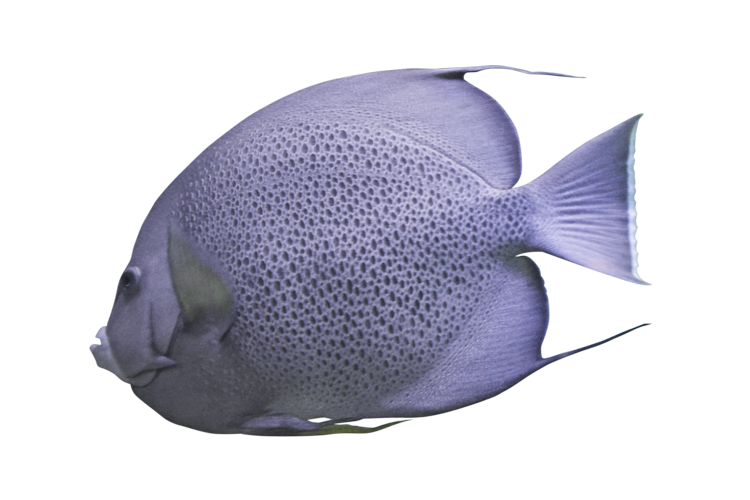
The Gray Angelfish is a large member of the angelfish family, typically reaching about 40 cm in length and sometimes growing to nearly 60 cm. It is distributed throughout the western Atlantic Ocean, ranging from the coast of New England in the United States through the Caribbean Sea and Gulf of Mexico to Rio de Janeiro in Brazil. The species inhabits coral reefs and rocky coastal areas, where it feeds on sponges, algae, and various bottom-dwelling organisms.
Although adults have a calm gray coloration with scale patterns that form a net-like appearance, juveniles look completely different from adults. Young fish are black with bright yellow vertical stripes, gradually transforming into the gray adult coloration as they mature. Such dramatic changes in appearance are also seen in related angelfish species. The striking juvenile pattern is thought to help avoid territorial conflicts and assist in species recognition. In Japan, the species has recently also been referred to by the name “Nezumi-yakko.”
Many angelfish species in Japan include the word “yakko” in their names. This term originates from the “Hatamoto-yakko,” flamboyantly dressed attendants and troublemakers of the Edo period. The vivid appearance of these fish was compared to the flashy clothing and bold behavior of these historical figures.
Because Gray Angelfish are relatively curious and often approach divers, they are popular subjects for underwater photography. They are also well known in the marine aquarium trade, and can even be seen in Japanese aquariums far from their natural habitat.
参考文献
WEB魚図鑑 | ネズミヤッコ 2024年8月18日閲覧
東京ズーネット | ニュース | 体の模様が違う理由は? | (2022年5月20日) 2024年8月18日閲覧
“Gray Angelfish (Pomacanthus arcuatus)” ANGARI Foundation Inc. 2026年5月23日閲覧