
Tragopan temminckii (Gray, 1831)
異様な雄の求愛行動
The Courtship Display of an Uncanny Male
体長約50〜65cm。中国南西部からインド北東部、ブータン、ネパール、ミャンマーにかけて分布し、標高1,500〜4,000mの山地の森林に生息します。竹やシャクナゲが生える林を好み、特に低木や草が茂る場所でよく見られます。季節によって生息場所の高さを変え、冬は比較的低い山林で過ごし、繁殖期の夏にはより高い場所へ移動します。
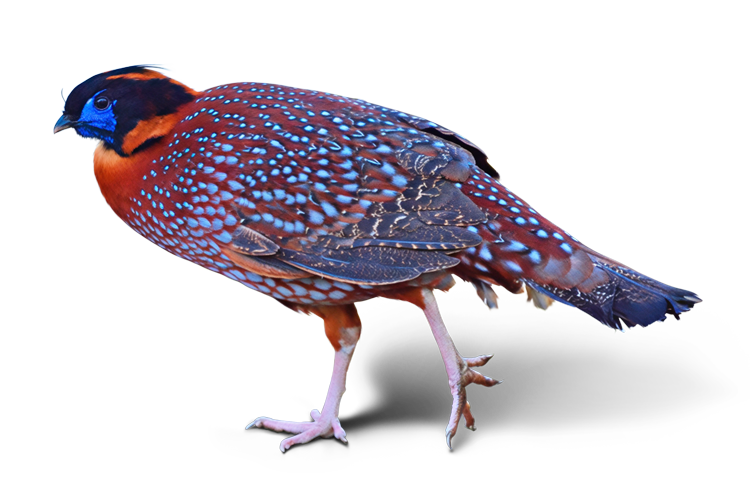
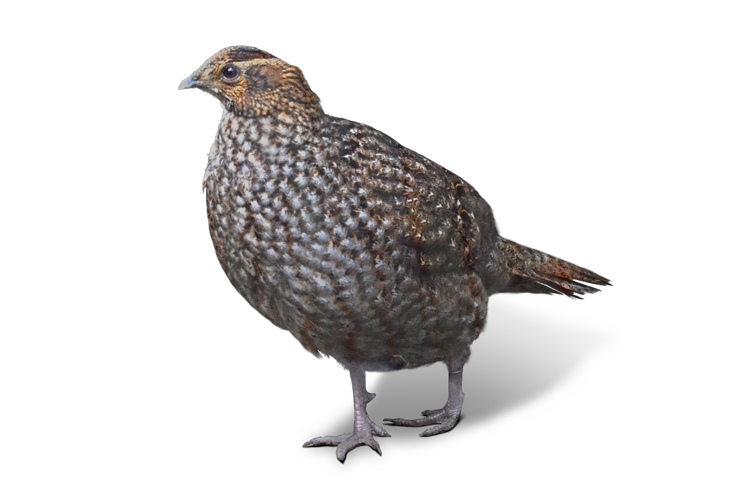
雌雄で外見が大きく異なる性的二形を示し、雄は赤橙色の羽毛に白斑が散在する華やかな体色を持ちます。顔面には青色の裸出皮膚が発達し、喉には青地に赤い模様を伴う肉垂(ワトル)を備えます。さらに頭頂には一対の角状の肉質突起を持ち、これらは通常は目立ちませんが、求愛時に大きく展開します。一方、雌は褐色の斑模様で、地面での抱卵時に周囲に溶け込む保護色となります。
警戒心が強く、普段は茂みの中で単独またはつがいで行動し、植物の芽や果実、小型の無脊椎動物などを採食します。夜は木の上で休む習性があり、キジ類の中では樹上利用が比較的多い種です。
繁殖期、雄は独特で印象的な求愛行動を行います。雌の背後から静かに近づくと、まず頭を上下に振りながら、喉の肉垂をゆっくりと下方へ広げていきます。よだれかけのように展開した肉垂は青地に赤い模様を帯び、次第に存在感を増します。同時に頭頂の角状突起が現れ、羽を細かく震わせながら喉から短いクリック音を発します。そしてそのリズムが最高潮に達した瞬間、体を大きく膨らませて背伸びするように前進し、雌へ強くアピールします。この一連の劇的な変化を伴う行動は極めて特異で、本種を象徴する特徴といえます。
Body length 50–65 cm. This species is distributed from southwestern China to northeastern India, Bhutan, Nepal, and Myanmar, inhabiting montane forests at elevations of 1,500–4,000 m. It prefers forests with bamboo and rhododendron, especially areas with dense undergrowth. It shows altitudinal movements, spending winter in relatively lower forests and moving to higher elevations during the breeding season.
It exhibits strong sexual dimorphism. Males are striking, with bright orange-red plumage marked by numerous white spots. The face has well-developed blue bare skin, and the throat bears a blue wattle with red patterns. In addition, males possess a pair of horn-like fleshy appendages on the head. These features are usually inconspicuous but expand dramatically during courtship. Females, in contrast, are mottled brown, providing effective camouflage when nesting on the ground.
This species is wary and typically occurs singly or in pairs within dense vegetation. It feeds on plant shoots, fruits, and small invertebrates. Unlike many pheasants, it frequently roosts in trees at night, showing a relatively strong arboreal tendency.
During the breeding season, the male performs a distinctive and elaborate courtship display. Approaching the female quietly from behind, he begins by bobbing his head while gradually expanding the throat wattle downward. The bib-like wattle, blue with red markings, becomes increasingly conspicuous. At the same time, the horn-like appendages emerge, and the male vibrates his wings while producing short clicking sounds from the throat. At the climax of this rhythmic display, he inflates his body, stretches upward, and advances toward the female in a dramatic final display. This remarkable sequence of transformations is highly unusual among pheasants and represents a defining characteristic of the species.
参考文献
“Tragopan pheasants’ colorful courtship displays” TKSST. 2026年4月4日閲覧
Chhetri, Bijoy & Badola, Hemant & Barat, Sudip. (2017). ECOLOGICAL STUDY OF SATYR TRAGOPAN (TRAGOPAN SATYRA) IN SIKKIM-INDIA: A THREATENED BIRD SPECIES OF EASTERN HIMALAYA. International Journal of Recent Scientific Research. 8. 20362-20368. 2026年4月4日閲覧