
Diodon hystrix (Linnaeus, 1758)
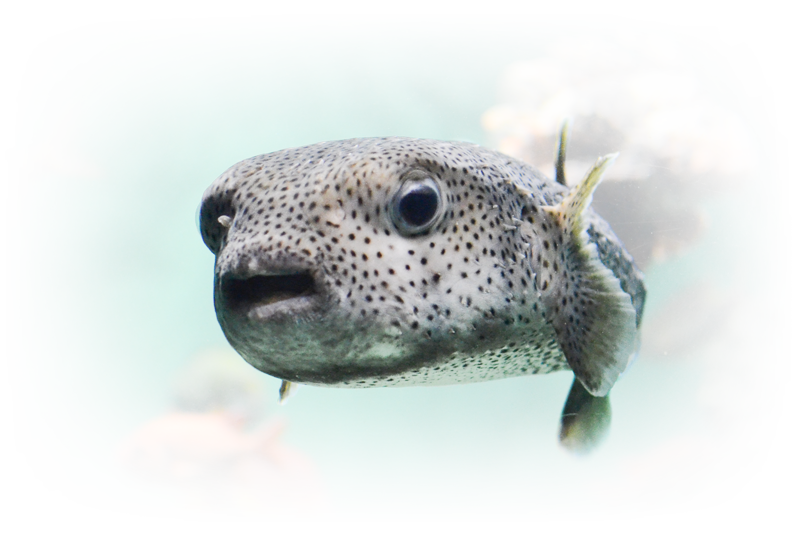
ネズミ顔の大きなハリセンボン
The Large Porcupinefish with a Mouse-Like Face
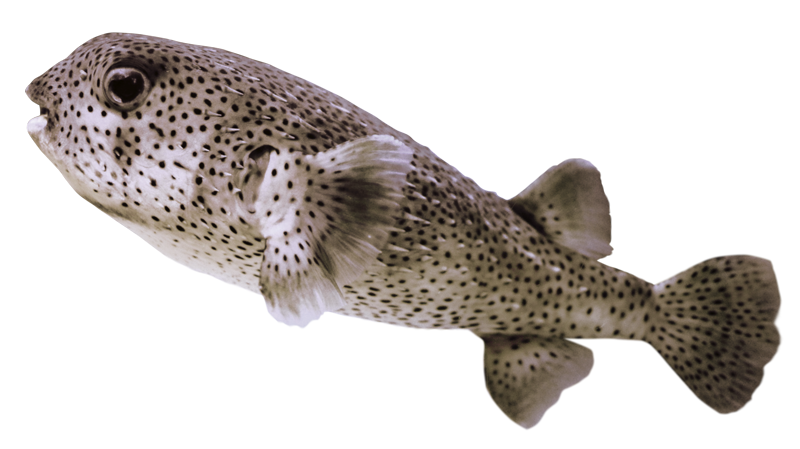
体長約40cm、最大で91cmに達する大型のハリセンボン科の魚です。世界の熱帯から温帯の海に広く分布し、浅い岩礁やサンゴ礁などの海底で暮らします。日本では屋久島や琉球列島などで見られます。体には長く鋭い棘が並び、危険を感じると水を飲み込んで体を大きく膨らませ、棘を立てて身を守ります。普段は後方に寝ている棘が一斉に立ち上がることで、捕食者にとって飲み込みにくい姿になるのです。
沖縄では「イノーアバサー」などと呼ばれ、ハリセンボンなどとともに「アバサー」として食用にされます。沖縄美ら海水族館も無毒として紹介しており、沖縄で行われた毒性調査でも、筋肉、皮膚、肝臓、生殖腺、腸のいずれにも有意な毒性は認められませんでした。味噌汁などに利用される身近な魚である一方、丸みを帯びた体と大きな目、愛嬌のある顔つきから、ダイバーにも人気があります。和名の「ネズミフグ」は、顔つきがネズミに似ていることから名付けられたとされますが、命名の詳しい由来は明らかではありません。
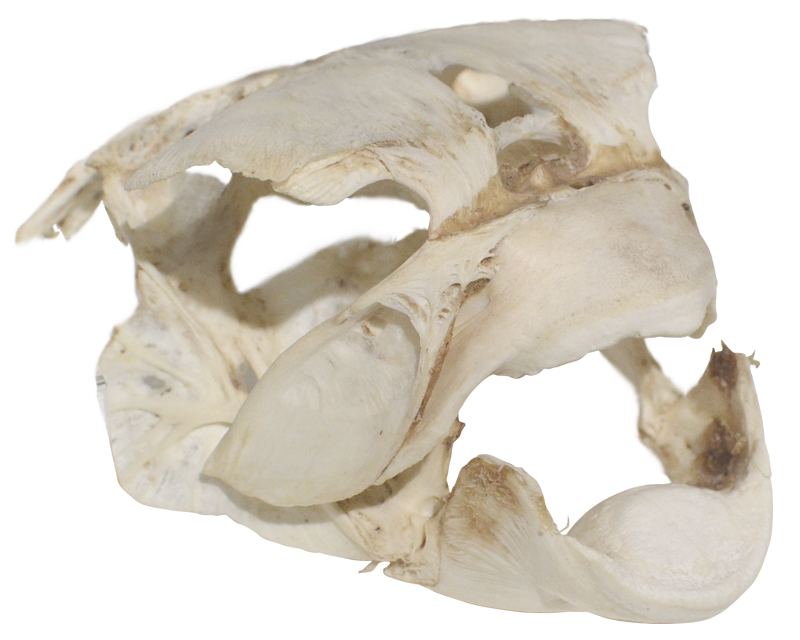
属名の Diodon はギリシャ語で「2つの歯」を意味します。口の中には上下それぞれ一枚の板状の歯板があり、左右に分かれず一枚の強固な構造になっています。一方、フグ科では上下の歯板がそれぞれ左右に分かれるため、4枚あるように見えます。この強力なくちばし状の歯は、貝類や甲殻類など硬い殻をもつ動物を砕くのに適しています。名前に込められた「2つの歯」は、まさにネズミフグの特徴的な口の構造を表しているのです。
Growing to about 40 cm in length and reaching a maximum of 91 cm, the spot-fin porcupinefish is a large member of the porcupinefish family, Diodontidae. It is widely distributed in tropical and temperate seas around the world, inhabiting shallow rocky and coral reef environments. In Japan, it occurs around Yakushima and the Ryukyu Islands. Its body is covered with long, sharp spines. When threatened, it gulps water to inflate its body, causing the spines to stand erect and making it difficult for predators to swallow. The spines, which normally lie flat against the body, can thus become an effective defense when danger approaches.
In Okinawa, the fish is known as ino-abasa and, together with porcupinefish and related species, is commonly called abasa. It is eaten locally, including in miso soup. The Okinawa Churaumi Aquarium describes the species as non-toxic, and toxicity studies conducted in Okinawa found no significant toxicity in the muscle, skin, liver, gonads, or intestines examined. Despite being a fish familiar as food, its rounded body, large eyes, and endearing face have also made it popular with divers. The Japanese name nezumifugu, meaning “mouse puffer,” is said to refer to its resemblance to a mouse, although the precise origin of the name is unclear.
The genus name Diodon comes from Greek and means “two teeth.” Inside its mouth are two strong, plate-like dental structures, one on the upper jaw and one on the lower jaw. Unlike the porcupinefishes, members of the pufferfish family have their upper and lower dental plates divided into left and right halves, giving them four plates in total. These powerful, beak-like teeth are well suited for crushing hard-shelled prey such as mollusks and crustaceans. Thus, the name Diodon—“two teeth”—aptly describes one of the most distinctive features of this fish.
参考文献
WEB魚図鑑 | ネズミフグ 2024年7月15日閲覧
MBC南日本放送 | たんぽぽ倶楽部 | ととナビvol.339 ネズミフグ | (2020年12月31日) 2024年7月15日閲覧
ふぐマガ | ふぐの仲間! 鋭いトゲを持つハリセンボン | (2019年6月28日) 2025年2月11日閲覧