
Carassius auratus
先祖と出会った魚取沼の金魚
The Goldfish of Lake Utorinuma That Met Its Ancestors
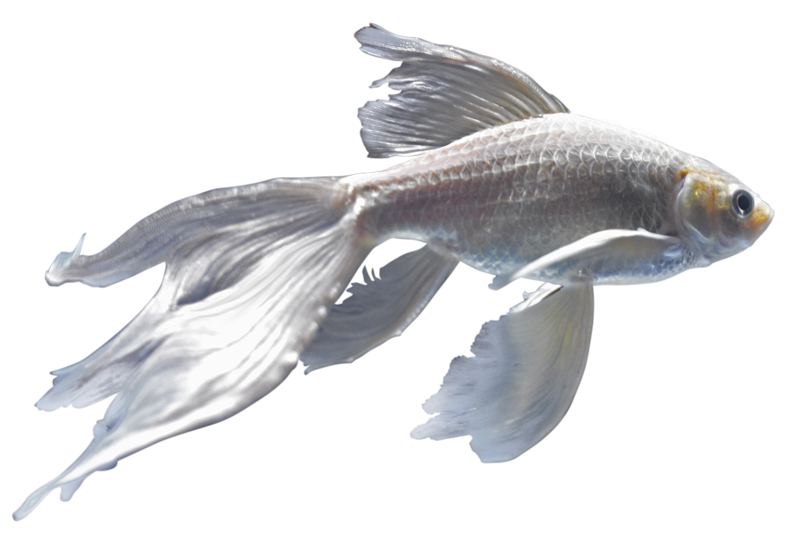
体長は約15cmで、最大30cmほどになります。鉄錆を思わせる赤褐色の体色から「鉄魚」と呼ばれます。フナに似た体型をしていますが、各ヒレが長く、とくに尾ビレが著しく伸びるのが特徴です。体色やヒレの形には個体差があり、成長とともに尾ビレがさらに伸びる個体もいます。
1922年、宮城県加美郡の魚取沼で発見されると、その姿から金魚の原種ではないかと注目を集めました。1933年には、魚取沼一帯が「鉄魚生息地」として国の天然記念物に指定されています。一方、古くからフナと金魚の交雑個体ではないかとも考えられており、その正体は長く議論されてきました。近年の研究によって、鉄魚は日本産フナ類と金魚の交雑に由来することが明らかになっています。
魚取沼では天然記念物として保護されているため、自然環境下で生まれた鉄魚を捕獲することはできません。その一方で、魚取沼を起源とする鉄魚の系統は養殖によって受け継がれ、現在も流通しています。野生のフナ類と金魚の交雑に由来する鉄魚は、金魚とは一線を画す渋い輝きを放つ姿もまた、本種が現在まで根強い人気を集めている理由の一つです。
The body length is about 15 cm, with a maximum of around 30 cm. It is called “Tetsugyo,” meaning “iron fish,” for its reddish-brown coloration reminiscent of iron rust. It has a body shape similar to that of a crucian carp, but its fins are elongated, with the caudal fin being particularly conspicuous. The coloration and fin shape vary among individuals, and in some fish the caudal fin becomes even longer as they grow.
In 1922, Tetsugyo was discovered in Lake Utorinuma in Kami District, Miyagi Prefecture. Its unusual appearance attracted attention, and it was initially thought to be a possible ancestor of the goldfish. In 1933, the area around Lake Utorinuma was designated a National Natural Monument as the “Habitat of Tetsugyo.” At the same time, it had long been suspected that these fish were hybrids between crucian carp and goldfish, and their true identity remained a subject of debate. Recent research has shown that Tetsugyo originated from hybridization between Japanese crucian carp and goldfish.
Because Lake Utorinuma is protected as a National Natural Monument, Tetsugyo born there in the wild cannot be collected. Meanwhile, lineages originating from Lake Utorinuma have been maintained through captive breeding and are still distributed today. Originating from hybridization between wild crucian carp and goldfish, Tetsugyo is also prized for its distinctive, subdued luster, quite unlike that of ordinary goldfish. This appearance is one of the reasons for its enduring popularity.
参考文献
宮城県| 指定文化財〈天然記念物〉魚取沼のテツギョ生息地 2024年7月28日閲覧
国立科学博物館魚類研究室 | 天然記念物の魚たち | テツギョ生息地 | 篠原 現人 2024年7月28日閲覧
冨澤 輝樹, 木島 隆, 二見 邦彦, 高橋 清孝, 岡本 信明『ミトコンドリアDNA および核DNA の解析による魚取沼テツギョの起源』魚類学雑誌 2015年 62巻 1号 p. 51-57 2024年7月28日閲覧