
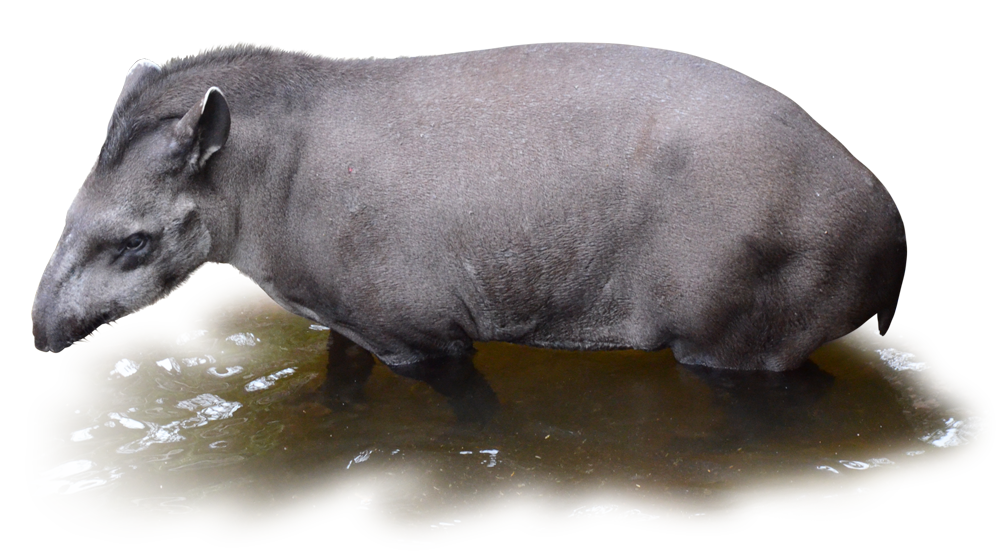
Hippopotamus terrestris (Linnaeus, 1758)
2000万年前の姿のまま生きるバク
A Tapir Living Unchanged Since 20 Million Years Ago
体長約2m、体重150~320kg。南米大陸のコロンビア・ベネズエラからパラグアイ、ブラジルにかけて広く分布し、低地の森林や水辺に近い藪地に生息しています。泳ぎや潜水が得意で、外敵に襲われそうになると水中に逃げ込みます。夜行性で、昼間は休息し、夕方から木の実や葉、果実などを探して活発に行動します。嗅覚に優れ、鬱蒼とした森林の中でも匂いを頼りに餌を見つけます。長い鼻先は柔軟で、ゾウのように器用に餌をつかむことができます。
バクの仲間は約2000万年前からその姿や生活様式を大きく変えておらず、奇蹄目の中でも原始的な特徴を残す動物です。現生のバクは5種が知られており、2013年には新種カボマニバク(Tapirus kabomani)が記載されました。これは従来アメリカバクと同一と考えられていた個体群が別種と判明したものです。5種の中では最小ですが、21世紀に記載された大型哺乳類として注目されました。東南アジアに生息するマレーバクを除く4種は新世界(南北アメリカ)に分布していますが、これはかつてヨーロッパやアジアにも広く分布していたバク類の多くが絶滅し、現在の分布域に生き残ったためと考えられています。
「バク」という名称は、中国の伝説上の生物「獏」に由来します。獏は、鼻はゾウ、目はサイ、尾はウシ、脚はトラに似るとされ、その姿がバクの特徴と重なることから名付けられました。この伝承が日本に伝わる過程で「悪夢を食べる存在」と解釈され、バクは夢を食べる動物として知られるようになりました。長い年月をほとんど姿を変えずに生きてきたバクは、今も静かに森の中で暮らしながら、人知れず夢を食べているのかもしれません。
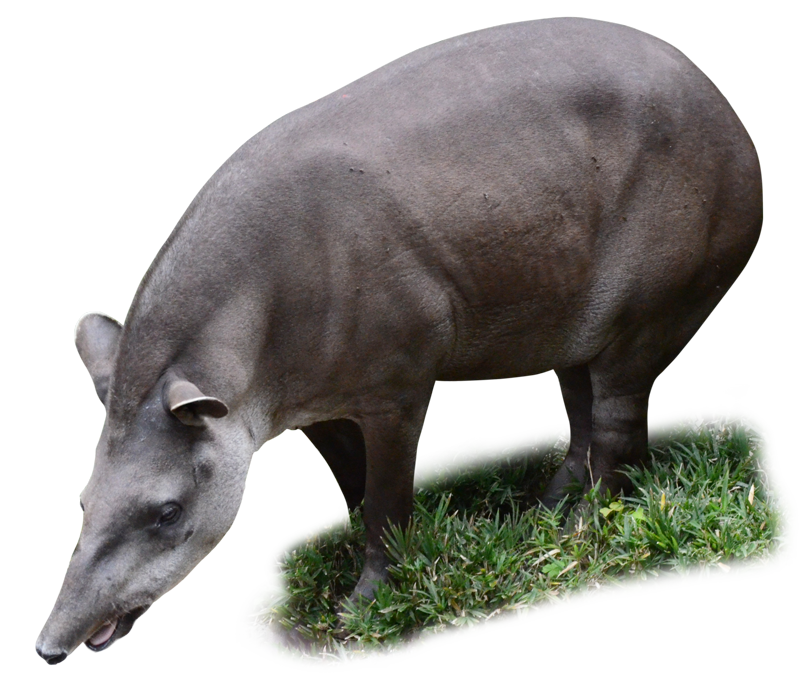
The lowland tapir has a body length of about 2 meters and weighs between 150 and 320 kg. It is widely distributed across South America, from Colombia and Venezuela to Paraguay and Brazil, inhabiting lowland forests and dense vegetation near water. An excellent swimmer and diver, it escapes into the water when threatened by predators. Primarily nocturnal, it rests during the day and becomes active at dusk, foraging for fruits, leaves, and other plant material. It has a highly developed sense of smell, allowing it to locate food even in dense forests. Its elongated, flexible snout functions much like a short trunk, enabling it to grasp food with precision.
Tapirs have retained much of their ancestral form and lifestyle for approximately 20 million years and are considered among the most primitive members of the order Perissodactyla. Five extant species are recognized, including the Kabomani tapir (Tapirus kabomani), described in 2013. This species was formerly regarded as part of the lowland tapir but was later identified as distinct. Although it is the smallest of the five species, it is notable as one of the largest mammals described in the 21st century. Except for the Malayan tapir of Southeast Asia, all living tapirs are found in the New World. Their present distribution reflects a once much wider range across Europe and Asia, with most lineages having gone extinct, leaving only those populations that survive today.
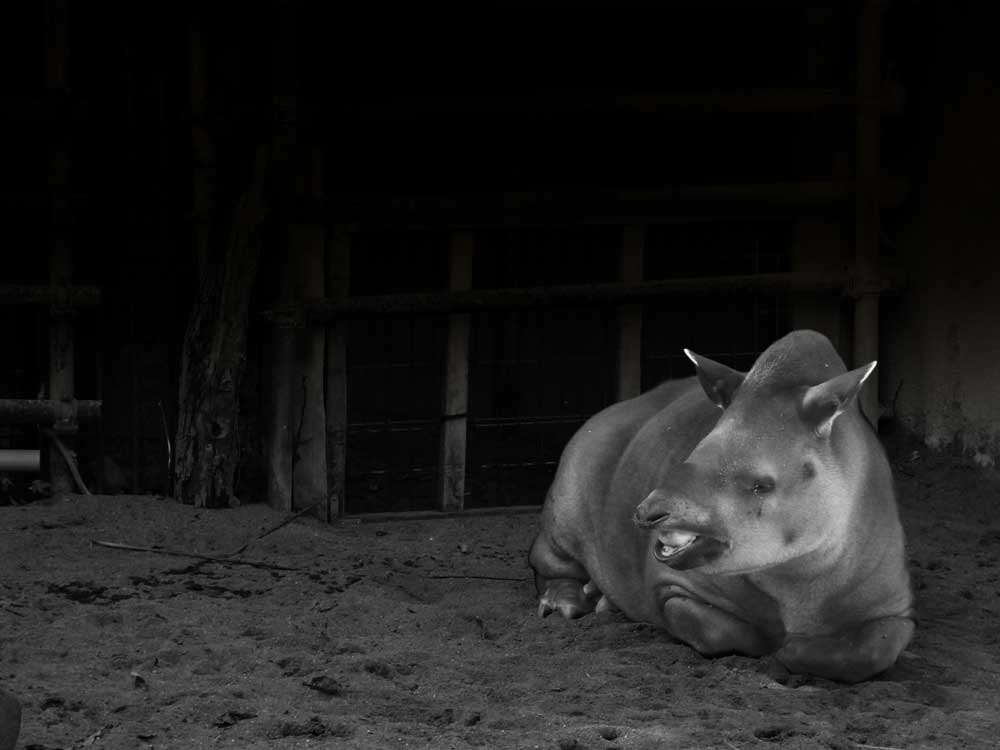
The name “baku” in Japanese originates from the mythical Chinese creature “mo” (獏). This legendary animal is said to possess features resembling an elephant’s trunk, a rhinoceros’s eyes, an ox’s tail, and a tiger’s legs—traits reminiscent of a tapir’s appearance. As this legend spread to Japan, it became associated with the idea of devouring nightmares, and the tapir came to be known as a “dream-eating animal.” Having lived largely unchanged for millions of years, the tapir may still be quietly wandering the forest, perhaps nibbling away at unseen dreams.
参考文献
エコチル | 【京都市動物園だより】以前は「ブラジルバク」と呼んでいた種「アメリカバク」 | (2023年6月12日) 2024年11月16日閲覧
エレファントーク | No.164 アメリカバク – おもしろ哺乳動物大百科 109 奇蹄目 バク科 | (2015年2月1日) 2024年11月16日閲覧
“Brazilian tapir” Animal Encyclopedia. Doublin Zoo 2024年11月16日閲覧
“What is a tapair?” Tapir Specialist Group 2024年11月16日閲覧
和楽web | なぜ夢を食べるのは「バク」なのか? 霊獣と夢のナゾを解説 | 馬場 紀衣 (2022年10月28日) 2024年11月16日閲覧
Coleman, Loren (2013, December 16) “Largest New Mammal Discovery of 21st Century: Fifth Species of Tapir” CRYPTOZOONEWS 2024年11月16日閲覧