
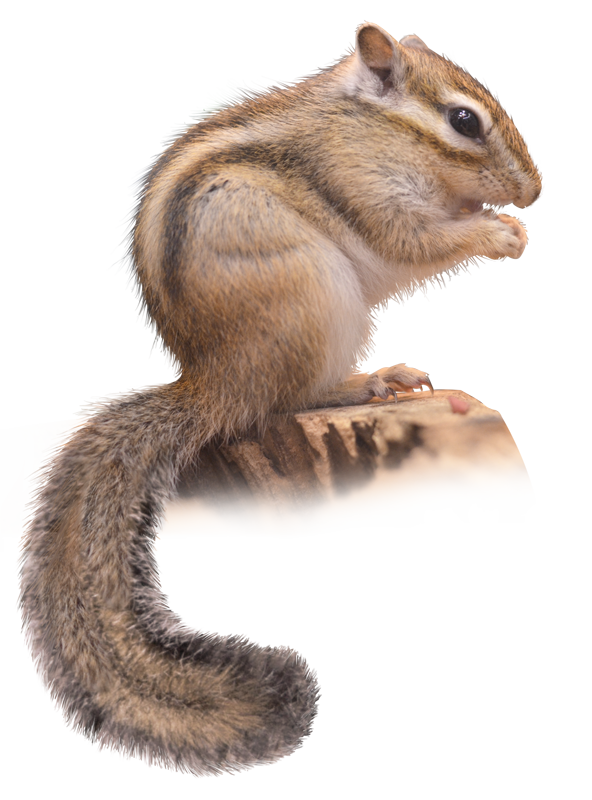
Eutamias sibiricus (Laxmann, 1769)
木の実貯蔵庫の管理人
Keeper of the Nut Storehouse
頭胴長12~19cm、尾長8~11.5cm、体重70~120g。ユーラシア大陸北部から朝鮮半島、中国東北部、日本の北海道まで広く分布する小型のリスです。シマリス属(Tamias)の中で唯一ユーラシアに生息する種であり、その他のシマリス類はすべて北アメリカに分布しています。背中に5本の黒い縦縞が走るのが特徴で、顔にも明瞭な縞模様があります。この模様は森林の落ち葉や木陰に溶け込み、外敵から身を守る保護色として役立っています。
主に森林や林縁部に生息し、樹上と地上の両方を利用して生活します。木登りが得意ですが、地上で採食することも多く、木の実、種子、果実、芽、昆虫などを幅広く食べる雑食性です。頬の内側には大きく伸縮する頬袋があり、食べ物を大量に詰め込んで巣へ運ぶことができます。秋になるとドングリや木の種子を集めて貯蔵し、冬の食糧として利用します。属名の Tamias はギリシア語で「管理人」や「貯蔵係」を意味し、この習性に由来するとされています。
巣は樹洞や地下の巣穴に作られます。地下の巣穴は複数の部屋と通路からなり、寝室や貯蔵室、排泄場所を分けて利用することが知られています。基本的に単独で生活し、繁殖期を除いて成獣同士が接触することはあまりありません。冬季には巣穴で長期間過ごしますが、クマのような深い冬眠ではなく、定期的に目覚めて蓄えた食物を食べる浅い冬眠を行います。
日本には北海道にシベリアシマリスの亜種であるエゾシマリスが生息しています。一方、本州などでペットとして流通してきた「シマリス」の多くは、同じくシベリアシマリスの亜種であるチョウセンシマリスやチュウゴクシマリスなどの輸入個体です。日本では1960年代頃から広く飼育されるようになり、その愛らしい姿や活発な行動から人気を集めました。しかし、飼育個体の逸出による野生化が各地で報告されており、生態系への影響が懸念されています。ヨーロッパでも野生化個体群の定着が確認されており、在来の小型哺乳類との競合や、マダニが媒介する感染症の拡散への影響が指摘されています。小さな体に優れた貯蔵能力と森林生活への適応を備えたシベリアシマリスは、北半球の森を代表する身近な哺乳類の一つです。
The Siberian chipmunk is a small squirrel measuring 12–19 cm in head-body length, with a tail length of 8–11.5 cm and a body weight of 70–120 g. It is widely distributed across northern Eurasia, including Siberia, the Korean Peninsula, northeastern China, and Hokkaido in Japan. Among the genus Tamias, it is the only species native to Eurasia, while all other chipmunk species occur in North America. Its most distinctive features are the five dark stripes running along its back and the conspicuous stripes on its face. These markings help camouflage the animal among fallen leaves and forest shadows, providing protection from predators.
Siberian chipmunks inhabit forests and woodland edges, spending time both on the ground and in trees. Although skilled climbers, they often forage on the forest floor, feeding on a wide variety of foods including nuts, seeds, fruits, buds, and insects. Like other chipmunks, they possess expandable cheek pouches that allow them to carry large quantities of food back to their nests. In autumn, they gather and store acorns and other seeds for use during the winter months. The genus name Tamias is derived from a Greek word meaning “steward” or “keeper,” referring to their habit of collecting and storing food.
Nests are constructed in tree cavities or underground burrows. These burrows consist of several chambers and tunnels, with separate areas used for sleeping, food storage, and waste disposal. Siberian chipmunks are generally solitary animals, and adults rarely interact outside the breeding season. During winter, they remain in their burrows for extended periods. However, rather than entering a deep hibernation like bears, they undergo a shallow form of hibernation, periodically awakening to feed on their stored provisions.
In Japan, the Ezo chipmunk, a subspecies of the Siberian chipmunk, occurs naturally in Hokkaido. By contrast, most “pet chipmunks” that have been kept in other parts of Japan are imported subspecies such as the Korean chipmunk and the Chinese chipmunk. These animals became popular pets from the 1960s onward because of their attractive appearance and lively behavior. Escaped or released individuals have established feral populations in some areas, raising concerns about their impact on native ecosystems. Feral populations have also become established in parts of Europe, where potential competition with native small mammals and the spread of tick-borne diseases have attracted attention. With its remarkable food-storing ability and adaptations for forest life, the Siberian chipmunk is one of the most familiar small mammals of the forests of the Northern Hemisphere.
参考文献
Tamias. Mindat.org. 2024年8月18日閲覧
国立環境研究所 | 侵入生物データベース | シマリス 2024年8月18日閲覧
環境省 | 報道発表資料 | 鳥獣の保護及び狩猟の適正化に関する法律施行規則の一部を改正する省令について | (2007年5月25日) 2024年8月18日閲覧